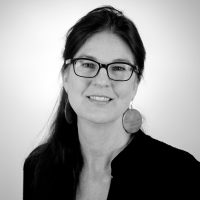
From left to right: Dr Grit Martinez, Ecologic Institute, César Bordehore, University Alicante, Ellen Johannesen, NIVA.
|Foto by César Bordehore
Putting Stakeholder Knowledge at the Heart of Fisheries Innovation
- Presentation
- Date
-
- Location
- Brest, France
- Speech
Research on fishers’ ecological knowledge has grown considerably over the past decade, highlighting its value for understanding marine ecosystems and supporting fisheries management and recognising the value of bringing different types of knowledge together.
In SEA4FUTURE, stakeholder engagement goes beyond simply identifying who the stakeholders are or asking fishers to provide observational data. Instead, we take a deep ethnographic dive into fisheries, exploring the social relationships, practices and decision-making environments that shape how people act and collaborate. And it is not only people who matter. Policies, documents, technologies, fishing gear and institutional procedures can also shape and mediate action. Understanding these connections helps us see how fisheries solutions can work in practice, not just on paper.
From stakeholder engagement to meaningful collaboration
At the ICES Annual Science Conference, Dr Grit Martinez from Ecologic Institute presented the SEA4FUTURE approach to stakeholder engagement for fisheries bycatch reduction, sharing experiences and lessons with scientists involved in projects across Europe and North America.
The SEA4FUTURE (S4F) approach brings together fishers, scientists, policymakers, industry representatives and coastal communities to co-design, test and validate practical solutions for more sustainable fisheries. A central principle is simple: fishers’ knowledge and experience are not just data to be collected; they are an important source of evidence. Solutions such as gear modifications are developed together with stakeholders, grounded in the realities of fishing and then tested at sea through six Mediterranean case studies.
Our experience highlights four important ingredients for meaningful collaboration:
- Involve people from the start
Successful collaboration begins with early and meaningful involvement. Building trust requires clear communication and approaches that allow knowledge to be collected, understood, interpreted and validated together. - Connect different ways of knowing
SEA4FUTURE brings together the social sciences and humanities (SSH) and natural sciences (NS). Its ethnographic approach draws, among others, on the work of Lévi-Strauss, Geertz and Latour to explore how fishers’ interests, knowledge and willingness to collaborate are shaped by social and political structures, local contexts, interactions and cultural practices.
Inspired by Latour’s Actor-Network Theory, SEA4FUTURE also looks at the connections between people, knowledge, technologies, practices and institutions. A fishing regulation, a new piece of gear or an institutional procedure can influence what happens just as much as the people involved. - Find common ground
Different stakeholders naturally bring different experiences, priorities and ideas. Bringing these perspectives together around a common purpose creates opportunities for “convergence”—while ensuring that fishers’ knowledge is recognised, respected and considered alongside other forms of evidence. - Make solutions work in the real world
A solution may look promising in a report or laboratory, but will it work on a fishing vessel? Is it practical for local fishing practices? Will fishers accept and use it?
SEA4FUTURE puts these questions at the centre of the process, helping develop technologies, fishing practices and management measures that are locally relevant, practical and socially accepted.
SEA4FUTURE shows that stakeholder engagement can be much more than consultation. When different forms of knowledge are brought together and people are genuinely involved in shaping solutions, collaboration can build trust, improve decision-making and support more sustainable and resilient fisheries. By connecting research with the realities of fishing communities, SEA4FUTURE is helping turn knowledge and collaboration into practical action at sea.
Contact