
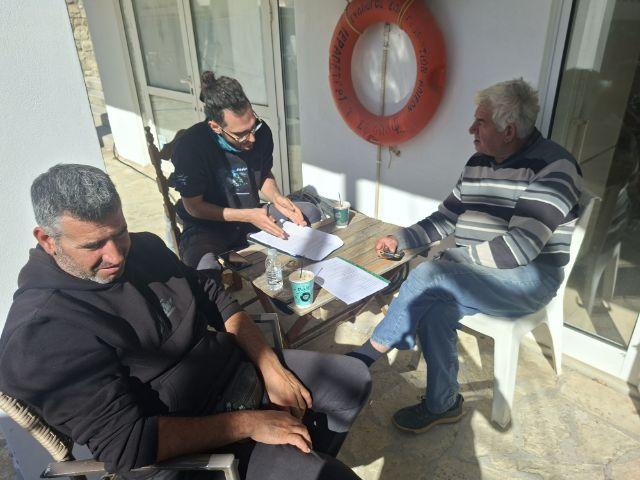
Research where it matters: Scientists speak with a local fisher in Crete to learn firsthand how invasive marine species are affecting coastal fisheries.
|© Ecologic Institute, 2026
When Invasive Species Become a Problem for Crete's Fishers and the Ecosystem
In Crete, scientists and fishers are working together to find ways to curb the spread of unwanted marine species.
- News
- Date
-
- Location
- Ierapetra, Crete, Greece
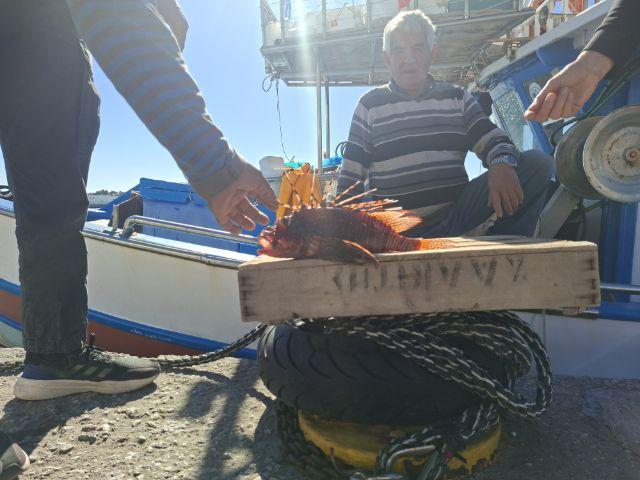
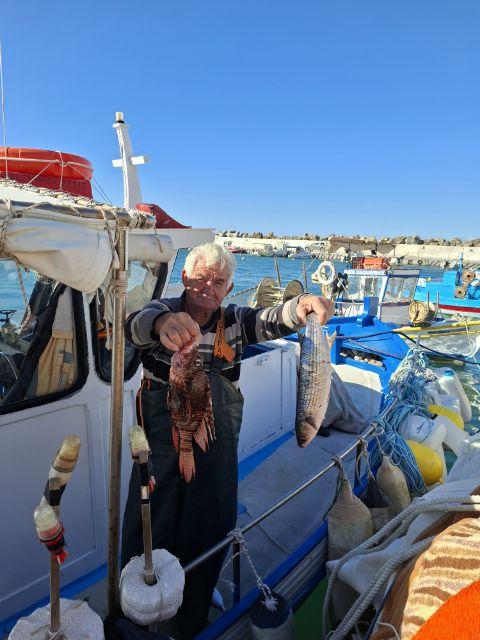
They bite through fishing lines, damage nets and make life increasingly difficult for local fishers: invasive pufferfish are spreading in the waters around Crete. Lionfish, too, are becoming increasingly common in local fishing grounds. For the island's fishing communities, these changes are no longer an abstract ecological threat. They are part of everyday life. But how can the problem be tackled? And what role can those who spend their days at sea play in finding solutions?
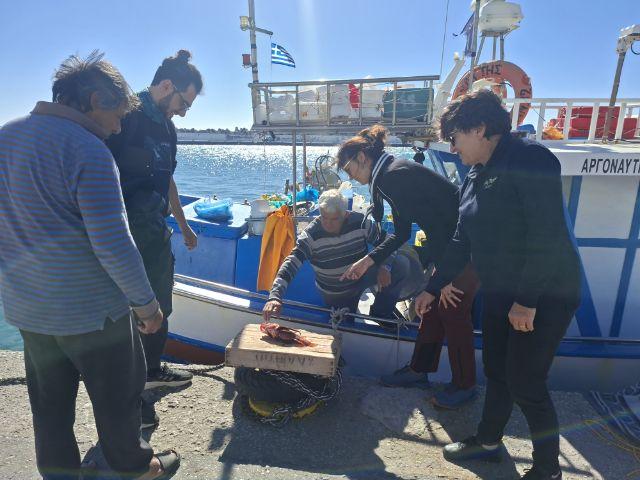
To explore these questions, a research team from Ecologic Institute and the Hellenic Centre for Marine Research (HCMR) travelled to Ierapetra on Crete's southern coast as part of the EU-funded SEA4FUTURE project. Dr Grit Martinez of Ecologic Institute joined Dr Nota Peristeraki, Dr Giorgos Chrisidis and Giannis Kosoglou of HCMR in conducting more than 20 in-depth interviews with professional fishers and recreational spearfishers. Rather than relying solely on scientific measurements and models, the researchers wanted to hear firsthand how the spread of invasive species is affecting local fisheries – and what opportunities those directly affected see for responding to the challenge.
Damaged Nets and a Determination to Make a Difference
Fishers described gear damaged by pufferfish, additional costs and changes in their fishing grounds. The ecological impacts of invasive species are affecting their livelihoods directly, adding to the economic pressures already facing small-scale fisheries. Yet the conversations revealed more than concerns and difficulties. Particularly striking was the willingness of many participants to take action themselves. Rather than simply waiting for authorities or research institutions to intervene, they expressed a strong interest in working together to find practical solutions.
Recreational spearfishers could play an important role in these efforts. Many indicated that they would be willing to participate in targeted lionfish removal activities, potentially helping to reduce pressure on native species. Such initiatives would, however, require appropriate training, clear operational guidelines and close scientific support.
For professional fishers, the findings also point to practical opportunities. Suitable fishing gear and economic incentives – such as better market opportunities for edible invasive species – could help make targeted removal a viable option in their day-to-day fishing operations.
Turning Local Experience into Policy Solutions
These findings are particularly valuable for SEA4FUTURE. Measures to protect marine ecosystems can only deliver lasting results if they are not merely ecologically sound but also feasible under the real-world conditions of local fisheries.
Ecologic Institute leads the project's social science research, working with its partners to explore how the knowledge and experience of fishing communities can inform the development of sustainable management approaches. The fieldwork in Ierapetra offers concrete insights into key questions: Which challenges are most pressing? Where is there a willingness to collaborate? And what support do fishers need to become actively involved in developing solutions?
The findings will now be analysed jointly with the project partners and will inform policy recommendations aimed at promoting more sustainable, ecosystem-based fisheries management in the Mediterranean.

Contact

- Funding
-
European Commission, Directorate-General Research & Innovation (DG Research & Innovation), International - Partner
-
Hellenic Centre for Marine Research (HCMR), Greece Ecologic Institute, Germany - Team
-
Dr. Nota Peristeraki (Hellenic Centre for Marine Research)Dr. Giorgos Chrisidis (Hellenic Centre for Marine Research)Giannis Kosoglou (Hellenic Centre for Marine Research)
- Date
-
- Project
- Project ID
- Keywords
-
biological invasion, non-native species, neobiota, marine bioinvasion, fishery conflicts, catch damage, coastal economy, small-scale fishing, fishery governance, adaptation strategies, invasive predators, biodiversity loss, community-based resource management, species conservation measuresIerapetra, Crete, Greece, Levantine Basin, Aegean Sea, southeastern Mediterranean, European coastal regionsqualitative interviews, social science field research, stakeholder interviews, stakeholder engagement, participatory research, transdisciplinary research, integration of local knowledge, actor analysis, needs assessment, co-creation, applied social research, qualitative data collection, acceptance research, governance analysis
Bogusz, T., Holtappels, M., Hodapp, D., Schlüter, A., & Breckwoldt, A. (2024). Nature and society in marine research - Perspectives for interdisciplinary cooperation in the Anthropocene. Zenodo. https://doi.org/10.5281/zenodo.14887580
Ellermann, A., G.Özerol, J. V.-d.Kruijf, et al. 2026. “Innovations for Stakeholder Engagement in Water Governance: A Systematic Literature Review From a Sustainability Transition Perspective.” Environmental Policy and Governance1–20. https://doi.org/10.1002/eet.70066.
Fuchs, G., Stelljes, N., Kroos, F. et al. Towards climate-ready marine protected areas: challenges and strategic pathways. npj Ocean Sustain 5, 15 (2026). https://doi.org/10.1038/s44183-026-00184-3
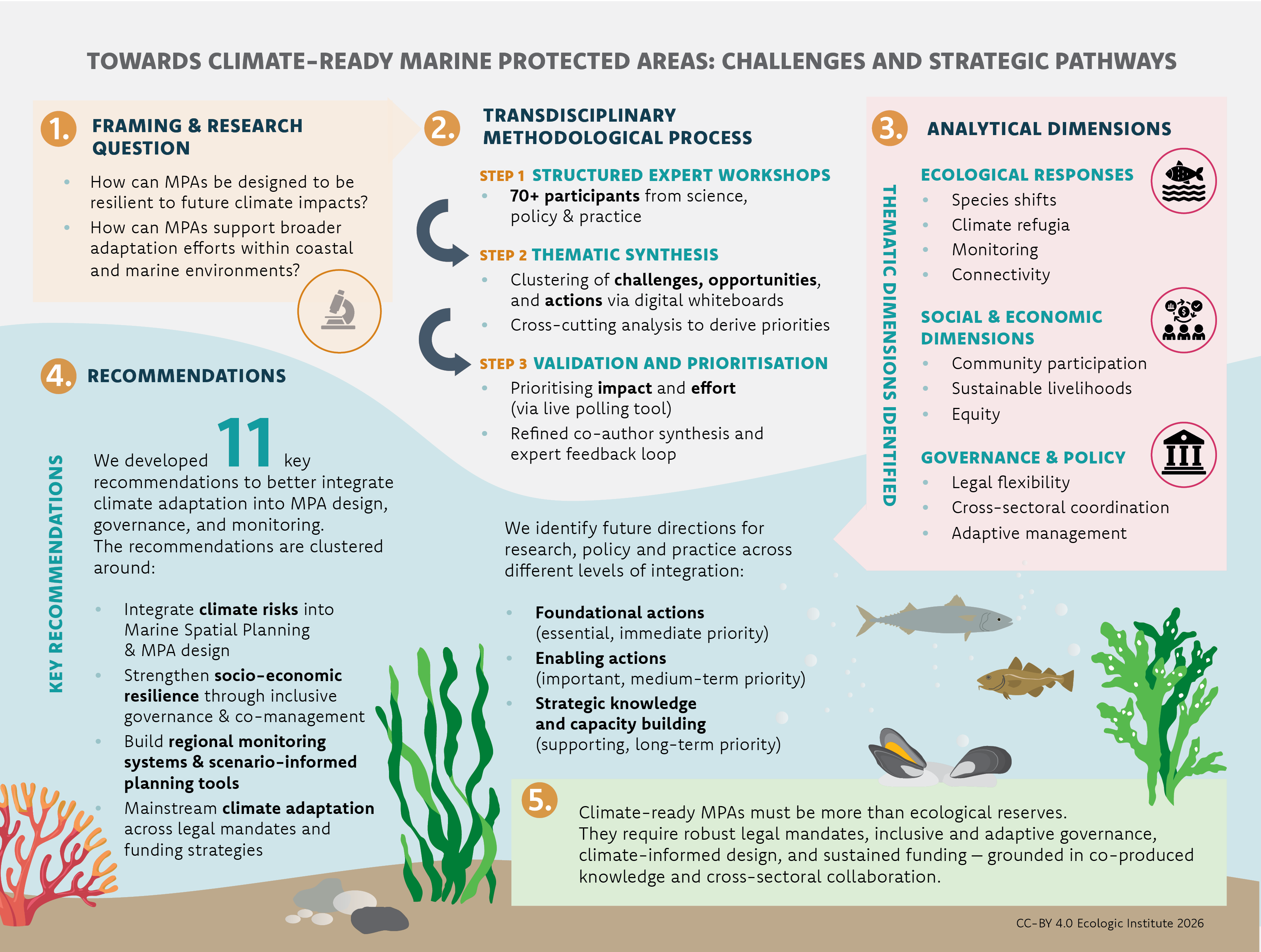
Ecologic Institute (2026): Towards climate-ready marine protected areas: challenges and strategic pathways. Infographic (Fig. 1) in: Fuchs, G., Stelljes, N., Kroos, F. et al. (2026): Towards climate-ready marine protected areas: challenges and strategic pathways. npj Ocean Sustainability, 5, 15. https://doi.org/10.1038/s44183-026-00184-3. Licensed under CC BY 4.0.
Fuchs, Gregory and Rebecca Noebel 2023: Die Wiederherstellung von Meeres- und Küstenökosystemen. Papier Nr. 6 der Policy Paper Reihe zur UN-Dekade für die Wiederherstellung von Ökosystemen (2021-2030). Federal Ministry for the Environment, Nature Conservation, Nuclear Safety and Consumer Protection, Berlin.