
Ecologic Institute Newsletter No 289 – October 2026
- Ecologic Institute Newsletter
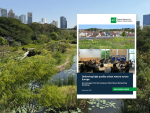
What Does It Take to Create High-quality Urban Nature? – Discussion Paper
More green spaces do not necessarily mean more biodiversity. So how can cities move beyond simply adding green space to creating urban nature that truly delivers for biodiversity and people? Drawing on a European expert workshop, a new discussion paper explores what it takes to turn ambitious restoration goals into action on the ground, from better coordination and biodiversity-sensitive planning to reliable financing, local capacity and smarter monitoring of ecological quality.
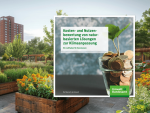
Making the Benefits of Nature-based Solutions Count in Municipal Decisions – Brochure
Urban trees, green roofs and restored rivers offer benefits far beyond climate adaptation, but how can municipalities account for these in their investment decisions? A new guide provides practical methods and tools to assess the costs and multiple benefits of nature-based solutions, helping local authorities make informed planning and funding decisions.
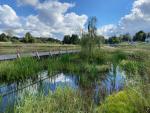
Putting Nature-based Solutions into Practice: Lessons from German Cities – Conference Presentation
Speech: Jenny Tröltzsch
What does it take to implement nature-based solutions successfully at the local level? At an international conference in Ljubljana, Ecologic Institute's Jenny Tröltzsch shared practical experiences from German cities, highlighting how integrated planning, stronger cooperation and stakeholder involvement can help overcome barriers to climate adaptation.
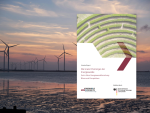
Six Years of Energy Transition Research: What Have we Learned? – Ariadne Report
What will it take to make the energy transition a success? Drawing on six years of research, the final Ariadne report identifies nine key challenges on the path to climate neutrality. From energy security and industrial competitiveness to fair cost distribution and public acceptance, it explores how technological innovation, effective policies and societal support must work together to drive the transition forward.
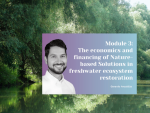
Financing Freshwater and Wetland Restoration: MERLIN Academy's Learning Module 3 – Video
How can restoration projects secure the funding they need? A free MERLIN Academy learning module explores the economics and financing of freshwater and wetland restoration. Through practical tools and guidance, participants learn how to identify suitable funding sources, assess financing mechanisms, and develop financial solutions to support ecosystem restoration across Europe.
Bringing Sustainability into Medical and Pharmaceutical Training: A Political Roadmap for Germany – Article
Sustainability remains largely absent from mandatory medical and pharmaceutical education in Germany. How can this change? A new research article identifies barriers to integrating sustainability into training and presents a political roadmap for embedding it in curricula. Freely available teaching materials offer practical support for educators, with a particular focus on the environmental impacts of pharmaceuticals.
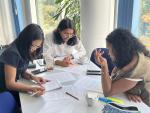
From Cities to Seas: Humboldt Fellows Explore Nature-based Solutions and Ecosystem-based Governance – Visitors Programme
How can nature-based solutions and ecosystem-based governance be put into practice across different regions and contexts? During a visit to Ecologic Institute in Berlin, International Climate Protection Fellows of the Alexander von Humboldt Foundation explored approaches to urban climate adaptation and sustainable marine management through interactive workshops and interdisciplinary exchange.
Join us this autumn
Advertising, Consumer Norms and Climate Policy
25 November 2026 | Vienna and online | NormTransform Symposium
Contents
| ► | What Does It Take to Create High-quality Urban Nature? – Discussion Paper |
| ► | Making the Benefits of Nature-based Solutions Count in Municipal Decisions – Brochure |
| ► | Putting Nature-based Solutions into Practice: Lessons from German Cities – Conference Presentation |
| ► | Six Years of Energy Transition Research: What Have we Learned? – Ariadne Report |
| ► | Financing Freshwater and Wetland Restoration: MERLIN Academy's Learning Module 3 – Video |
| ► | Bringing Sustainability into Medical and Pharmaceutical Training: A Political Roadmap for Germany – Article |
| ► | From Cities to Seas: Humboldt Fellows Explore Nature-based Solutions and Ecosystem-based Governance – Visitors Programme |
| ► | Join us this autumn |
| ► | We are hiring |