Foto von Volodymyr Hryshchenko auf Unsplash
Sustainability in Pharmaceutical and Medical Education
A political roadmap for Germany
- Publication
- Citation
Woitaske-Proske C, Kemper M, Zinke L, Vidaurre R, Strehse JS, Maser E, Maack G, Amato R, Hein A, Peifer C (2026), "Sustainability in pharmaceutical and medical education – a political roadmap for Germany". International Journal of Sustainability in Higher Education, Vol. ahead-of-print No. ahead-of-print. https://doi.org/10.1108/IJSHE-11-2025-1479
How can sustainability be firmly embedded in the education of medical and pharmaceutical professionals? A research article in the International Journal of Sustainability in Higher Education explores this question in the German context. The authors identify structural barriers that currently hinder the systematic integration of sustainability and present a political roadmap for higher education, vocational training and continuing professional development. They also provide freely available teaching materials designed to facilitate the integration of sustainability into existing curricula and teaching programmes.
From individual teaching initiatives to structural integration
The study addresses a gap in the German education system: sustainability is not currently a mandatory component of medical and pharmaceutical education. At the same time, limited time, a lack of subject-specific expertise and the effort involved in developing teaching materials can prevent educators from incorporating additional sustainability content into their courses. The authors therefore address the issue at two levels. Their political roadmap identifies ways to embed sustainability more systematically across higher education, vocational training and continuing professional development. At the same time, ready-to-use materials are intended to lower practical barriers to integrating the topic into teaching.
Pharmaceuticals and the environment as a teaching topic
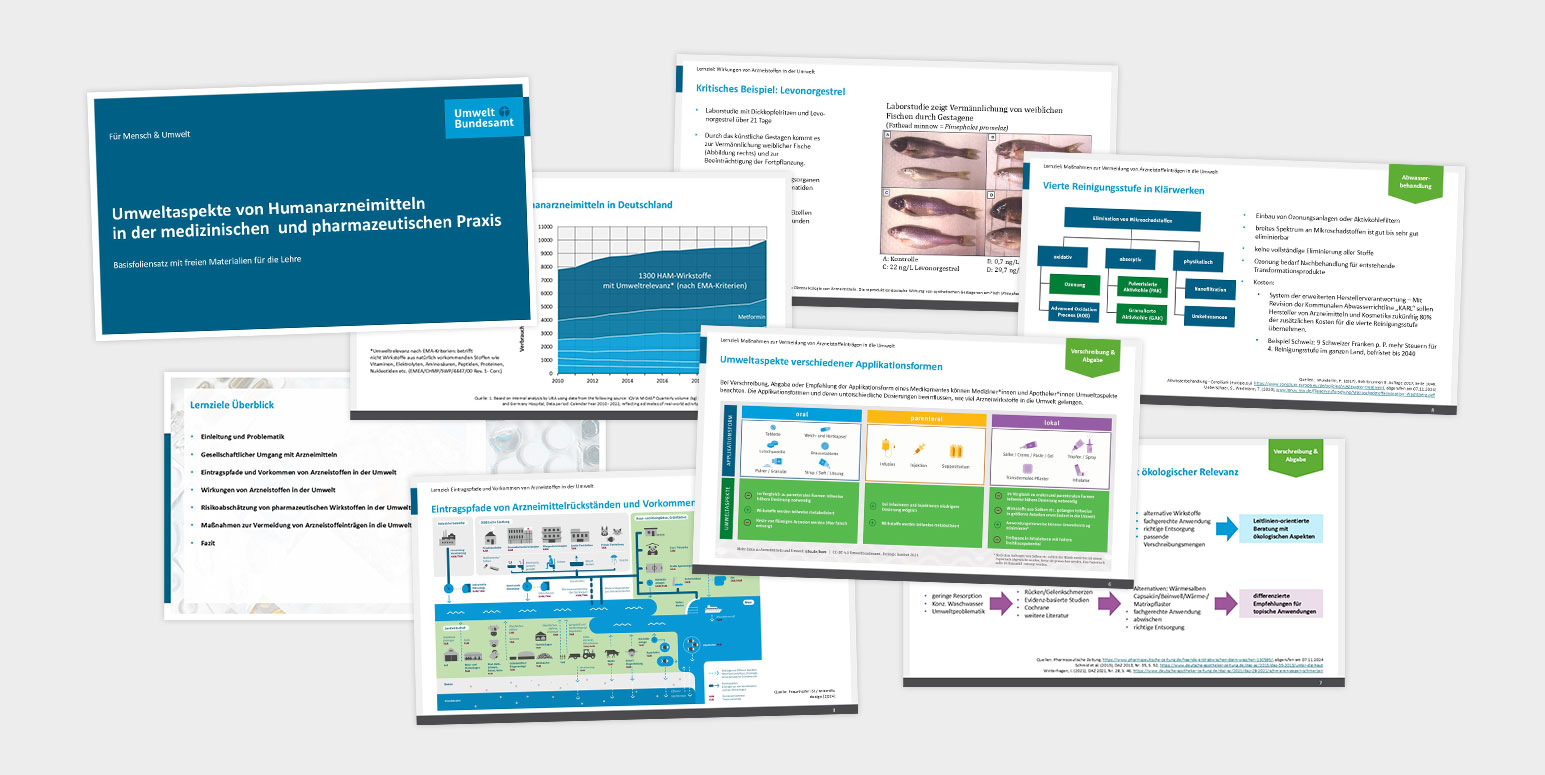
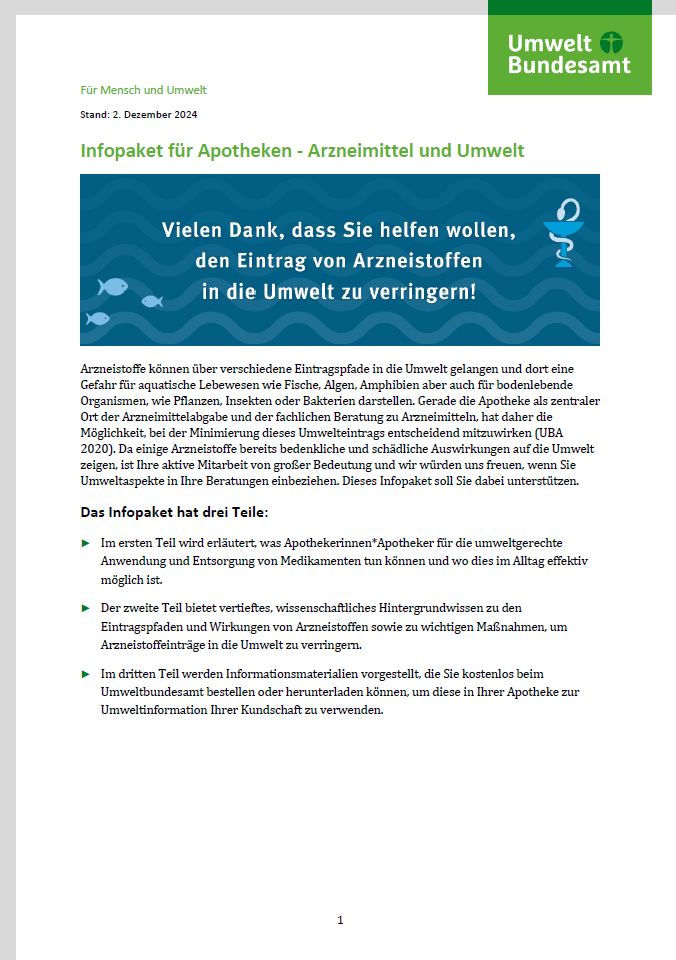
The resources developed include open-access, freely editable teaching slides, accompanying explanatory texts, information materials and a dedicated website. A particular focus is placed on the environmental impacts of pharmaceuticals. The materials explain, among other aspects, how pharmaceutical residues enter the environment and what health-care professionals and patients can do to reduce these emissions. In this way, the work links recommendations for education policy with practical resources that can be incorporated directly into teaching.
Creating structures and supporting implementation
The authors highlight that strengthening sustainability in health-care education requires both institutional integration and practical support for educators. The political roadmap addresses the structural dimension, while the freely available and adaptable teaching materials are designed to facilitate implementation in educational practice.
Contact