Foto von Manuel Rheinschmidt auf Unsplash, Study: npj Ocean Sustain, 2026
Towards Climate-ready Marine Protected Areas
Challenges and strategic pathways
- Publication
- Citation
Fuchs, G., Stelljes, N., Kroos, F. et al. Towards climate-ready marine protected areas: challenges and strategic pathways. npj Ocean Sustain 5, 15 (2026). https://doi.org/10.1038/s44183-026-00184-3
Marine Protected Areas (MPAs) are essential for safeguarding biodiversity, maintaining ecosystem services, and strengthening the resilience of marine social-ecological systems. As climate change intensifies, however, their effectiveness increasingly depends on how well climate considerations are integrated into their design, management, and governance.
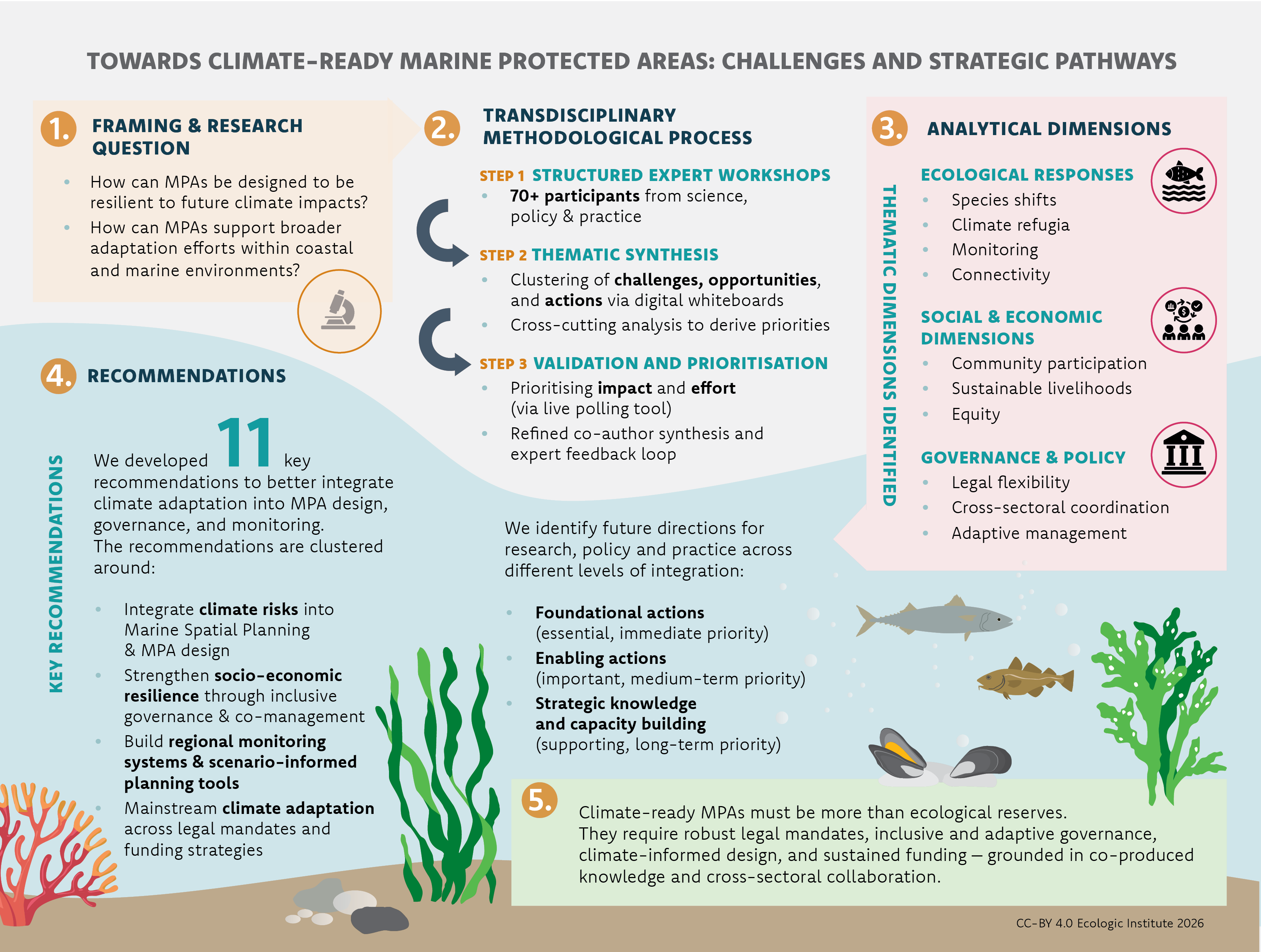
Drawing on structured expert workshops across Europe, this study identifies key scientific, governance, and socio-economic conditions needed for making MPAs “climate-ready”. The findings highlight that such MPAs must be ecologically robust, socially inclusive, underpinned by coherent governance frameworks, and capable of adapting to changing ocean conditions.
Key priorities for climate-ready MPAs
Experts identified four strategic priorities:
- Improving ecological monitoring and climate-informed spatial planning, including connectivity and climate refugia
- Embedding equity and participatory governance to strengthen social legitimacy
- Aligning legal and institutional frameworks across sectors and governance levels
- Securing sustainable, long-term financing
From priorities to action
- Building on these priorities, the transdisciplinary process developed eleven recommendations, grouped as:
- Foundational actions to establish enabling conditions
- Enabling actions to support implementation
- Long-term strategic actions to ensure adaptive capacity
Together, they provide a pathway for strengthening the climate-readiness of MPAs and MPA networks in Europe and beyond.
Project context
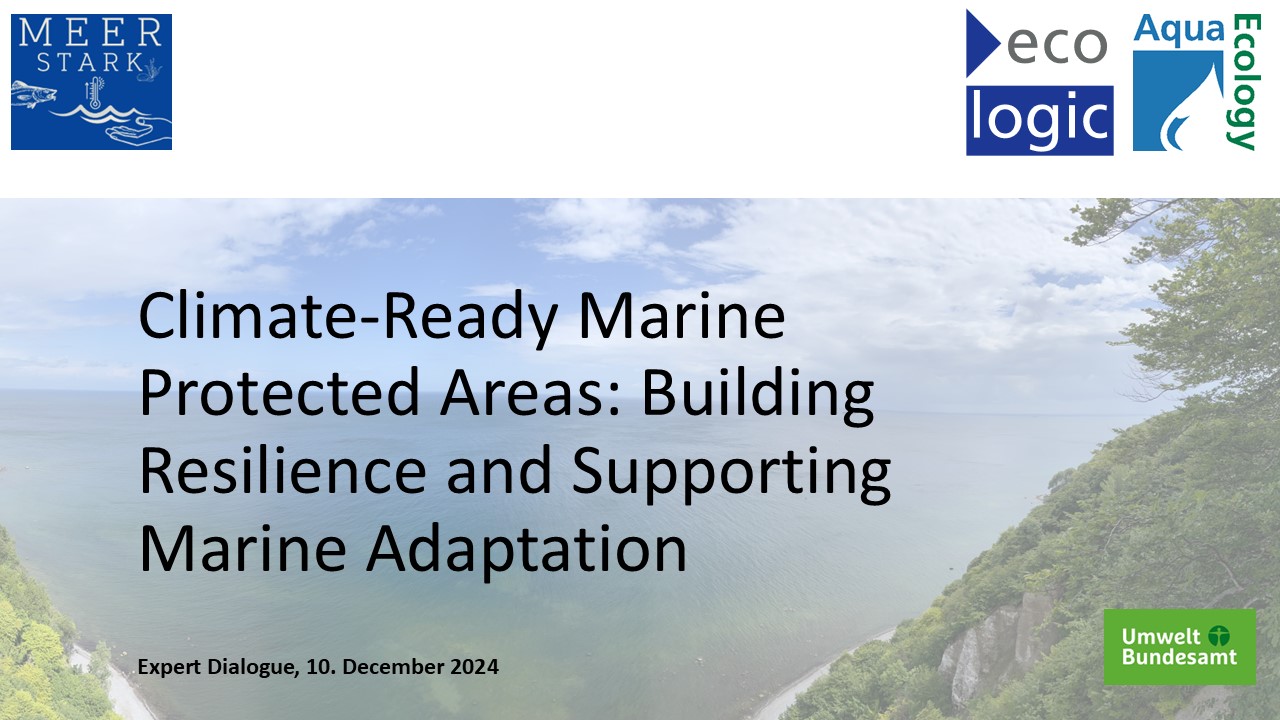
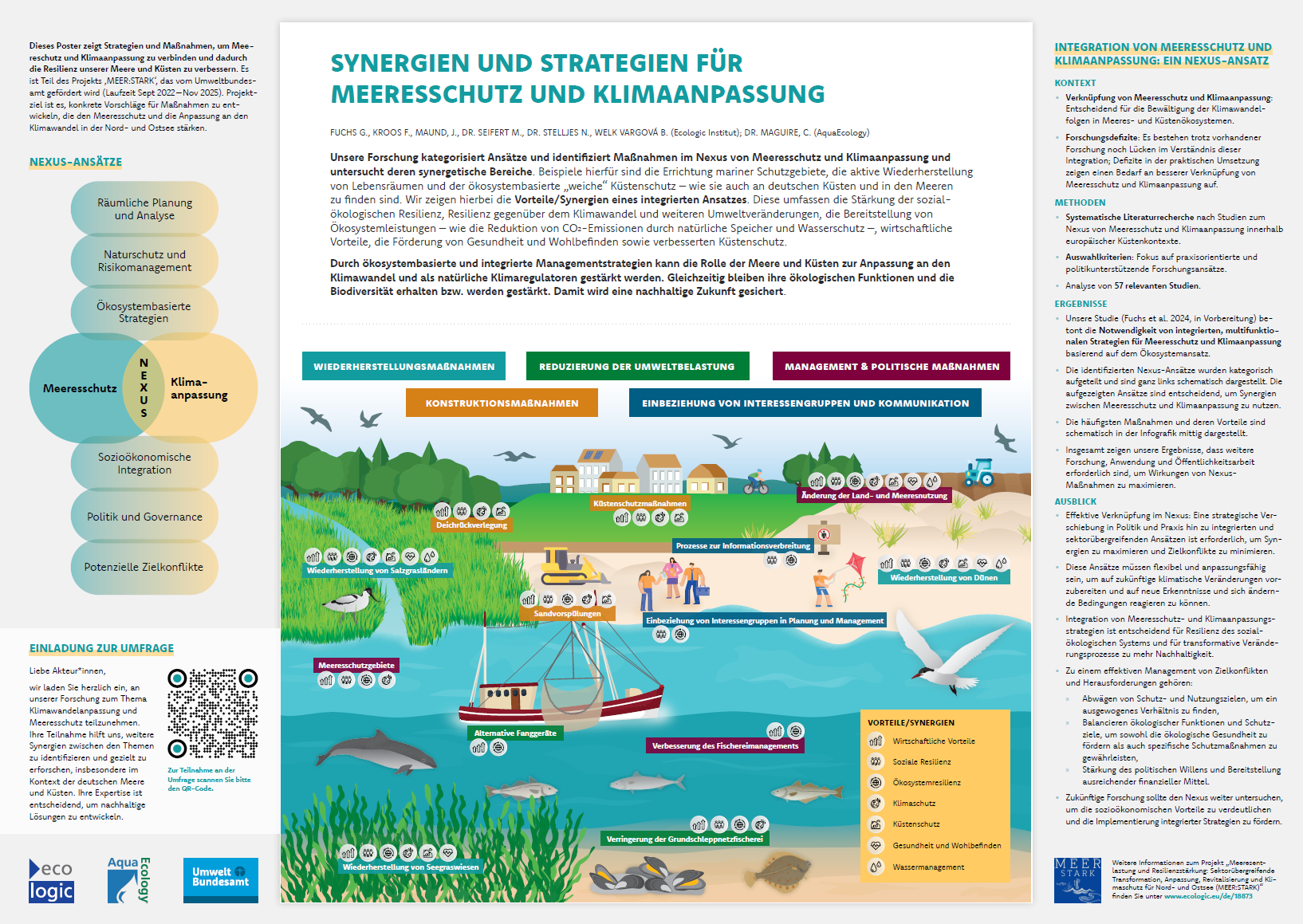
This work was developed as part of the project “Resilience and Climate Adaptation for the North and Baltic Sea” (MEER:STARK), led by Ecologic Institute on behalf of the German Environment Agency (UBA). The project focuses on developing concrete, cross-sectoral recommendations to strengthen marine protection and climate adaptation, supported by expert dialogue and stakeholder engagement across policy, science, and practice.


Contact