This brochure is aimed at veterinarians. It provides information on how veterinary medicines enter the environment, explains their environmental impact and shows how environmental aspects can be taken into account in daily veterinary work. The advisory role of veterinary medicine in relation to preventive health management is of particular importance.
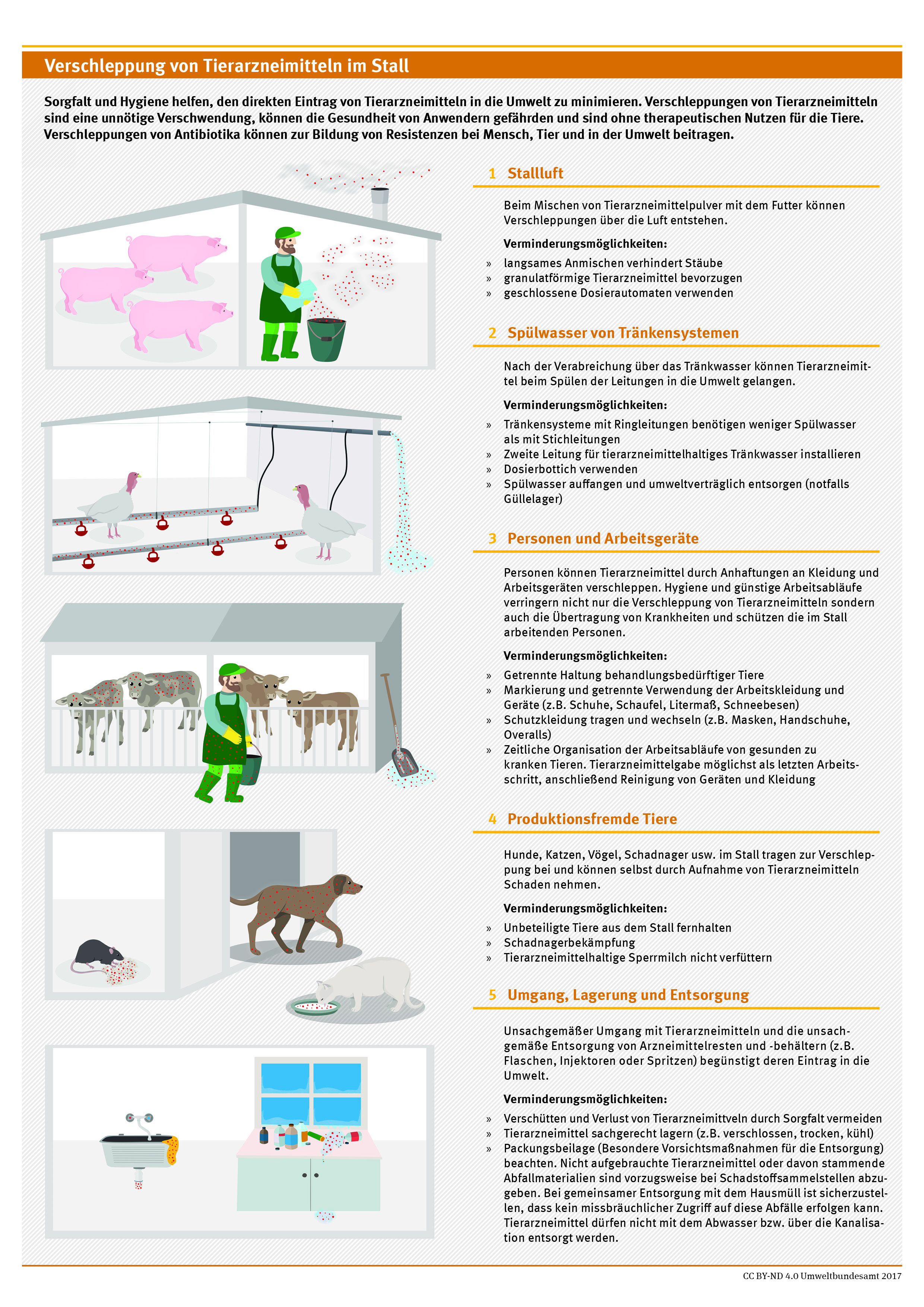
Care and hygiene help to minimise the direct entry of veterinary medicines into the environment. Carry-over of veterinary medicines is an unnecessary waste, can endanger the health of operators and have no therapeutic benefits for animals. Carry-over antibiotics can contribute to the development of resistance in humans, animals and the environment. This infographic illustrates five ways to reduce the carry-over of veterinary medicines in the barn.
This brochure is aimed at farmers. It provides information on how veterinary medicines enter the environment and explains their environmental impact. It also identifies ways in which environmental aspects can be taken into account in the application of veterinary medicinal products and the use of fertilisers containing veterinary medicinal products. Precautionary health measures are of particular importance. Veterinary medicines that do not need to be administered in the first place cannot harm the environment.
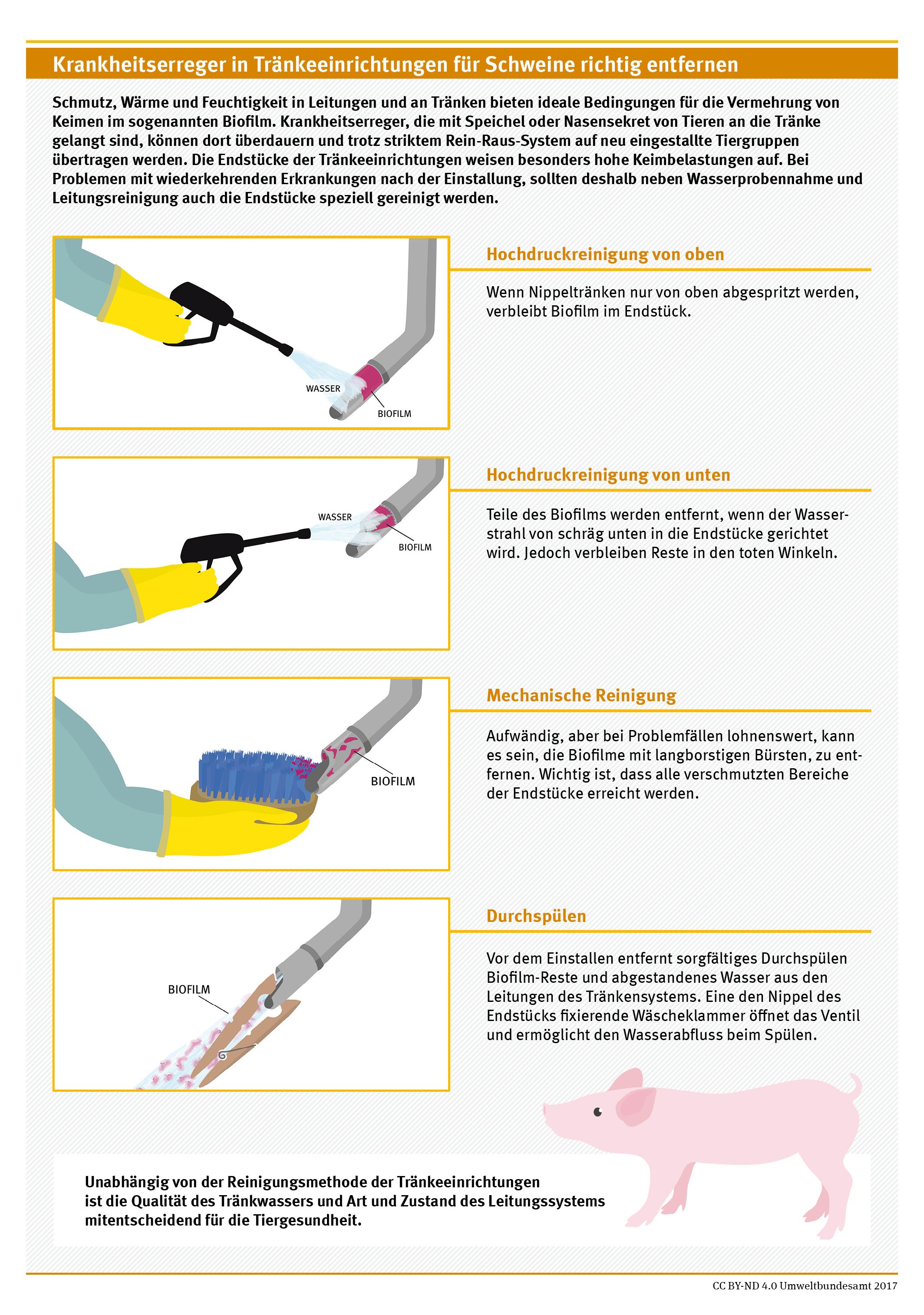
The infographic illustrates the advantages and disadvantages of four different cleaning methods for nipple drinks in pigsties with drawings. Dirt, heat and moisture in pipes and on drinking troughs provide ideal conditions for the propagation of germs in the so-called biofilm. Pathogens that have reached the drinking trough with saliva or nasal secretions from animals can survive there and can be transmitted to new animal groups.
In January 2018 the European Commission adopted an Action Plan to improve compliance with EU environmental rules. Ecologic Institute and its partners support the European Commission in implementing the Action Plan. In particular, the project assists the European Commission in the development of good practice guidance documents on combating environmental crimes, on compliance assurance in rural areas and on handling environmental complaints of citizens as well as with the communication on the Action Plan.
Wunder, Stephanie; Timo Kaphengst; Ana Frelih-Larsen (2017): Implementing land degradation neutrality (SDG 15.3) at national level: general approach, indicator selection and experiences from Germany. In: Ginzky, H. et. al. (eds.): International Year Book of Soil Law and Policy, 191-219.
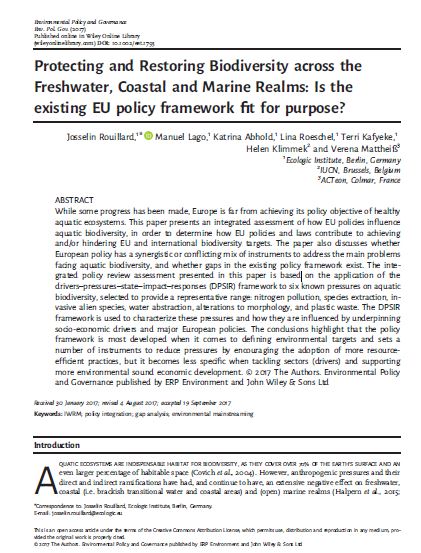
This paper presents an integrated assessment of how EU policies influence aquatic biodiversity in order to determine how EU policies and laws contribute to achieving and/or hindering EU and international biodiversity targets. The authors from Ecologic Institute, IUCN, and ACTeon also discuss whether European policy has a synergistic or conflicting mix of instruments to address the main problems facing aquatic biodiversity, and whether there are any gaps in the existing policy framework. The article is available for download.
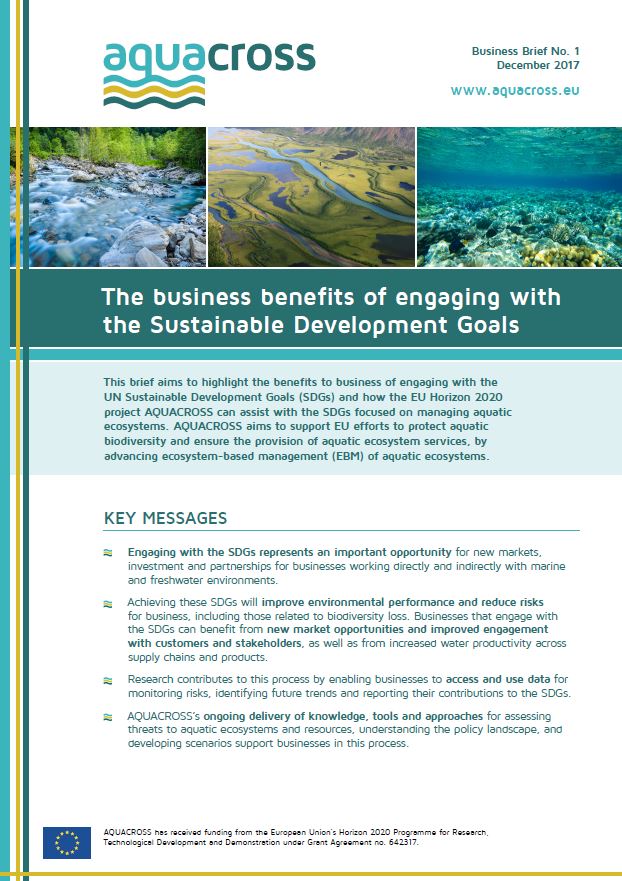
This brief aims to highlight the benefits to business of engaging with the UN Sustainable Development Goals (SDGs) and how the EU Horizon 2020 project Knowledge, Assessment, and Management for Aquatic Biodiversity and Ecosystem Services Across EU Policies (AQUACROSS) can assist with the SDGs focused on managing aquatic ecosystems. The business brief is available for download.
The EU project "Implementation of the EU's Action Plan for nature, people and the economy" responds to the EU Nature Directives' Fitness Check and aims to contribute to the improvement of the Nature Directives implementation. It seeks to support the Commission in the delivery of specific sub-actions of the EU Action Plan for nature, people and the economy under the Priority B 'Building political ownership and strengthening compliance'. The project is led by the Institute for European Environmental Policy (IEEP) and is supported by Ecologic Institute and the N2K Group EEIG composed of five companies from different European regions.
As an output of the research project "European Union Action to Fight Environmental Crime" (EFFACE), which was coordinated by Ecologic Institute, an edited volume entitled "Environmental Crime in Europe" was published by Hart Publishing. Dr. Stephan Sina, Senior Fellow at Ecologic Institute, contributed a chapter on environmental crime in Germany. In this chapter, he describes the legal framework on environmental crime in Germany and assesses its conformity with the EU's Environmental Crime Directive.
On 13 December 2017 the China Emissions Exchange and the European Commission hosted a conference in Shenzhen on emissions trading in China and the EU. The conference was organized by Ecologic Institute. The event brought together experts from the world's largest emissions trading scheme, the EU ETS, and China's future major emissions trading scheme. The conference took stock of what emissions trading in the EU and China have achieved so far and what lessons can be drawn from it. Moreover, the event dealt with how emissions trading can contribute to mastering future climate policy challenges. The presentation slides are available online.
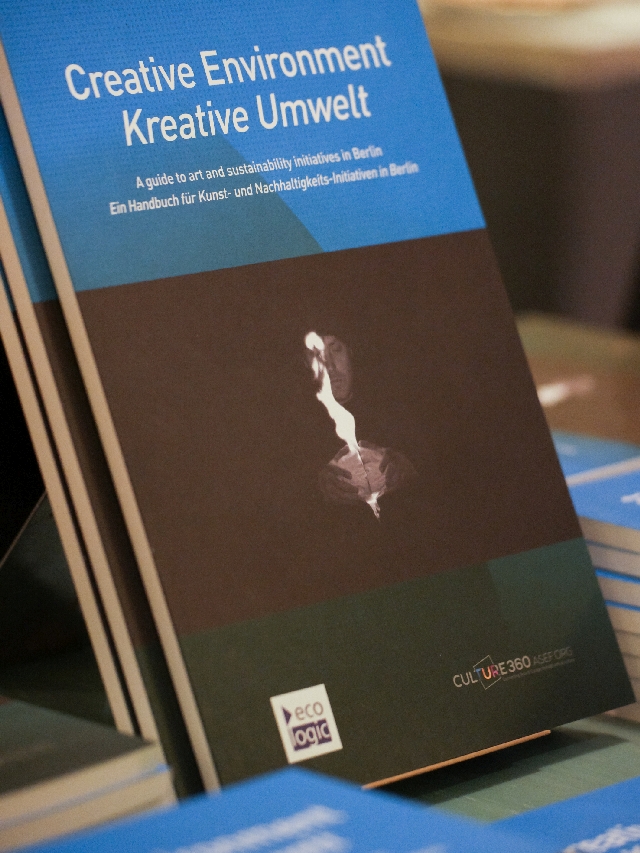
The fruits of Yasmine Ostendorf's Writer-in-Residence term at Ecologic Institute were presented at a festive December evening at Zabriskie Bookshop. The publication "Creative Environment – A guide to art and sustainability initiatives in Berlin" was rolled out to a vibrant group of scientists, artists, curators and the general public. The publication is available online and in hard copy.
In December 2017 the publication "Creative Environment – a guide to art and sustainability initiatives in Berlin" was published by Ecologic Institute. The guide is the result of Ecologic Institute's inaugural Writer-in-Residence program. Curator Yasmine Ostendorf spent two months conducting interviews and researching initiatives in Berlin that are working in the shared spaces between art and sustainability.
Shortly before Christmas 2017, decision makers from the Midwest in the USA and Canada took the opportunity to come to Germany and get a feel for the many different facets and recent developments of German energy policy. The group consisted of US representatives from Illinois, Kansas and Wisconsin, as well as Canadian members of the legislative assembly from Saskatchewan and Manitoba. During the tour, participants were able to meet and engage with representatives from federal ministries and agencies, municipalities, the German parliament, think tanks, as well as businesses and embassies.
On 8 December 2017, Dr. Stephan Sina, Senior Fellow at Ecologic Institute, presented a comparative overview of climate change laws at state level in Germany at a workshop on the further development of the Climate Change Act for Baden-Württemberg. He focused on common features and differences in the existing climate change acts, and highlighted elements of interest for the amendment of the Climate Change Act for Baden-Württemberg.