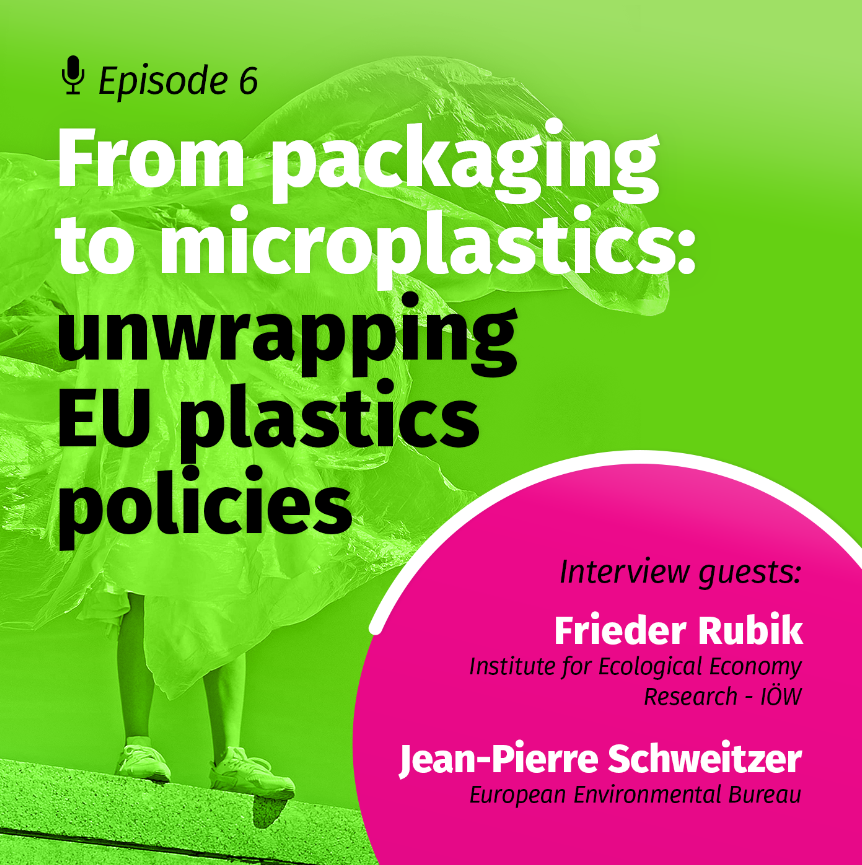
Since we learned how to produce plastic, humans have manufactured more than 8.3 billion tons of it – most of which ended up as waste somewhere on the planet. This leads plastic waste to enter the landscape, rivers, beaches, and eventually ocean. We asked our listeners what, in their opinion, is the issue with plastic pollution. The answers ranged from negative impacts on human health and the environment to lack of recycling infrastructure and the global dimension of the plastics problem.
This webinar was jointly organised by the projects: INTERLACE, CONEXUS, REGREEN and CLEARING HOUSE as an official side-event of the European Week of Regions and Cities 2022. The webinar brought together about 500 representatives from cities, regions and local authorities, city network representatives, policy-makers, researcher, civil society and experts on nature-based solutions and urban ecosystem restoration from Europe, China and Latin America.
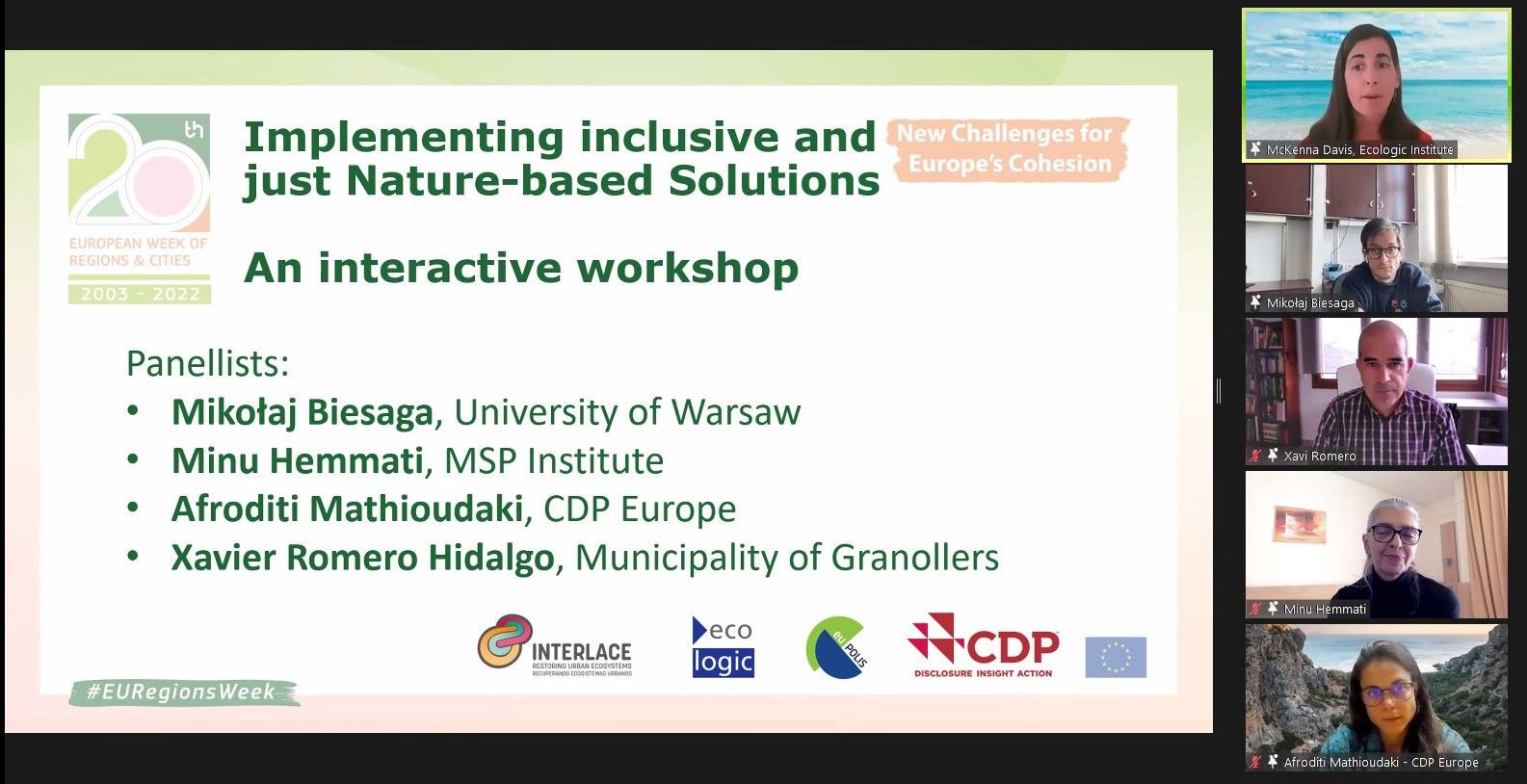
Nature-based Solutions (NBS) for EU cities and regions represent an integral part of the EU's transition to achieving climate neutrality. In this panel, moderated by Ecologic Institute's McKenna Davis, experts discussed effective, just and inclusive strategies to design, implement and manage NBS, while engaging under-represented or marginalised stakeholders. The event was part of the European Week of Regions and Cities.
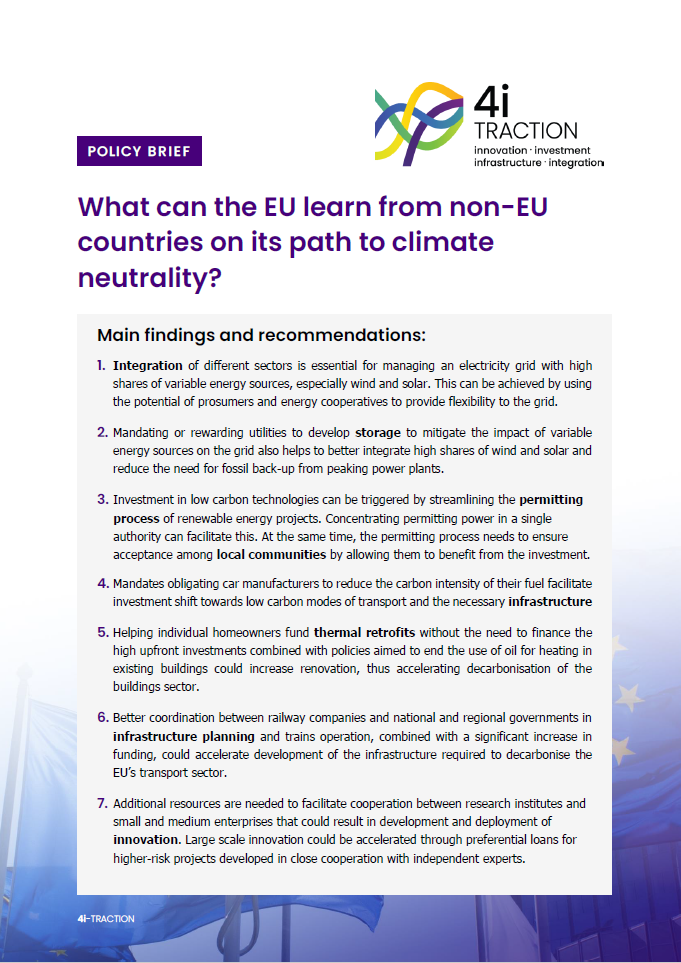
This policy brief summarizes the results of 17 case studies of non-EU countries. It presents the main lessons and takeaways for the EU along the four challenges that define the 4i-TRACTION project: facilitating integration across sectors, shifting investments, rolling out infrastructure and fostering innovation for a climate-neutral economy.
In her presentation, titled "Evaluating environmental policies with citizen science data? An example from the Plastic Pirates investigating plastic pollution of rivers", Linda Mederake (Ecologic Institute) presented an approach to evaluate the Single-Use Plastics Directive with the help of citizen science data.
This webinar presented and discussed a report by Ecologic Institute on national frameworks for CDR. The report assessed the CDR policy frameworks of all 27 Member States and made recommendations on how to improve them.
This study analyses the objectives, targets and activities of the EU Mission 'Restore our ocean and waters by 2030'. It proposes a draft set of indicators for measuring the Mission's progress, maps major stakeholders and networks, and offers recommendations for the future implementation of the Mission.
This research report presents case study results of selected climate policies in non-EU countries. Based on the analysis, it develops recommendations how the experience of other countries can inform EU policymaking.
In her plans for 2023 addressed to the EU Parliament, President of the EU Commission von der Leyen did not mention the proposal for a Sustainable Food System legislative framework (SFSF). This created speculation about the timeframe of this key proposal, which has been put forward as a cornerstone of the EU Green Deal for the agri-food sector. This blogpost, co-signed by members of the Think Sustainable Europe network, underlines the importance of the SFSF to be proposed next year in order to drive a sustainable transition of the EU food system, given the urgency of such a transition.
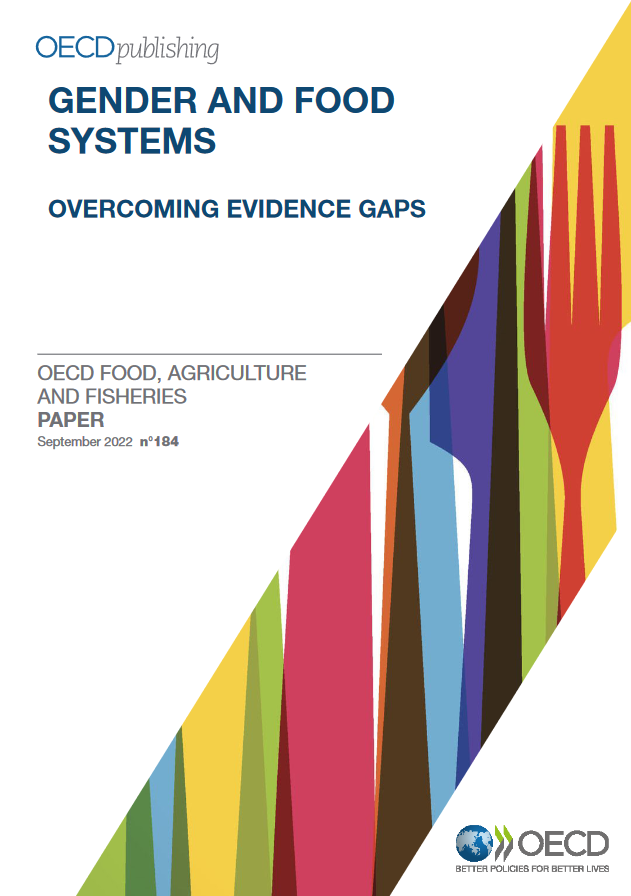
This report calls for the development of better evidence on gender and food systems as a necessary first step in the path towards gender equality. Based on OECD countries' experiences, it provides a roadmap to identify and overcome evidence gaps on gender aspects and policies that address gender inequality in food systems with the aim of advancing women's contribution to food systems.
From 21 to 22 September 2022, the INTERLACE project held the first European Cities Talk Nature Engagement Event in Kraków (Poland). Sandra Naumann, Coordinator of the INTERLACE project and Senior Fellow at Ecologic Institute, opened the conference by presenting the INTERLACE project and its work on the ground to the audience.
The Commission's proposal on the certification of Carbon Dioxide Removals (CDR) could be a milestone of EU climate policy making. It can put the EU on the right track – with a watertight CDR definition, and a firewall between removals and reductions; or the wrong track – dubious low-impact carbon removal schemes that pretend to offset what cannot be offset. As the integrity of EU climate policy is at stake, the EU cannot afford to take the wrong turn, writes Nils Meyer-Ohlendorf in the EU Observer.
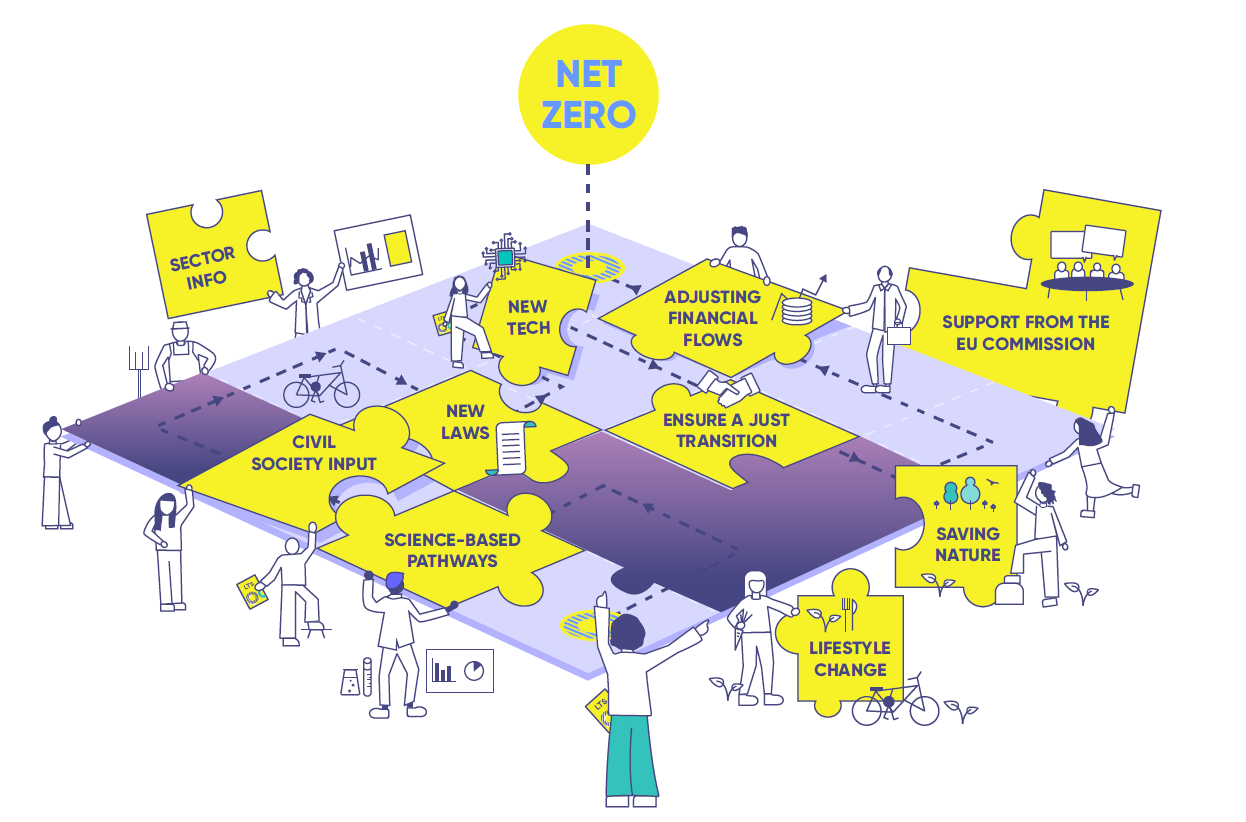
Preparing and then adopting a robust and sufficiently detailed long-term climate strategy is a crucial step. These strategies should include pathways that identify the necessary changes in the main emitting sectors and the economy as a whole. The plans need to take into consideration the specific national starting conditions and include economic, technical and social aspects, as well as other long-term objectives (e.g., adaptation needs or biodiversity goals). This infographic shows puzzle pieces that should be considered when developing strategies for moving toward net-zero emissions.
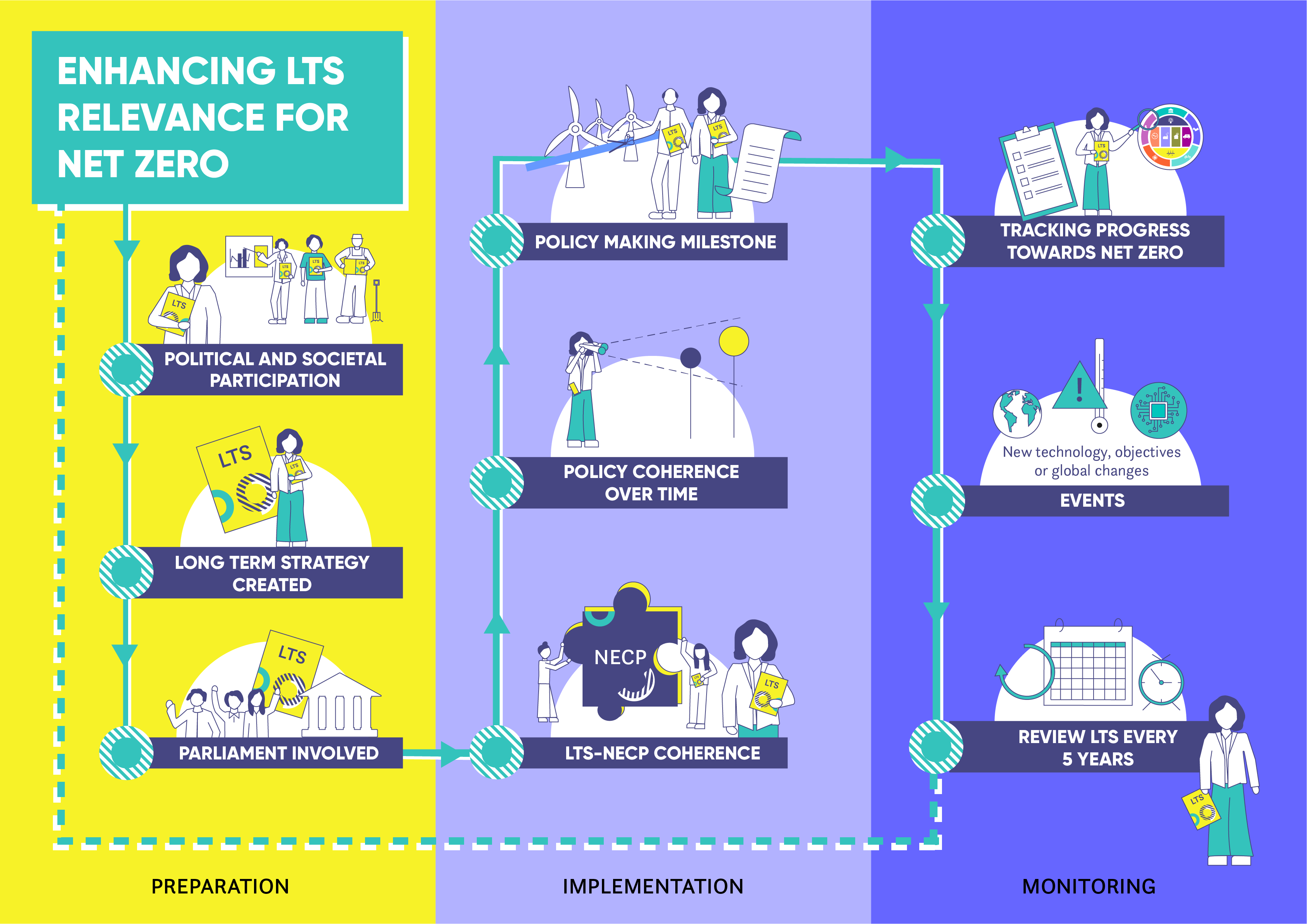
This infographic visualizes the proposed three-step process (preparation, implementation, monitoring) for EU member states to strengthen LTS relevance for net-zero. It's part of the report "Charting a Path to Net Zero. An assessment of national long-term strategies in the EU." The report presents the findings from an assessment of 22 long-term strategies (LTSs) of the EU Member States available as of March 2022. It is complemented by a briefing that summarizes the key findings and recommendations.
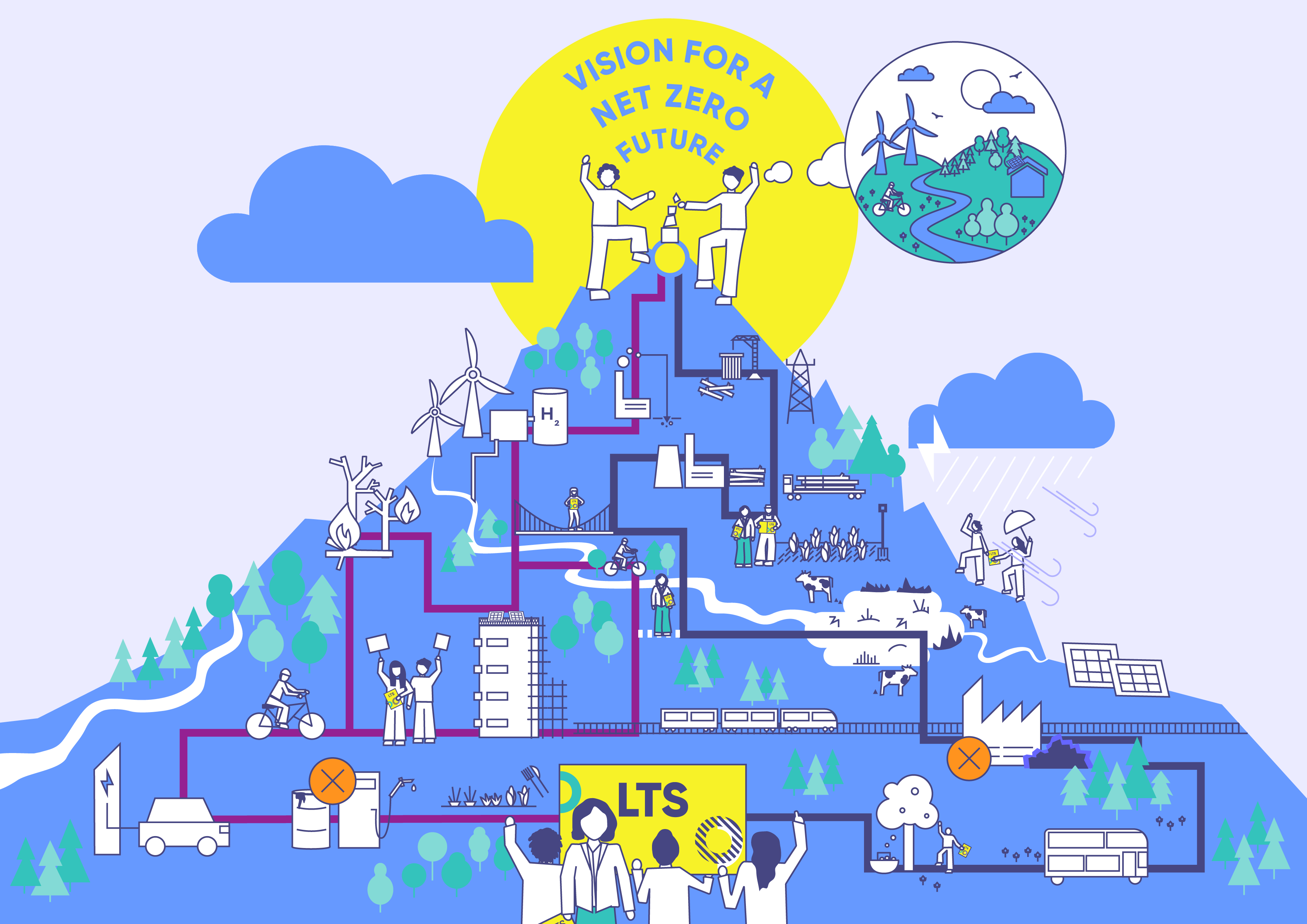
All EU member states should be clear on the role of emission reductions and removals, and ideally include specific long-term reduction and removal targets. LTSs should provide information about when and how these reductions and removals will be realised. This means strategies must include a description of pathways, including interim targets, to paint a clear picture of what needs to happen in the short- and longer term. This infographic visualizes different pathways of long-term strategies. It's part of the report "Charting a Path to Net Zero. An assessment of national long-term strategies in the EU." The report presents the findings from an assessment of 22 long-term strategies (LTSs) of the EU Member States available as of March 2022. It is complemented by a briefing that summarizes the key findings and recommendations.