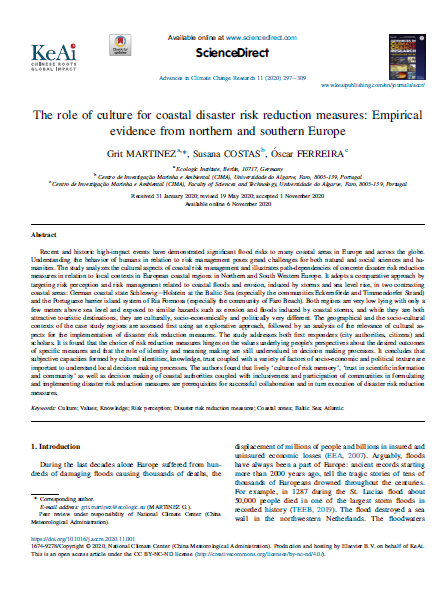
Recent and historic high-impact events have demonstrated significant flood risks to many coastal areas in Europe and across the globe. Understanding the behavior of humans in relation to risk management poses grand challenges for both natural and social sciences and humanities. The study analyzes the cultural aspects of coastal risk management and illustrates path-dependencies of concrete disaster risk reduction measures in relation to local contexts in European coastal regions in Northern and South Western Europe. Dr. Grit Martinez from Ecologic Institute co-authored the journal article.
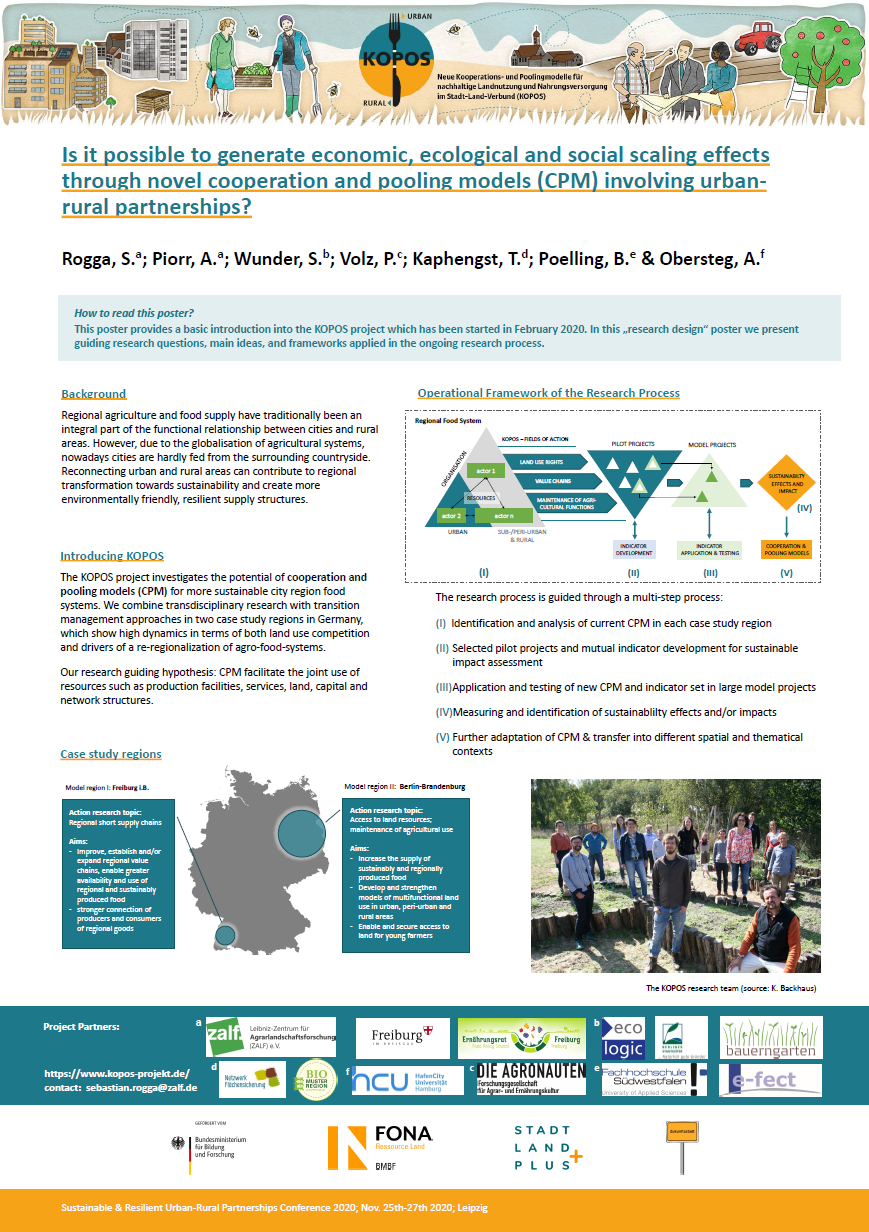
This poster provides a basic introduction into the KOPOS project, which has been started in February 2020. In this "research design" poster guiding research questions, main ideas, and frameworks applied in the ongoing research process are presented. The poster was designed according to the project's style guidelines for the "Sustainable & Resilient Urban-Rural Partnerships Conference 2020" in Leipzig.
The RECIPES project aimed to develop new tools and guidelines to ensure the precautionary principle is applied while still encouraging innovation. The objective was to address and reduce societal controversy while helping policymakers and other stakeholders to assess risks and uncertainty and applying the precautionary principle taking into account innovation. This series of fact sheets condenses the joint research project case studies and presents them consistently in the project design, developed by Ecologic Institute.
This hands-on guidance document supports regional actors in designing viable business models for the bioeconomy. Based on practical experiences from five Open Innovation Platforms (OIPs) across Europe, it outlines how to analyse regional market conditions, engage diverse stakeholders and translate promising bio-based product ideas into actionable business strategies. The result: a modular toolkit to unlock local biomass potential and drive sustainable rural development.
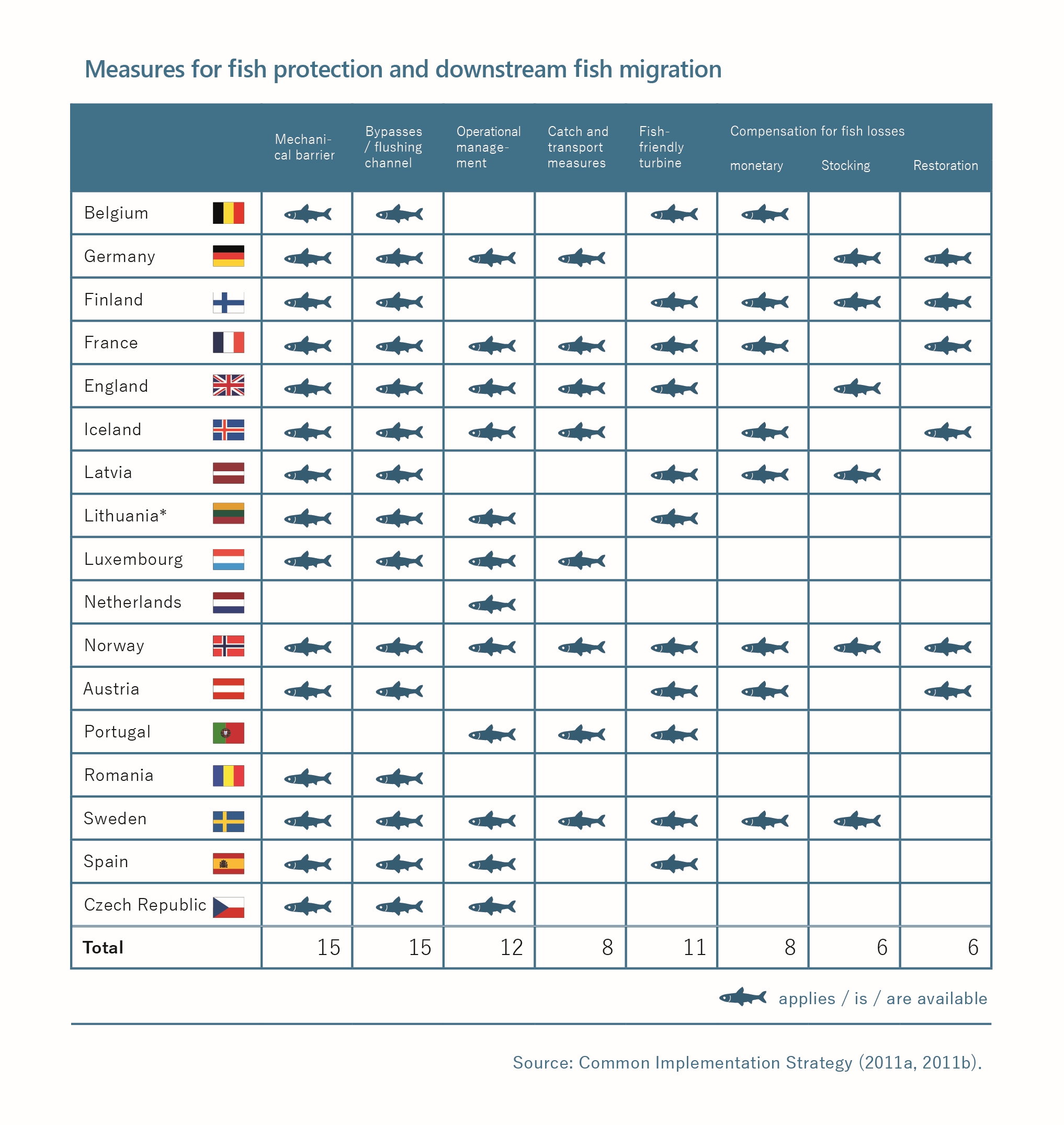
This infographic provides an overview of the Measures for fish protection and downstream fish migration in Europe. The infographic is part of a fact sheet on fish protection targets in Europe.
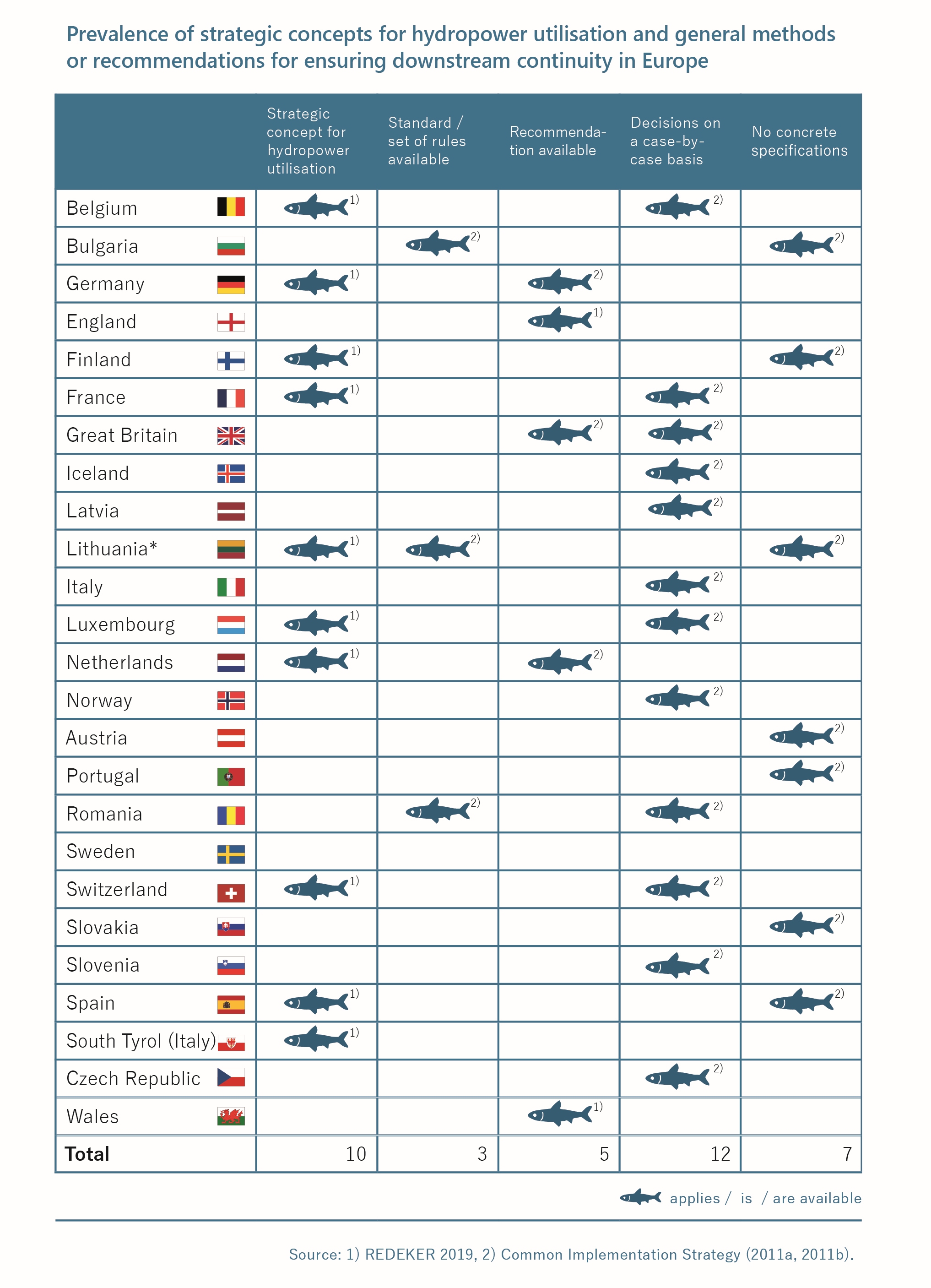
This infographic provides an overview of the prevalence of strategic concepts for hydropower utilisation and general methods or recommendations for ensuring downstream continuity in Europe. The infographic is part of a fact sheet on fish protection targets in Europe.
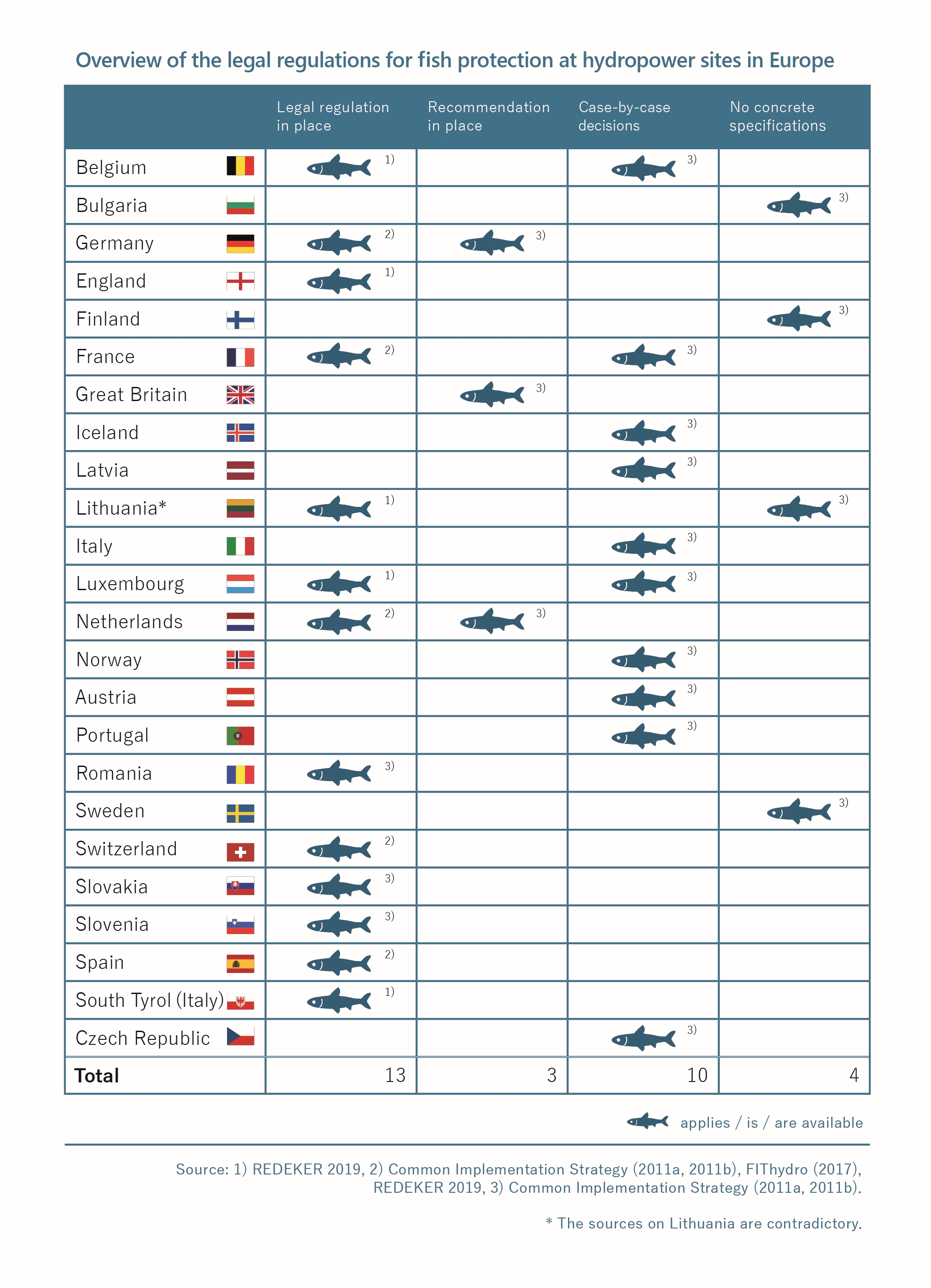
This infographic provides an overview of the legal regulations for fish protection at hydropower sites in Europe. The infographic is part of a fact sheet on fish protection targets in Europe.
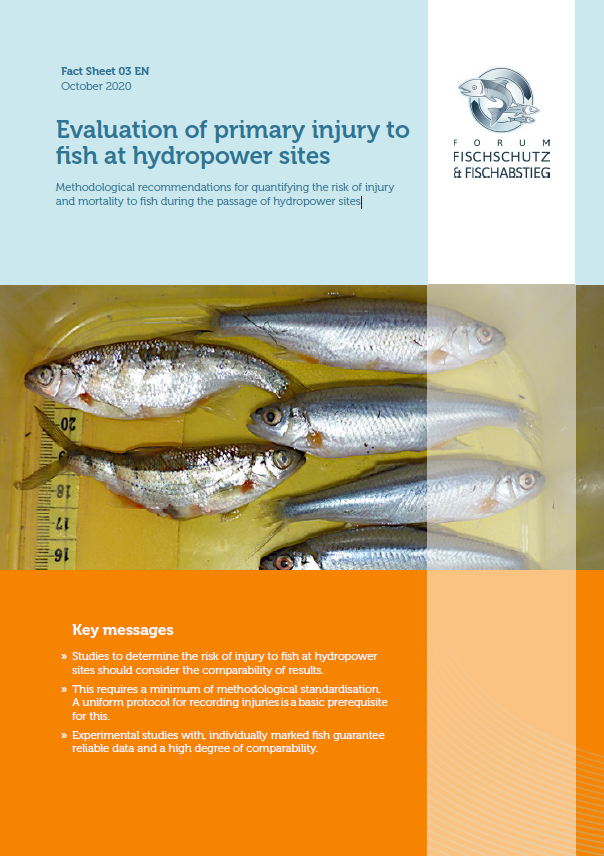
This Fact Sheet provides methodological recommendations for quantifying the risk of harm and mortality to fish during passage from hydropower sites. The fact sheet "Evaluation of primary injury to fish at hydropower sites" is available for download.
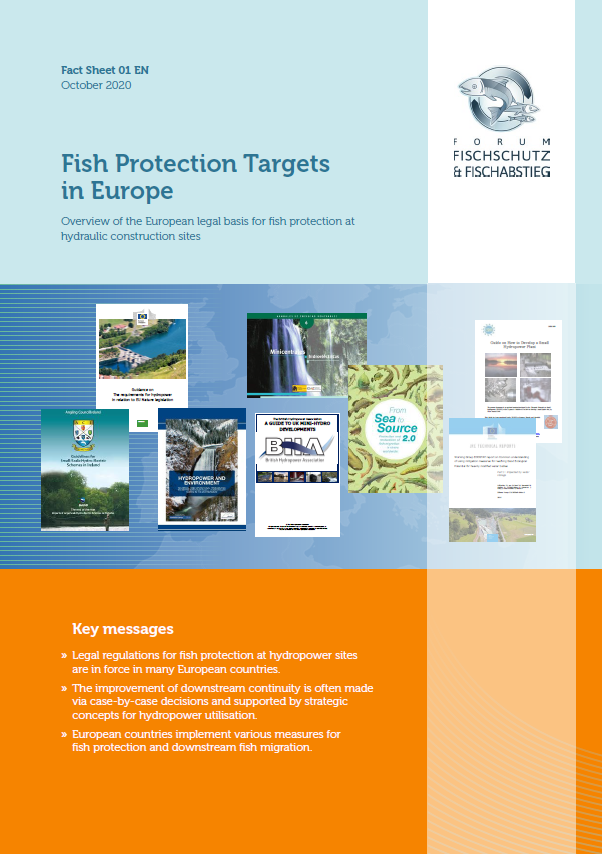
This Fact Sheet provides an overview of the European legal basis for fish protection at hydraulic engineering structures. The fact sheet "Fish protection targets in Europe" is available for download.
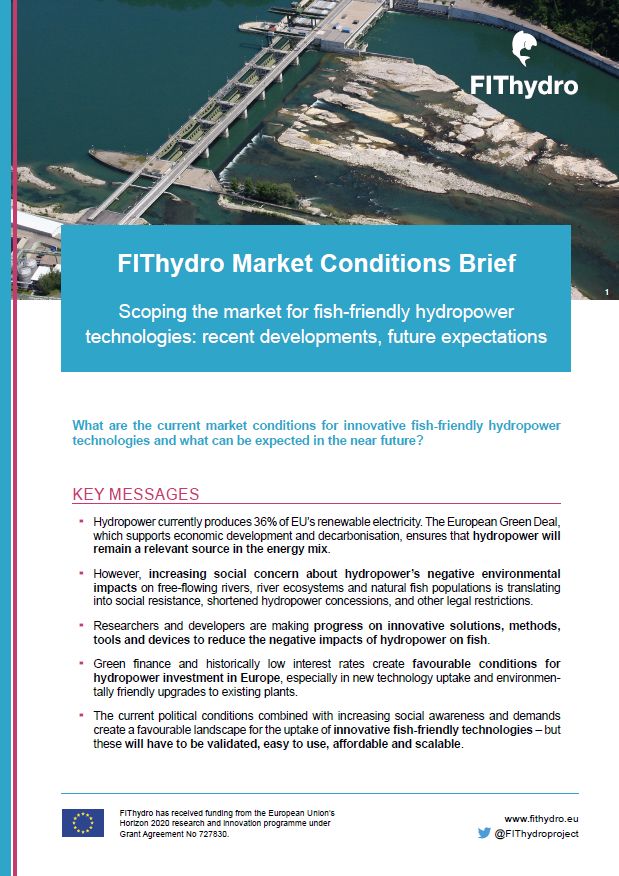
This FIThydro Brief, written by Ecologic Institute's Hugh McDonald and Gerardo Anzaldúa, assesses the current and future demand for fish-friendly hydropower in Europe. It concludes that EU and national policy and economic developments offer a chance to innovate and address rising social and environmental concerns about hydropower's negative impacts.
The European Environmental Agency (EEA) published their landmark report on the state of nature in the EU on 19 October 2020, representing the most comprehensive assessment of the status of European nature and biodiversity to date. The State of Nature 2020 provides invaluable insights about the impact of conservation measures that have been applied as well as remaining gaps. The findings indicate that the majority of Europe's biodiversity continues to decline at an alarming rate, threatening the survival of thousands of animal species and habitats.
On October 12th and 13th the 2020 European Sustainable Development Network (ESDN) Annual Conference took place. Together with prominent speakers like Angela Merkel and Achim Steiner participants discussed the transformative potential of the EU Green Deal. Stephanie Wunder, Senior Fellow at the Ecologic Institute presented what steps are needed next to implement the Green Deals’ Farm to Fork Strategy. The presentation is available for download.