Ecologic Institute published a briefing for the ENVI Committee of the European Parliament to guide their participation in the upcoming UN Ocean Conference to be held June 2017 in New York City. The brief provides a short overview of the UN 2030 Agenda and specifically, Sustainable Development Goal 14: Conserve and sustainably use the oceans, seas and marine resources for sustainable development (SDG 14). The brief identifies key issues and the position of main stakeholders. In a final section, several recommendations to guide EU participation are provided. The briefing is available for download.
This report describes the work undertaken in the BRIGAID market scoping exercise at the European scale. Its aim is to help the BRIGAID innovators to identify those regions within Europe where potential business opportunities could emerge based on an analysis of the current and expected impacts of climate change and the current adaptive capacity at the regional level. The market scoping should facilitate the identification of markets that have a high potential of adopting innovative climate change adaptation measures whilst also differentiating between the specific hazards that BRIGAID innovations address.
This policy brief introduces the SWITCH-ON Virtual Water Science Laboratory, a digital platform for scientific research and collaboration built upon the principles of transparency, community and open access. The Virtual Lab implements Open Science by encouraging collaborative experiment definition and by facilitating the search and upload of open datasets. The SWITCH-ON Policy Brief No.2 is available for download.
This policy brief illustrates how SWITCH-ON supports globally-connected science, digital innovation, and the use of open data to help citizens, governments, and businesses in Europe and across the globe move towards a sustainable future. It shows how the 14 SWITCH-ON products are closely aligned to the SDGs by addressing several EU environmental policy objectives. The SWITCH-ON Policy Brief No.4 is available for download.
Paul Ekins, Paul Drummond & Benjamin Görlach (2017) Policy instruments for low-carbon development based on work from the EUFP7 project, CECILIA2050, Climate Policy, 17:sup1, S1-S7, DOI: 10.1080/14693062.2016.1272044
This T20 Policy Brief sends a loud exhortation to the leaders meeting in the G20 Summit in Hamburg in July 2017. T20 or "Think 20" is a network of think tanks in the G20 countries, and 23 experts in 13 think tanks in 8 countries contributed to this policy brief. Ecologic Institute founder R. Andreas Kraemer, Senior Fellow at the Centre for International Governance Innovation (CIGI), led the drafting, and Benjamin Boteler, Ina Krüger, and Grit Martinez of Ecologic Institute contributed. The policy brief is available for download.
Ecologic Institute's Elizabeth Zelljadt provided an overview of the ways various emission trading systems (ETS) use revenues from the auctioning of allowances as part of a panel discussion on revenue recycling at the Ontario Cap-and-Trade Forum in Toronto. The event brought together government decision-makers as well as analysts and Canadian industries affected by the province's emissions trading system, which entered into force January 2017 and held its first allowance auction in March 2017.
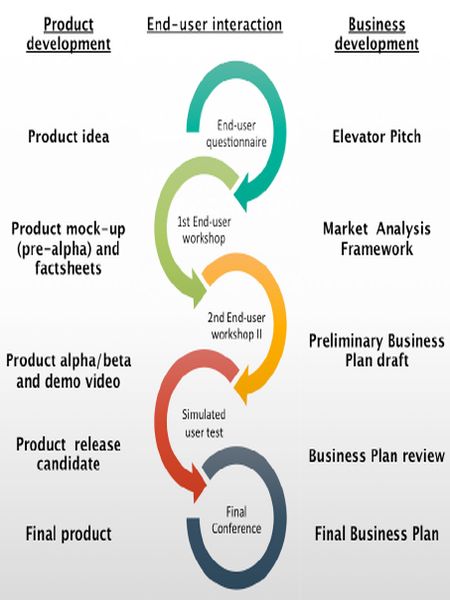
This policy brief illustrates how the SWITCH-ON project has provided proof-of-concept of how product development based on Open Innovation and Open Data can foster environmental and economic benefits in the European Union. This was achieved by transforming Open Databased hydrological science outputs into useful products and services for water managers, researchers, businesses and authorities at multiple levels. The SWITCH-ON policy brief is available for download.
In May 2017, Ecologic Institute organised the 17th ICAP Training Course on Emissions Trading in Bangkok (Thailand). The course brought together experts from emerging economies and developing countries to learn about emissions trading as a tool for climate protection, and to discuss the options of implementing such systems in developing countries. The session continues a series of past ICAP events that Ecologic Institute organised across the world since 2009. Twenty-seven mid-career professionals from seven Asian countries as well as Benjamin Görlach and Pedro Barata led the course.
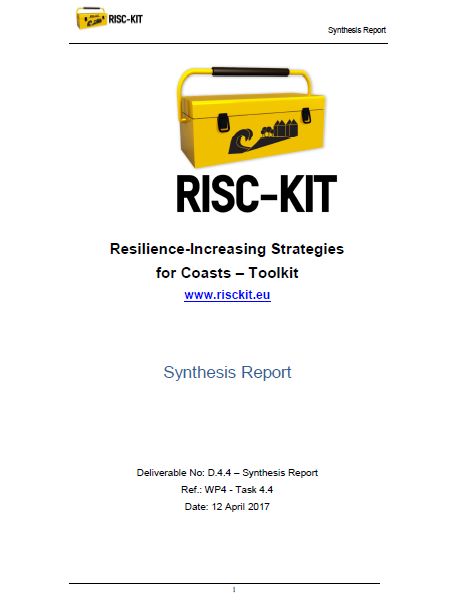
This Synthesis Report provides an overview of the achievements, lessons learned and challenges identified through the RISC-KIT project activities, including the development and application of the tools at ten case study sites in a range of coastal regions across Europe. The lessons learned are then fed into a series of recommendations for improved DRR for Europe and beyond. The resulting insights and accompanying recommendations have been considered in relation to their relevance to EU and international processes that both directly and indirectly address coastal DRR. The RISC-KIT Synthesis Report is available for download.
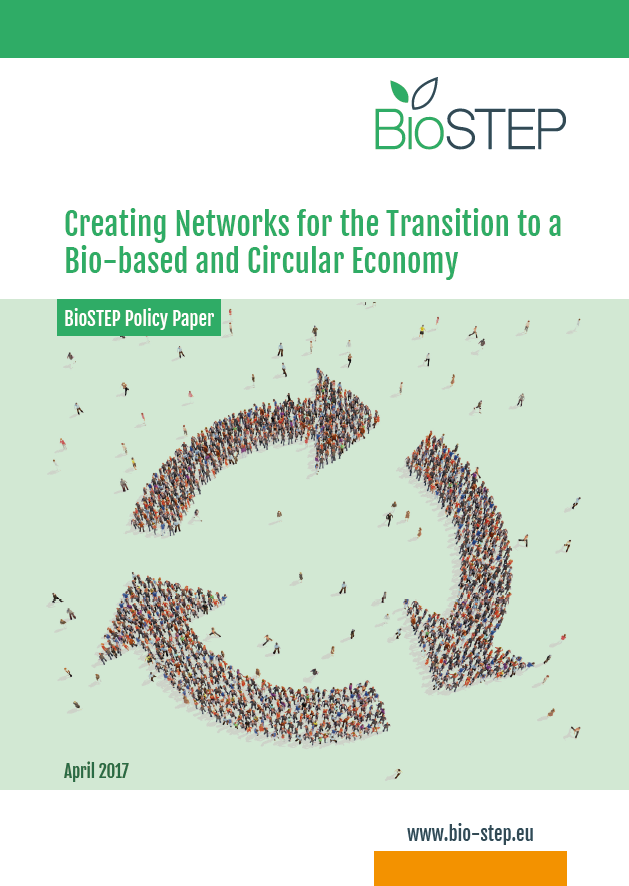
After two years of research and stakeholder consultation, the BioSTEP consortium, led by Ecologic Institute, finalized the BioSTEP policy paper. This paper concludes five recommendations, aiming to support the revision of the European Bioeconomy Strategy. These recommendations were amended and complemented at the BioSTEP Forum, which was held in Brussels in March 2016. The policy paper is available for download.
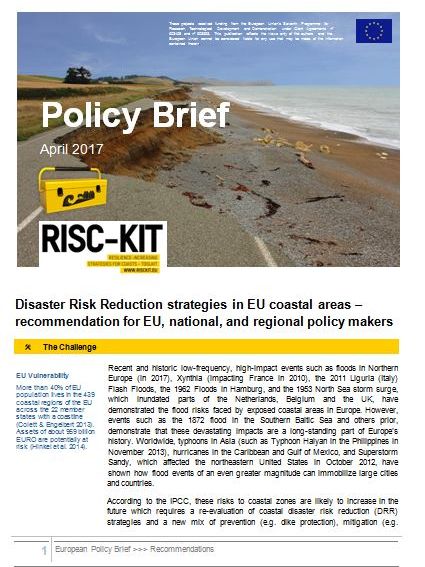
Europe's coastlines are a product of human cultivation. Since settling on the coast, humans have engineered the coastal characteristics to suit the purposes of states, the economy and human recreation. At the time of the Treaties of Rome, Europe had just emerged from the devastating aftermath of the Second World War with a 'great hunger' for a liberal life style, leisure activities and travel. The diverse and scenic views of Europe's coasts offered the ideal destination for such endeavors. Soon, a rapid coastal urbanization coupled with a steady increase in mass tourism emerged. Spurred by the trust in technical and engineering capacities, new bold attitudes about building and living on the sea often interfered with the natural sediment transport of coastal systems, leading to erosion. Today, more than 42% of Europeans live in coastal regions with coastal infrastructure worth about 959 billion EURO. Recent and historic high-impact storm events have demonstrated that weather events pose a significant risk and can immobilize cities and countries. The FP7 project, Resilience-Increasing Strategies for Coasts – toolKIT (RISC-KIT), recently issued a policy brief to communicate lessons learned and to support the dissemination of tools, which coastal managers to improve coastal resilience in Europe and elsewhere.
The edited volume, Fighting Environmental Crime in Europe and Beyond: The Role of the EU and Its Member States, was published by Palgrave Macmillan in March 2017. The edited volume sums up the findings of EFFACE, a multi-disciplinary and international research project on environmental crime in Europe, funded by the European Union (EU). "European Union Action to Fight Environmental Crime" (EFFACE) was a 40-month research project that included eleven European research institutions and think tanks and was led by Ecologic Institute Berlin. The edited volume consists of six case studies conducted during the project on different types of environmental crime.
This paper explores six climate protection studies, namely for France, Italy, Poland, Sweden, United Kingdom and Germany. The authors, among them Ecologic Institute's Lena Donat, analyze objectives, results, modeling approaches, main assumptions and input parameters. The inclusions of long-term strategies in the Paris Agreement and in the European Commission's proposal for a new regulation on the "Governance of the Energy Union" make this analysis very topical. The analysis is available for download.
In the context of a framework contract with the European Commission focused on supporting the implementation of European water policies, Ecologic Institute has contributed to the preparation of a best practice overview report on how water management issues can be addressed within Rural Development Programmes. The report is available for download.