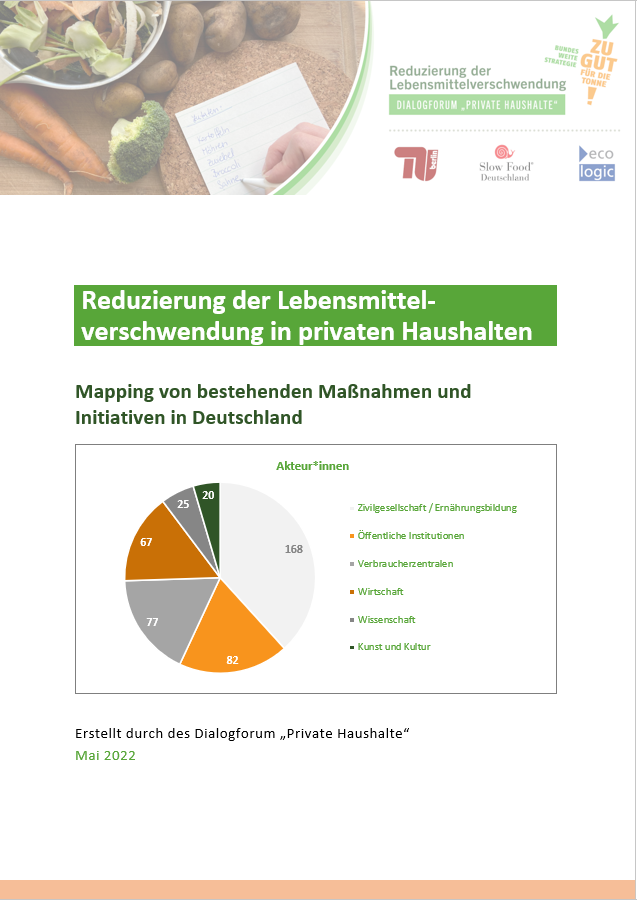
As part of the project Dialogue Forum "Private Households", a mapping of existing actors and initiatives in Germany was carried out and evaluated. The aim of this structured categorisation is to gain an overview of the current landscape of measures in order to identify which effective starting points are already covered by current measures and which are not, and how existing measures can be improved and their effectiveness increased.
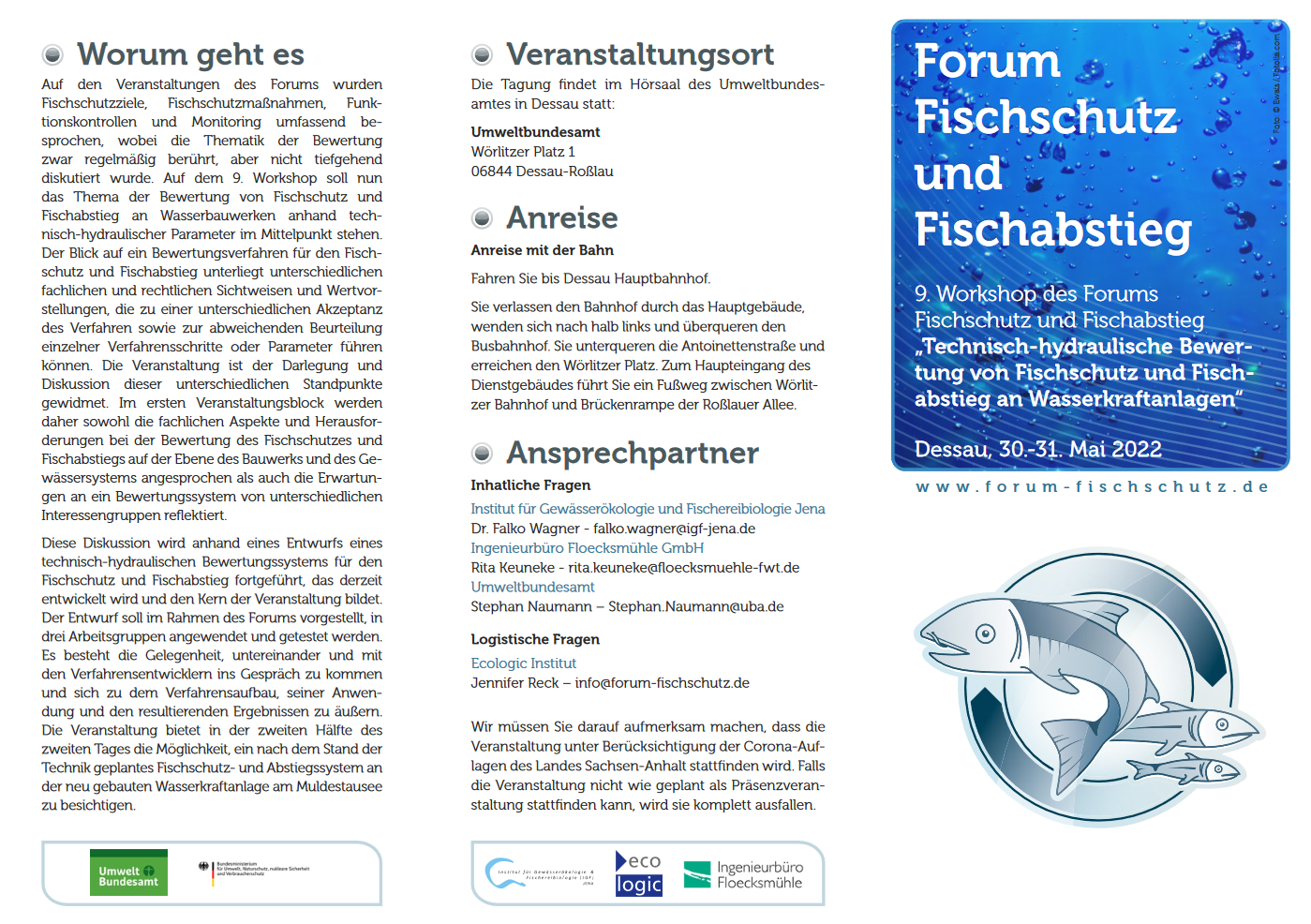
The two-day workshop, funded under the BMUV's Environmental Research Plan, took place on 30 and 31 May 2022 at the Federal Environment Agency in Dessau (Germany) and was dedicated to the topic of "Technical-Hydraulic Assessment of Fish Protection and Downstream Migration at Hydropower Plants".
Ecologic Institute coordinated the organisation of the 9th Workshop on Fish Protection and Downstream Migration, dedicated to the topic of "Technical-Hydraulic Assessment of Fish Protection and Downstream Migration at Hydropower Plants". A programme flyer were developed and designed to provide relevant content on conference context, agenda, and the venue in a concerted way to participants.
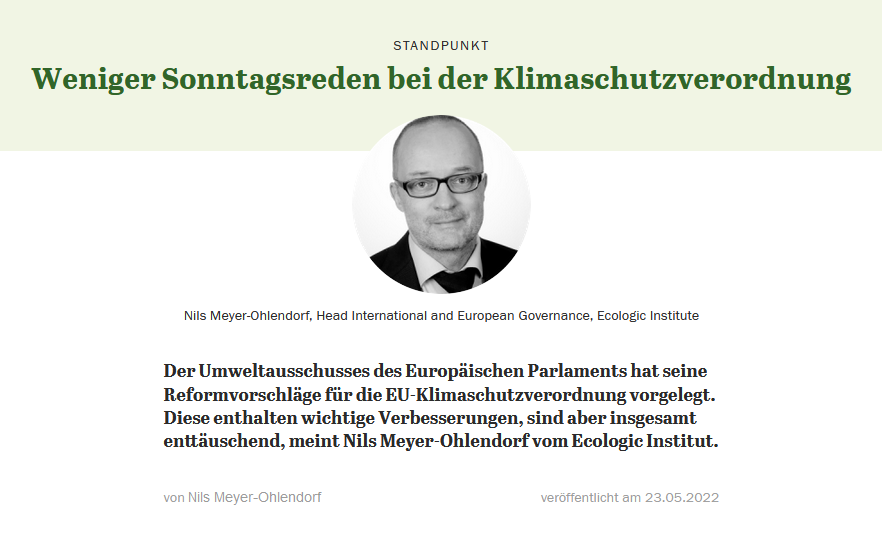
The Environment Committee of the European Parliament adopted its reform proposals for the EU Climate Action Regulation last Monday. These contain important improvements, but overall they are disappointing, says Nils Meyer-Ohlendorf in the Tagesspiegel.
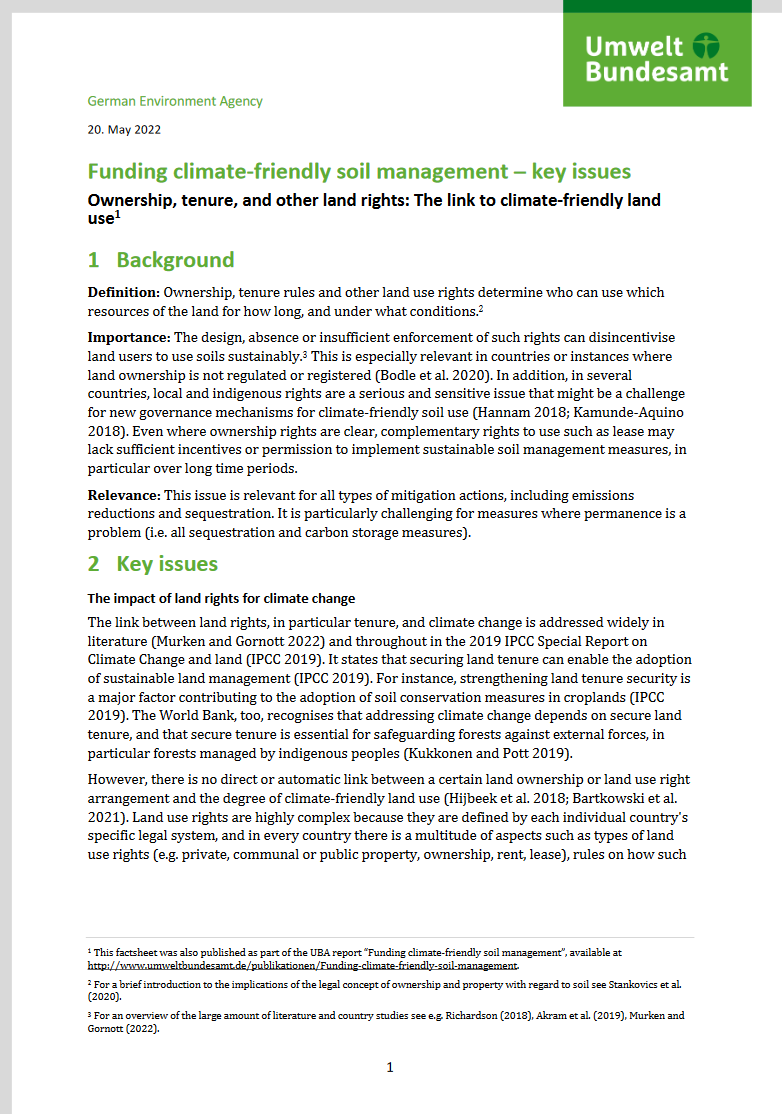
Bodle, Ralph and Hugh McDonald 2022: Funding climate-friendly soil management – key issues. Ownership, tenure, and other land rights: The link to climate-friendly land use. Factsheet. German Environment Agency: Dessau-Roßlau.
At the theme day on plastics in the environment on 6 May, children, young people and adults could inform themselves at more than 20 interactive exhibition stands and talk to researchers from all over Germany. In addition to a photo exhibition, a science and poetry slam, improvisation theatre and discussion rounds, participants had the opportunity to get involved in exciting hands-on activities. For example, water samples will be taken directly from the Spree to test for microplastic contamination.
The publication summarizes the key messages from all 20 joint research projects and the seven cross-cutting topics of the German research focus "Plastics in the Environment". Structured by main topics, the central results are presented in order to derive recommendations for various addressees. More than 70 researchers and practitioners from across the research focus have jointly co-authored the key messages.
On 6 May 2022, Ecologic Institute organized the "Theme Day Plastic in the Environment" to present to the public the research findings achieved since 2017 from 20 research projects with more than 100 participating institutions from science, industry and practice. Ecologic Institute developed a trailer for passenger television in Berlin's subways (Berliner Fenster) for Berlin-wide visibility of the event.
On 6 May 2022, Ecologic Institute organized the "Theme Day Plastic in the Environment" to present to the public the research findings achieved since 2017 from 20 research projects with more than 100 participating institutions from science, industry and practice. Ecologic Institute produced a reel to contribute to the visibility of the event.
Plastic waste is a global environmental problem, the consequences of our increasing plastic use are visible worldwide. Therefore, water pollution (oceans, rivers, lakes, groundwater) and plastics in the environment are among the top environmental issues of concern to many people. However, many myths, misconceptions, and ambiguities circulate in the plastics debate. This 20-part poster series sets out to clarify some of these issues. Join us for a fact check – would you have known?
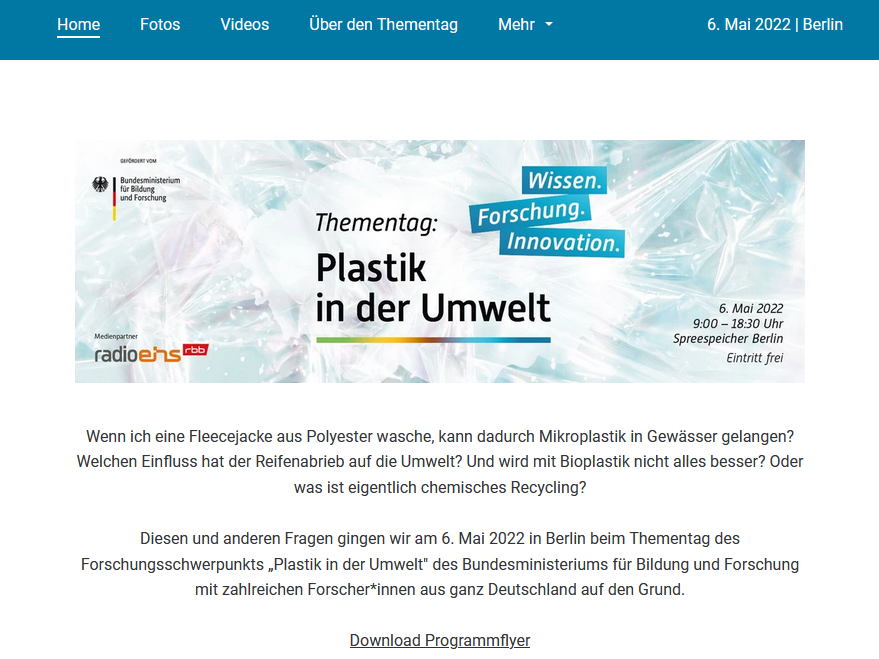
The Ecologic Institute designed and developed the theme day website "Plastic in the Environment". It contained the event documentation and programme information.
This paper describes important findings from the project "Data Governance and Regulation for a Sustainable Berlin" and formulates – in addition to the application field-specific papers – overarching recommendations.
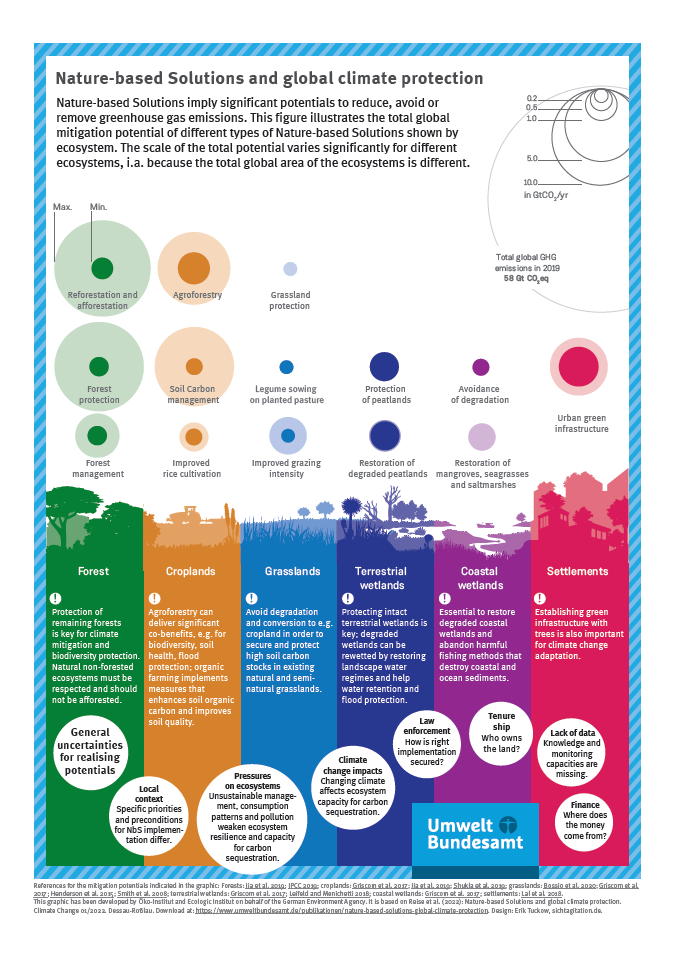
This infographic illustrates the total global mitigation potential of different types of Nature-based Solutions, shown by ecosystem. The scale of the total potential varies significantly for different ecosystems, i.a. because the total global area of the ecosystems is different.
Berlin can look back on an eventful history of the New Social Movements. Numerous Berlin pioneering organizations from that time are still active: Kraut & Rüben, the Schokofabrik, Oktoberdruck, the Regenbogenfabrik and many more. At the same time, many new alternative-economy enterprises are currently emerging in Berlin - the city that is considered a melting pot of alternative economy. But what is new about today's ideas compared to the motives of over 40 years ago? What can those active today learn from the successes and failures of that time? What experiences can, and should they build on? And: What role do changed framework conditions play? What has become possible or impossible today compared to the past?
As the war in Ukraine escalates, the climate crisis continues. But environmental policy in particular could build important bridges, reminds Dr. Camilla Bausch Scientific & Executive Director of Ecologic Institute. In an interview with Elisabeth von Thadden, she discusses, among other things, the environmental impact of the war and the dichotomy over Ukraine's demand to the secretariats of thirteen major international environmental agreements to exclude Russia from relevant decision-making bodies and suspend Russian membership in the agreements.