Sustainable use of natural resources in the long term requires not only the application and dissemination of resource-saving technologies and infrastructures, but also changes in individual and collective behaviour and social practices. Against this background, different methods were combined in the project "Trendradar Resource Policy" to identify and evaluate societal trends and resource policy measures. Using trend analysis, 20 socially relevant trends were identified and qualitatively described. These trends were then empirically reflected by eliciting perceptions, attitudes and interpretation patterns of the general population in a three-week Moderated Research Online Community (MROC). At the same time, policy measures were identified and qualitatively assessed in terms of relevance and possible barriers to implementation.
A group of polish local government experts, landscape planners, architects and engineers participated in a study tour on nature-based solutions in Berlin on 25 and 26 August 2020, which was part of the EUKI project "Climate NBS Poland". Nature-based solutions (NBS) can be implemented in urban settings to deliver a suite of services to address climate change, such as reduce demand for heating and cooling, stormwater management, microclimate regulation but also support human health and recreation. Thanks to their multi-functionality and sustainability NBS are increasingly applied as measures to address climate change in cities – in Berlin, a number of innovative NBS projects have been implemented in Berlin already since the 1990s to address such challenges.
How to increase regional food production and consumption for and in cities? That was the guiding question for the panel discussion with Stephanie Wunder, Senior Fellow at Ecologic Institute, Wolfram Günther, Saxon Minister of Agriculture, Valentin Thurn, film director and chairman of the Cologne Food Policy Council and Jörg Naumann, farmer and representative of the alliance "Land schafft Verbindung" on 9 September 2020 at the German Hygiene Museum in Dresden.
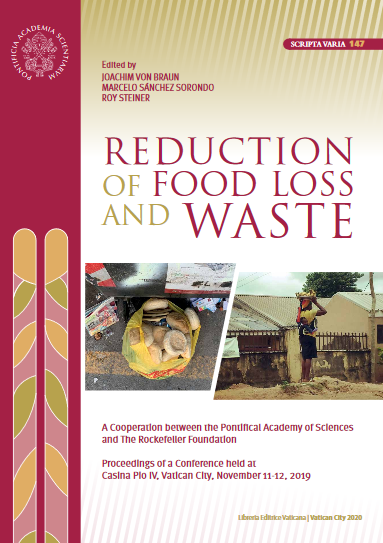
In July 2020, the Federal Environment Agency published the trend report "Meat of the Future", which analyzes the environmental impacts of plant-based meat substitutes, edible insects and in-vitro meat. Ecologic Institute developed policy options on how the market development of meat alternatives can be better aligned with the goal of sustainability.
In this paper the authors, among them Ecologic Institute's Ulf Stein, focus on the governmental bottlenecks in the Implementation of the European Water Framework Directive. The lack of horizontal, inter-sectoral communication; the insufficient land reserves; human resources and; the lack of financing were the areas that emerged as the most pressing issues. Further evidence suggests that the interaction of the WFD with other policy areas regulated at the European level might require closer inspection.
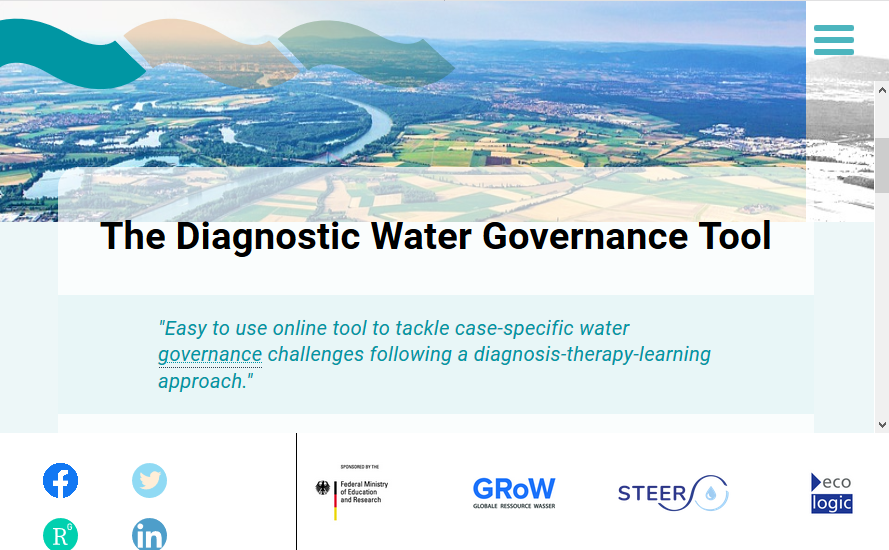
In this publication, Doris Knoblauch (Ecologic Institute), Lorenzo Felicetti, and Ulf Stein (Ecologic Institute) shed light on the untapped potential of ICT solutions in water management across Berlin, Milan, Copenhagen, Paris and Sofia, the five cities analysed in the project digital-water.city. In the analysis, the cross-cutting nature of digital water governance and, thereby, its multifunctionality in terms of policy goals became evident.
Launched on 8 June 2020 by our Commissioner for Environment, Oceans and Fisheries, Virginijus Sinkevičius, the EU4Ocean Coalition, which aims at supporting collective ocean literacy in Europe, is moving to action! You are invited to join the first "EU4Ocean workshop Designing Ocean Literacy actions in Europe" on 24 and 25 September 2020 (online).
This project sought to boost the capabilities of climate advisory bodies across Europe through a knowledge-exchange dialogue. Key players involved were mainly independent scientific councils composed of research and academic community members. The focus was to uncover insights and challenges these bodies face in aiding policy-makers develop proactive climate policy, while also identifying means for ongoing engagement.
Ecologic Institute investigates the extent to which transport and buildings are already affected by the existing EU emissions trading scheme, e.g. through district heating networks and electromobility. Furthermore, Ecologic Institute contributes case studies on non-European emissions trading schemes covering transport and/or buildings (including California, New Zealand and Tokyo). Furthermore, Ecologic Institute provides analyses on which price-based instruments are already applied in selected EU member states. Finally, Ecologic Institute examines how the expansion of emissions trading would affect competitiveness and the EU's existing climate policy instruments.
In order to reduce air pollution, especially in large cities, Vietnam is discussing the introduction of air quality planning and an integrated permit system as part of the revision of its Law on Environmental Protection. Together with the Independent Institute for Environmental Issues, Ecologic Institute supports the legislative process and develops guidelines for the subsequent implementation of the two instruments.
This research project explored whether strengthening the concept of extended product responsibility in international law has the potential of noticeably improving waste management in the Global South. The concept of Extended Producer Responsibility (EPR) aimed at taking into account waste management issues during the entire life cycle of a product (cradle-to-grave approach). Its main purpose was to reduce the costs of waste management for local authorities and taxpayers, while at the same time providing incentives for producers to design their products so that they are easier to recycle and dispose of in an environmentally sound manner, generating less waste overall.
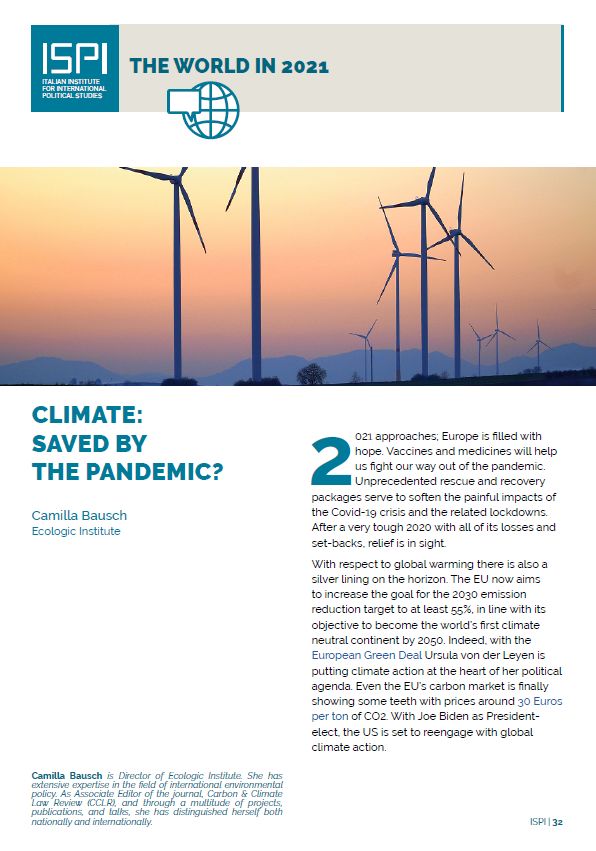
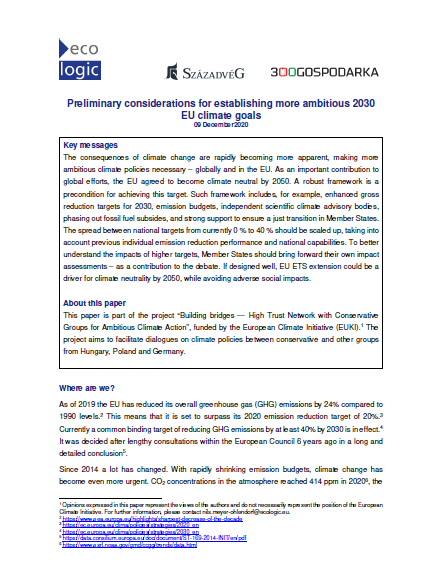
The danger of a rebound in greenhouse gas emissions after the coronavirus crisis is looming on the horizon. Michał Dorociak and Michał Kamiński of 300Gospodarka, and Nils Meyer-Ohlendorf discuss in an OpEd for the EU Observer how the EU recovery programmes can avoid post-crisis emission increases.
The objective of the online event is to explore the extent to which the implementation of a bioeconomy concept can leverage the reactivation of regional economies across Europe.
This project seeks to bring available knowledge together on the future of the EU agricultural production, including on possible sustainability gaps in the form of food, water and energy security, land take and GHG emissions that need to be closed by 2050. The results contribute to a better understanding on how the agricultural sector can contribute to climate-change mitigation and biodiversity conservation, taking into account the growth potential of the bioeconomy and its impact on the environment.
In our brochure "Ecologic Institute: Science and Policy for a Sustainable World", we introduce Ecologic Institute as a transdisciplinary research organization. Readers gain an overview of our capabilities in research, policy analysis, education, communication and stakeholder events. Suitable for clients, partners, funders and the interested public, the brochure describes the many ways that Ecologic Institute brings new insights into environmental policy.