The MinFuture workshop "Enhancing data robustness on global level" served to present and test the MinFuture approach of placing statistical data in a system context so that global information flows on mineral raw material become less fragmented and provide a more complete, comprehensive and realistic picture. The MinFuture Workshop Synthesis Brief is available for download.
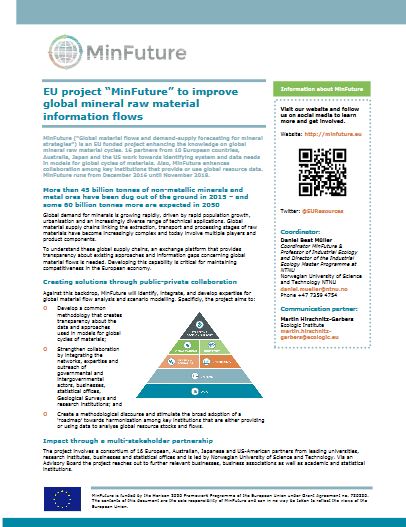
The MinFuture flyer illustrates the main project outline, objectives and modules. An overview of the project process is illustrated, together with details of the partner countries implementing the project. The flyer is styled according to the project style-guides, contains contact information and an QR-code directing to the project website.
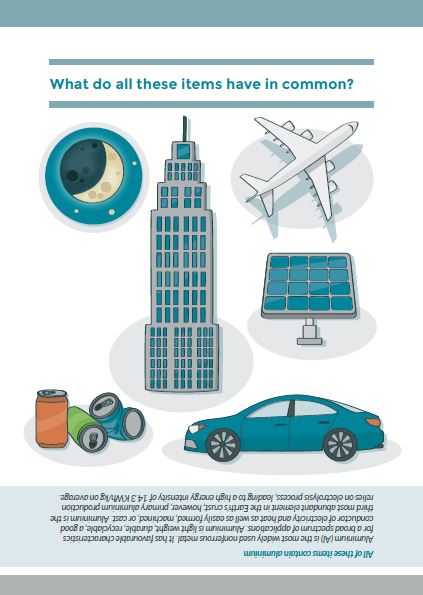
As part of the visual identity for project "Global Material Flows and Demand-supply Forecasting for Mineral Strategies" (MinFuture), Ecologic Institute designed promotional flyers in small postcard format. The postcards summarize general objectives and aims of the project, are styled according to the project style-guides and draw the reader's attention to facts about mineral usage. The three postcards also contain contact information and a QR-code directing to the project website.
Under its ‘Framework contract for Evaluation, review and development of EU Water Policy', the European Commission DG Environment has issued a service request for a Specific Contract to provide "Support for the elaboration of guidance on WFD harmonised environmental requirements for HMWB and hydromorphology". The aim of this Specific Contract is to ensure support for the follow-up activities towards the further elaboration of deliverables as outlined in the Terms of Reference of the Ad-Hoc Task Group on Hydromorphology. The requested services include the provision to the Water Unit in DG Environment of independent and timely support and advice on scientific, socio-economic and technical issues related to the activities of the ATG. This includes the provision of products of high technical quality as specified in the description of tasks and deliverables.
The Arctic Summer College 2018 virtual campus was open to participating Arctic experts, specialists and students in July and August 2018. It provided information on a wide range of topics, including the regional impact of climate change on the Arctic, local challenges such as land use, energy production and distribution and food security, as well as activities in the Arctic Council and the need for a vision for the Arctic.
The Arctic Summer College 2017 virtual campus was open to participating Arctic experts, specialists and students in July and August 2017. It provided information on a wide range of topics, including the regional impact of climate change on the Arctic, local challenges such as land use, energy production and distribution and food security, as well as activities in the Arctic Council and the need for a vision for the Arctic.
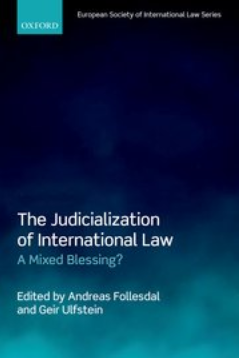
The dispute settlement mechanism of the World Trade Organisation (WTO) is one of the most active international courts. How the WTO's adjudicators decide cases is the topic of a book chapter authored by Christiane Gerstetter, Senior Fellow at Ecologic Institute. The book, entiteld "The Judicialization of International Law: A Mixed Blessing?" is edited by Andreas Follesdal and Geir Ulfstein and published by Oxford University Press. It deals with the influence of decisions by international courts on international law.
On 27 March 2018, around 20 social scientists, all involved in a project of the research program "Plastic in the Environment", funded by the German Federal Ministry for Education and Research, met to network and discuss future possibilities to increase the visibility of the social and political dimensions of plastics in the environment. The chair for science and technology policy at the Munich Center for Technology in Society organized the meeting together with Ecologic Institute.
The AquaCross research community, funded by the European Commission, was represented on stage at the 8th World Water Forum in Brasilia by two members of the AquaCross Think Tank, Francisco Nunes Correia and R. Andreas Kraemer. R. Andreas Kraemer, founder of Ecologic Institute, gave two presentations at this annual global gathering.
The EFEX study tour from 25 to 29 June 2018 complements our 2018 International Symposium on Energy Efficiency with an in-depth exploration of energy lighthouse projects in the US American capital region. The programme includes presentations and field trips on topics ranging from energy efficiency to renewable energy and sustainable mobility, with a special focus on the interconnections between these sectors. The programme is designed for civil-society participants from the United States and Europe. The Ecologic Institute US is the lead organiser for the study tour. Applications are still open.
On 26 June 2018, the International Symposium on Energy Efficiency will bring together leaders from all over the globe as part of the EFEX project to talk about the ways in which energy efficiency has proven to be not only a tool for meeting environmental and sustainability goals and commitments but also an opportunity to increase participation and prosperity in all segments of society. Registration for the conference is open, and you can still get in at the discounted early bird rate. You'll find further information including registration details on the symposium's website.
Around 50 scientists from twelve collaborative projects of the research focus on plastics in the environment met for a first exchange on sampling, sample preparation and analysis of microplastics at the Water Technology Center (TZW) in Karlsruhe. The workshop, organized by TZW and the Ecologic Institute, aimed to coordinate and learn from each other the many difficulties in identifying and quantifying microplastics from water or soil samples.
The first meeting of think tanks focusing on EU climate policy explored how European climate action can help to address the multiple crises the EU is facing. Supported by the Mercator Foundation, convened by Mercator Senior Fellow R. Andreas Kraemer and hosted by Ecologic Institute, 20 representatives from policy institutes from 10 countries identified windows of opportunity for policy intervention, and explored ways and means for cooperation and coordination in the EU.
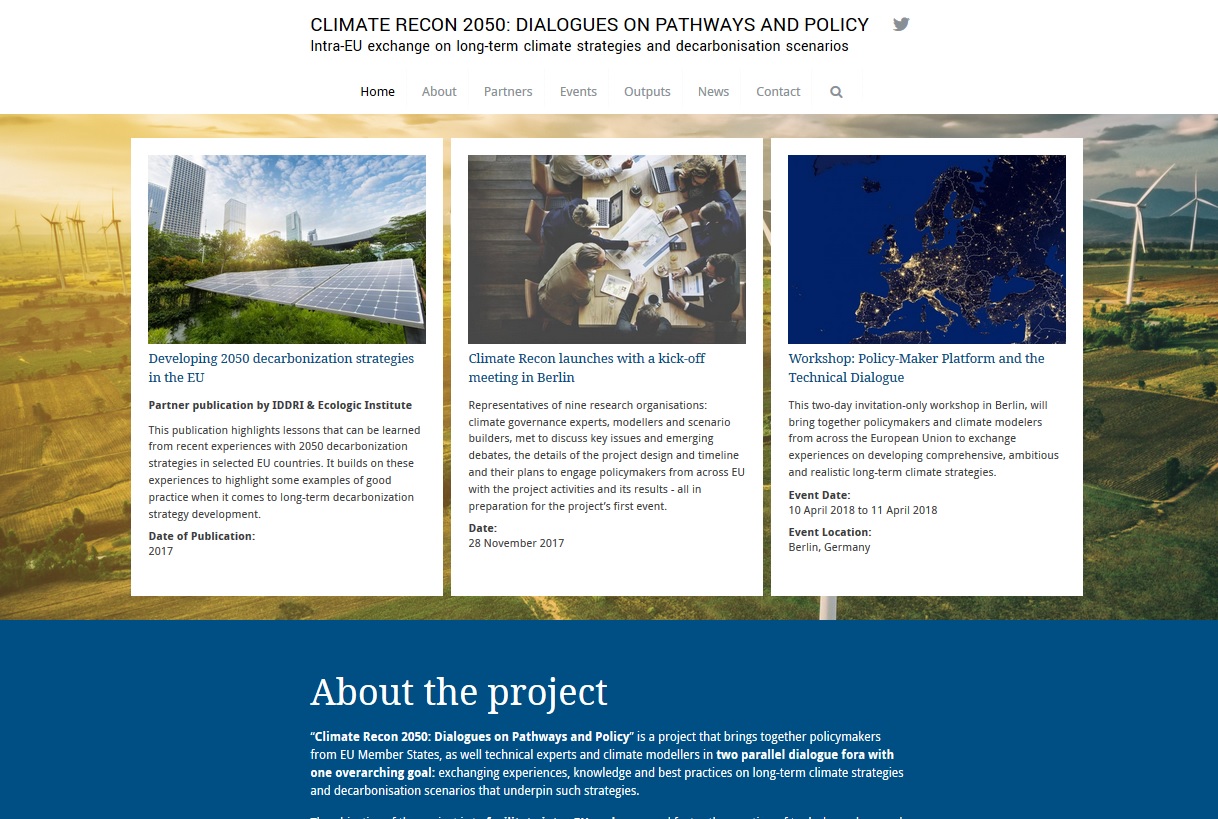
The projects website provides an overview of the project objectives, structure and partners as well as events and news related to relevant issues of the project. Furthermore, project outputs such as deliverables, policy briefs and publications are regularly promoted on the website. Ecologic Institute is responsible for the concept, design and programming.
The 7th workshop of the forum "Fish Protection and Downstream Migration" was dedicated to the topic of improving the implementation of measures at the end of the second cycle of the forum. The workshop took place in Dresden in April 2018. Important to this workshop was the task of creating a summary of the intense discourse that had taken place between all of the stakeholders over the past six years. These discourses were then synthesized into twelve guidelines. The recommendations and results of the event are available for download.