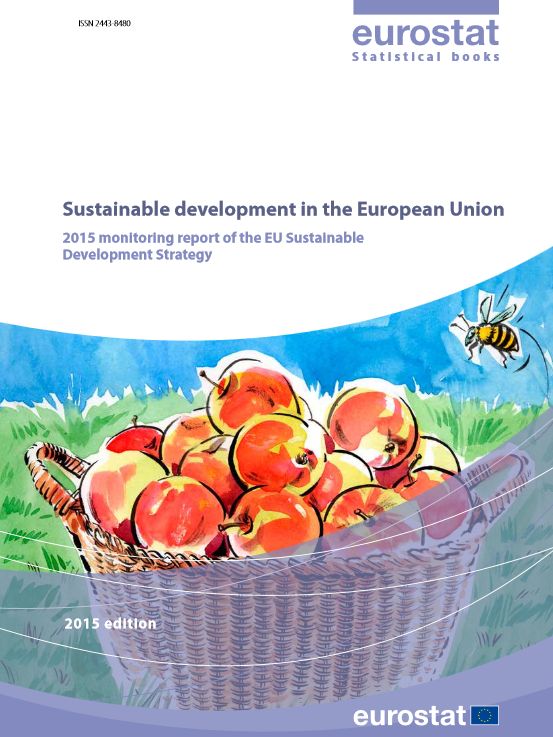
The Eurostat monitoring report examines how well the EU and its member states adapt the EU Sustainable Development Strategy. As part of a consortium with the Vienna University of Economics and Business, INFRAS and the Haymarket Media Group, Ecologic Institute played an integral role in compiling the 2015 Eurostat monitoring report. The report is available for download.
On 7 July 2015, the POLIMP Webinar Series officially kicked off with a discussion on the topic: "Paris 2015: Lessons from the Copenhagen Experience. The webinar featured guest speakers Prof. Dr. Sebastian Oberthür (IES) and Wytze van der Gaast, PhD (JIN).
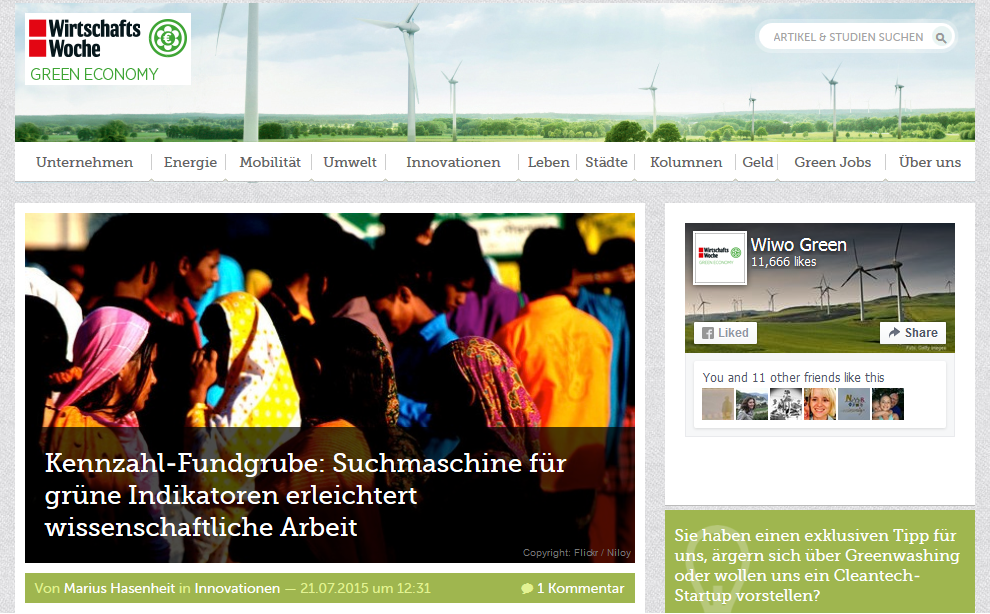
Marius Hasenheit, Junior Researcher at Ecologic Institute, wrote an article for the German online magazine Wirtschaftswoche Green Economy about the interactive search engine für Green Economy Indicators "measuring-progress.eu". In his article, he also interviewed Katharina Stepping of the German Development Institute (DIE), who already tested the tool.
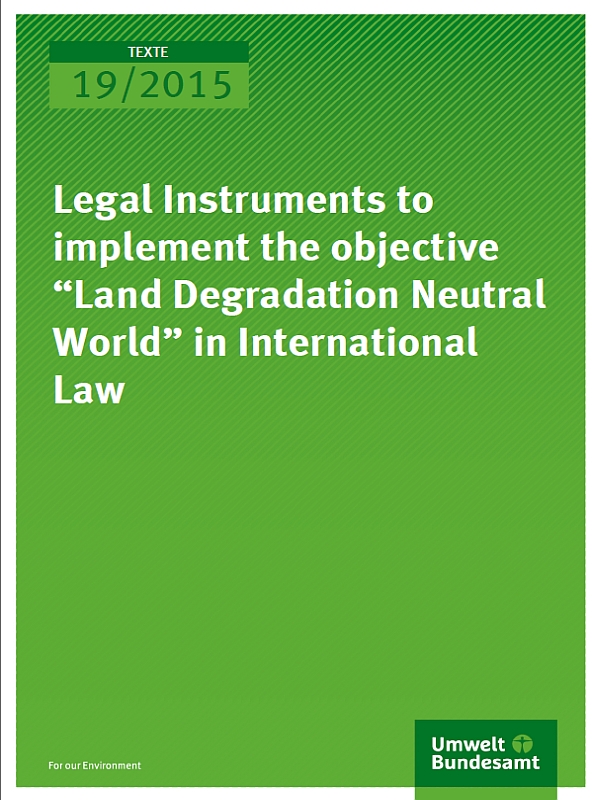
Altvater, Susanne; Elizabeth Dooley and Ennid Roberts 2015: Legal Instruments to Implement the Objective 'Land Degradation Neutral World' in International Law. Dessau-Roßlau: UBA.
Using a combination of web-based tools, the POLIMP project imparts expert knowledge on international climate negotiations and EU climate policy. Through the distribution of regular surveys to POLIMP's "Expert Response Group," opinions on key topics and recent developments in international climate negotiations are identified. The survey results are then shared in the POLIMP live webinar series.
We are excited to announce the third webinar in our POLIMP Webinar Series, which will feature a discussion on the topic: "EU climate policy for 2030: why are we talking about governance?". The webinar will take place on Wednesday, 28 October from 11:00-12:00 CET and will feature guest speakers Jonathan Gaventa (E3G) and Katharina Umpfenbach (Ecologic Institute).
The Arctic Summer College is proud to have recently completed its fifth successful year. From 25 June to 13 August 13, the 20 selected Arctic Summer College Fellows participated in eight webinars on various topics relevant to the Arctic, including Indigenous Actors and Arctic Decision-making, Arctic Energy and Climate Change Adaptation. Fellows became part of a network of emerging Arctic leaders from different disciplines and regions and were able to share and discuss ideas with expert speakers.
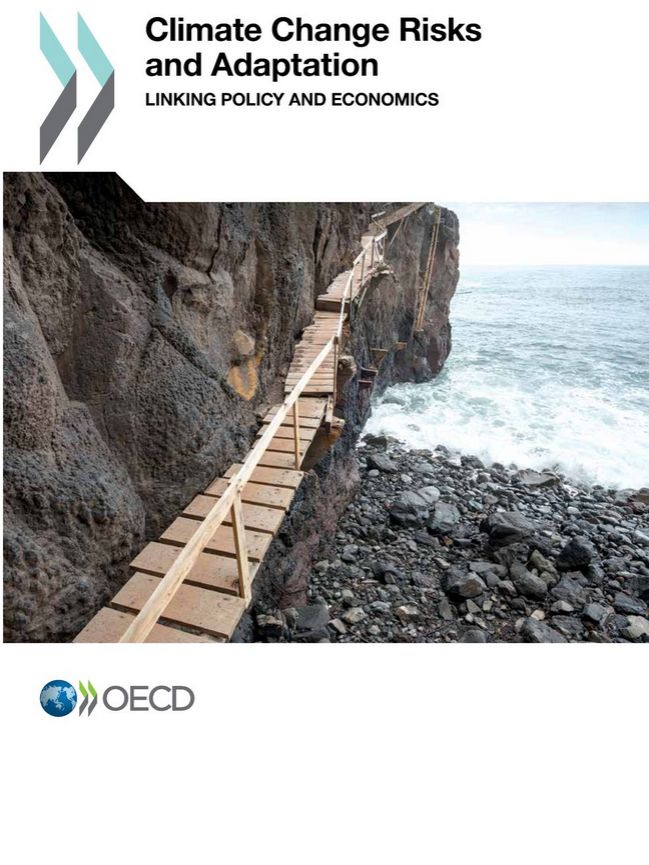
The published OECD-report "Climate Change Risks and Adaptation: Linking Policy and Economics" sets out how the latest economic evidence and tools can enable better policy making for adaptation. Scientists from Ecologic Institute con-tributed to the chapter on the costs and benefits of adaptation on the national and regional scale.
'BeWater' is a three and a half-year EU-funded project, which investigates the opportunities of preparing adaptive management plans for river basins in four case studies based in the Mediterranean region: Pedieos (Cyprus), Rmel (Tunisia), Tordera (Spain) and Vipava (Slovenia). The aim of the project is to promote dialogue and collaboration between science and society for sustainable water management in order to facilitate adaptation to the impacts of global change in the Mediterranean. From May until July 2015, four participatory workshops were held in the aforementioned cities. Some of the outcomes of the workshops are summarized in the table at the end of the text.
It is widely recognized that national or regional efforts to restrict the damage of climate change are insufficient and hence that environmental and climate protection needs a global concept. Paradoxically, the way environmental and climate change is perceived and damage is handled is linked to local and regional patterns of perceptions. Dr. Grit Martinez from Ecologic Institute and Prof. Michael Paolisso from the University of Maryland investigate the ways local knowledge and the values of major cultural groups shape understanding and perceptions of climate change risks, and in turn the consequences of that cultural knowledge in terms of vulnerability, adaptation and resilience.
The Emerging Leaders in Environment and Energy Policies Network (ELEEP) is helping to deepen transatlantic cooperation on climate and energy by organising a Transatlantic Energy and Climate Dialogue. Specific themes of the ELEEP Transatlantic Energy and Climate Dialogue are the transition to low-carbon energy systems in the EU & the US, local adaptation of energy systems to climate change impacts and the potential for transatlantic cooperation in carbon markets. Over the course of two years, 40-60 new ELEEP Fellows will join the network and engage in a variety of offline and in-person activities. Based on these activities, members will collaborate on online platforms to produce jointly published policy papers and impact projects, which will be presented at an ELEEP conference in Washington D.C. in the summer of 2017.
In this joint project commissioned by the European Environment Agency, the team at Ecologic Institute evaluates both technical aspects (e.g. cost-effectiveness) and implementation dimensions (e.g. barriers and enabling factors) of water demand management practices in Europe. The assessment focuses on measures implemented in Cyprus, Germany, Denmark, Spain, France, Italy, Romania and Sweden. It also aims to update the knowledge on price elasticity of water demand via 10 case studies conducted at the local (water operator) scale. The countries covered in the case studies are the same as above plus the UK. The aim: to assess how EU Member States are already applying price and non-price measures to manage water demand, and to understand how such implementations can help take the EU further along the pathway to a sustainable future.
The ECCA 2015 covered a range of issues related to climate adaptation under the theme "Integrating climate adaptation action in science, policy, practice, and business". The three-day conference took place from 12 to 14 May 2015 in Copenhagen, Denmark. The conference also featured a poster commercial, as well as three State of Green Tours to see innovative, local adaptation activities in action.
The upcoming negotiations in Paris on the future global climate regime were the topic of the 30th Cairo Climate Talks in Egypt. Top level participants from the Egyptian Ministry of Environment, the French and German Embassies and Ecologic Institute’s own Dr. Camilla Bausch provided varying perspectives on the challenges and opportunities regarding the upcoming 21st Conference of Parties (COP21). Dr. Khaled Fahmy, Egyptian Minister of the Environment, offered critical insights into the current framework in Egypt, while German Ambassador Hansjörg Haber and French Ambassador André Parant served as hosts for the evening discussion.
Following 13 successful ICAP summer and training courses on emissions trading, the first ICAP Advanced Training Course (Masterclass) took place in July 2015. Taking place over a week, the course brought together experts from emerging economies and developing countries to deepen their knowledge of emissions trading as a tool for climate protection and to discuss the experiences with / options of implementing such schemes in developing countries. The course in London was the fourteenth of its kind and continues the tradition of previous ICAP Summer Schools and Training Courses, the most recent of which were held in Seoul, Mexico City and Paris. 31 mid-career professionals from 14 countries at-tended the course, which was led by Benjamin Görlach and Matthias Duwe.