On 19 May 2020, Doris Knoblauch moderated a media training for the research focus "Plastics in the Environment". The journalist Ralf Nestler provided the content input. In addition to his work at the Tagesspiegel, he also worked as a scientist at the GFZ German Research Centre for Geosciences in Potsdam. Nestler thus knows both sides of the relationship between science and journalism.
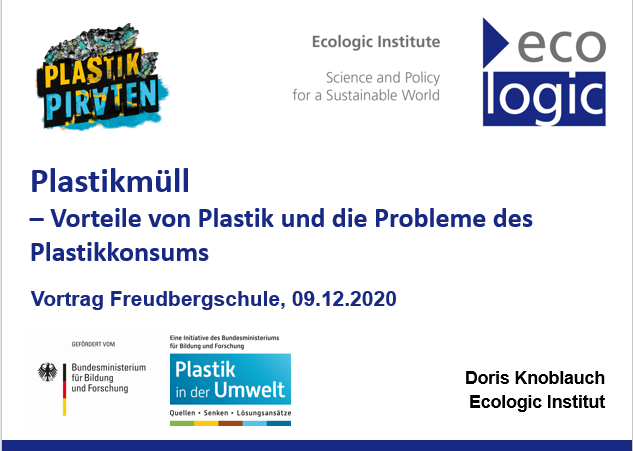
Doris Knoblauch gave a presentation on plastic waste at the Freudberg School in Berlin on 9 December 2020. The lecture took place as part of the "Plastic Pirates" project.
What exactly is the European Green Deal? Which role does it play in our everyday life? And what challenges does it pose? In our podcast and webinar series "Green deal – Big Deal?" we take a critical look at these questions and discuss various aspects of the European Green Deal with experts from policy, business and science. Ecologic Institute produced a reel to contribute to the visibility of the podcast.
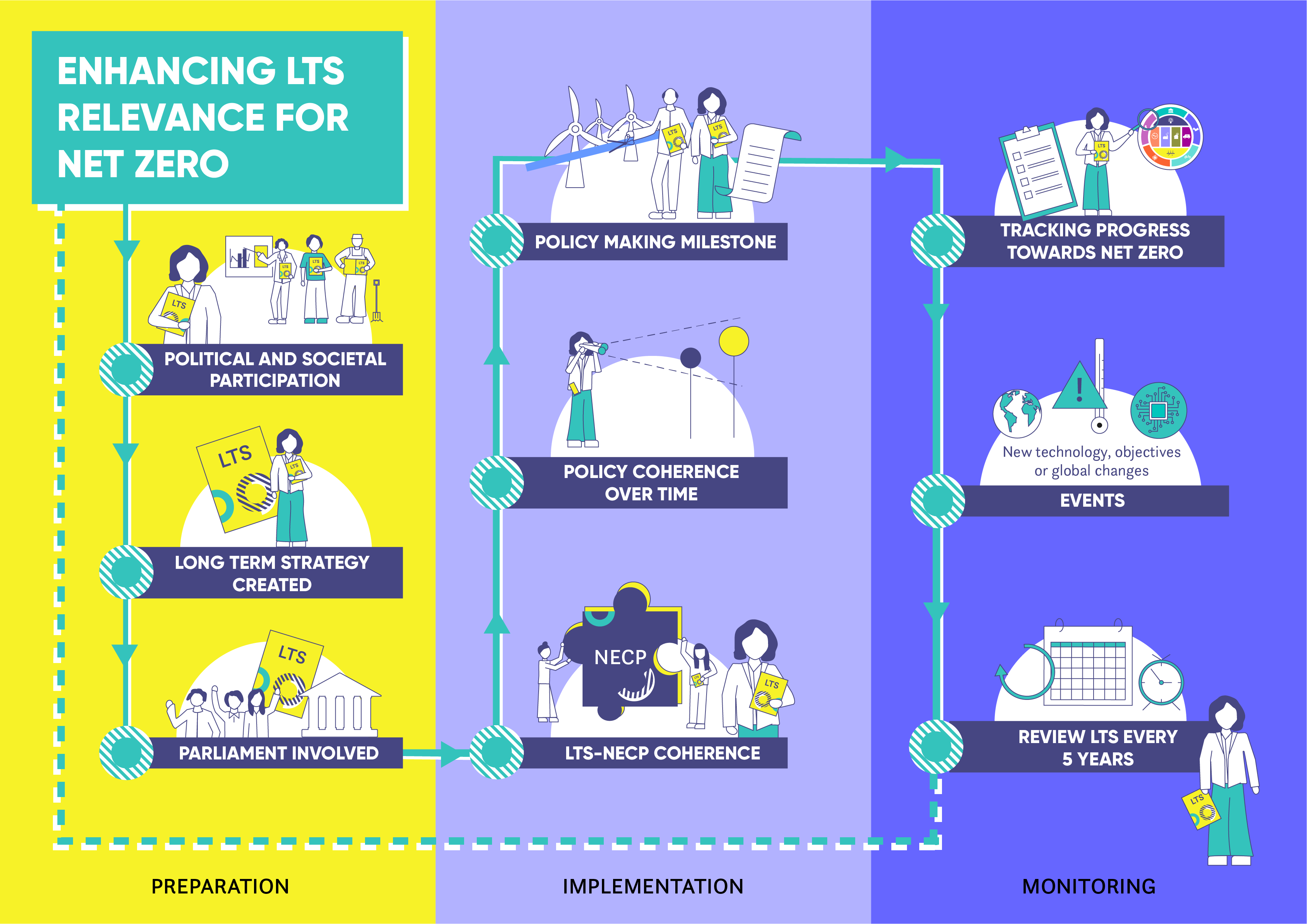
This infographic visualizes the proposed three-step process (preparation, implementation, monitoring) for EU member states to strengthen LTS relevance for net-zero. It's part of the report "Charting a Path to Net Zero. An assessment of national long-term strategies in the EU." The report presents the findings from an assessment of 22 long-term strategies (LTSs) of the EU Member States available as of March 2022. It is complemented by a briefing that summarizes the key findings and recommendations.
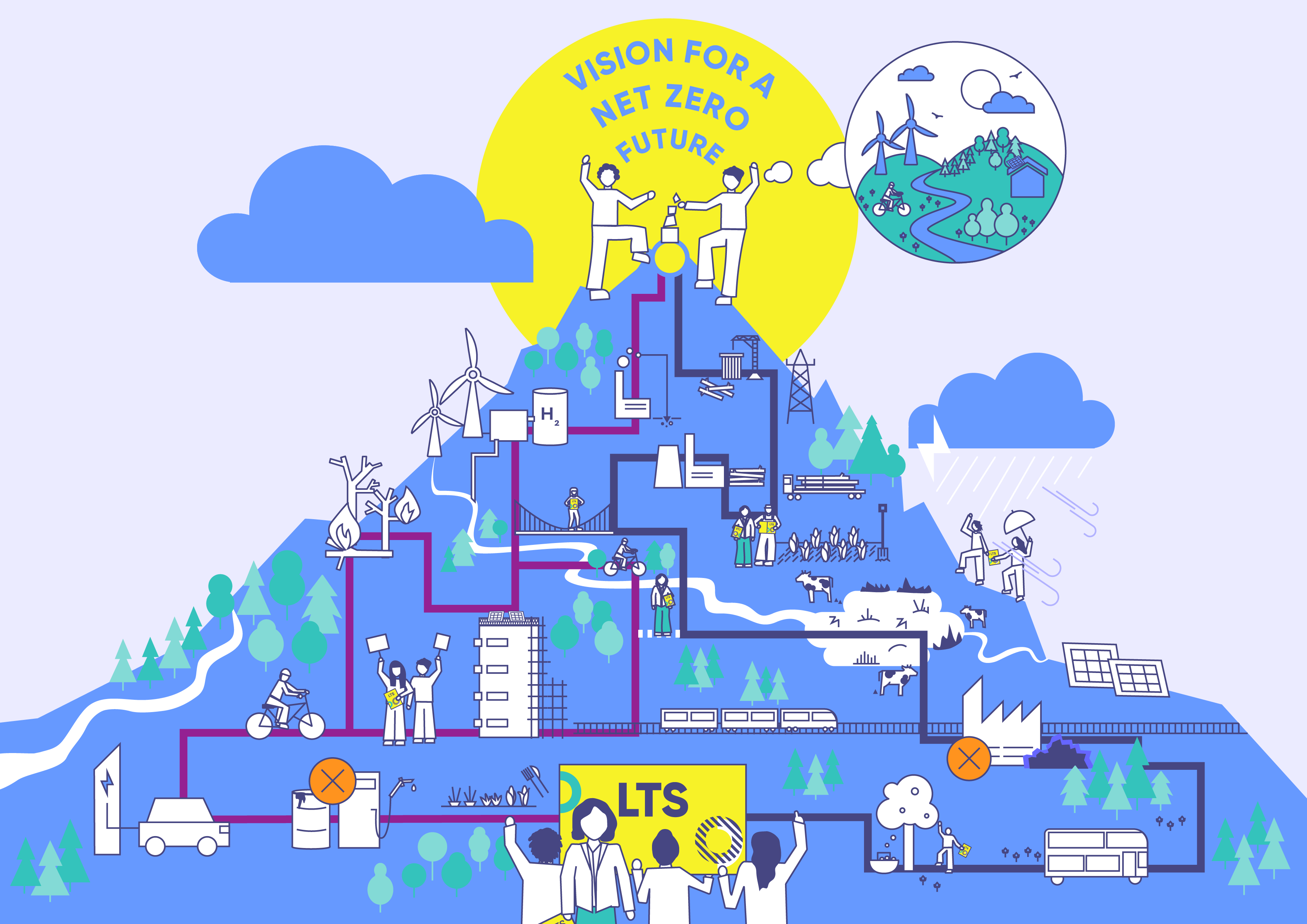
All EU member states should be clear on the role of emission reductions and removals, and ideally include specific long-term reduction and removal targets. LTSs should provide information about when and how these reductions and removals will be realised. This means strategies must include a description of pathways, including interim targets, to paint a clear picture of what needs to happen in the short- and longer term. This infographic visualizes different pathways of long-term strategies. It's part of the report "Charting a Path to Net Zero. An assessment of national long-term strategies in the EU." The report presents the findings from an assessment of 22 long-term strategies (LTSs) of the EU Member States available as of March 2022. It is complemented by a briefing that summarizes the key findings and recommendations.
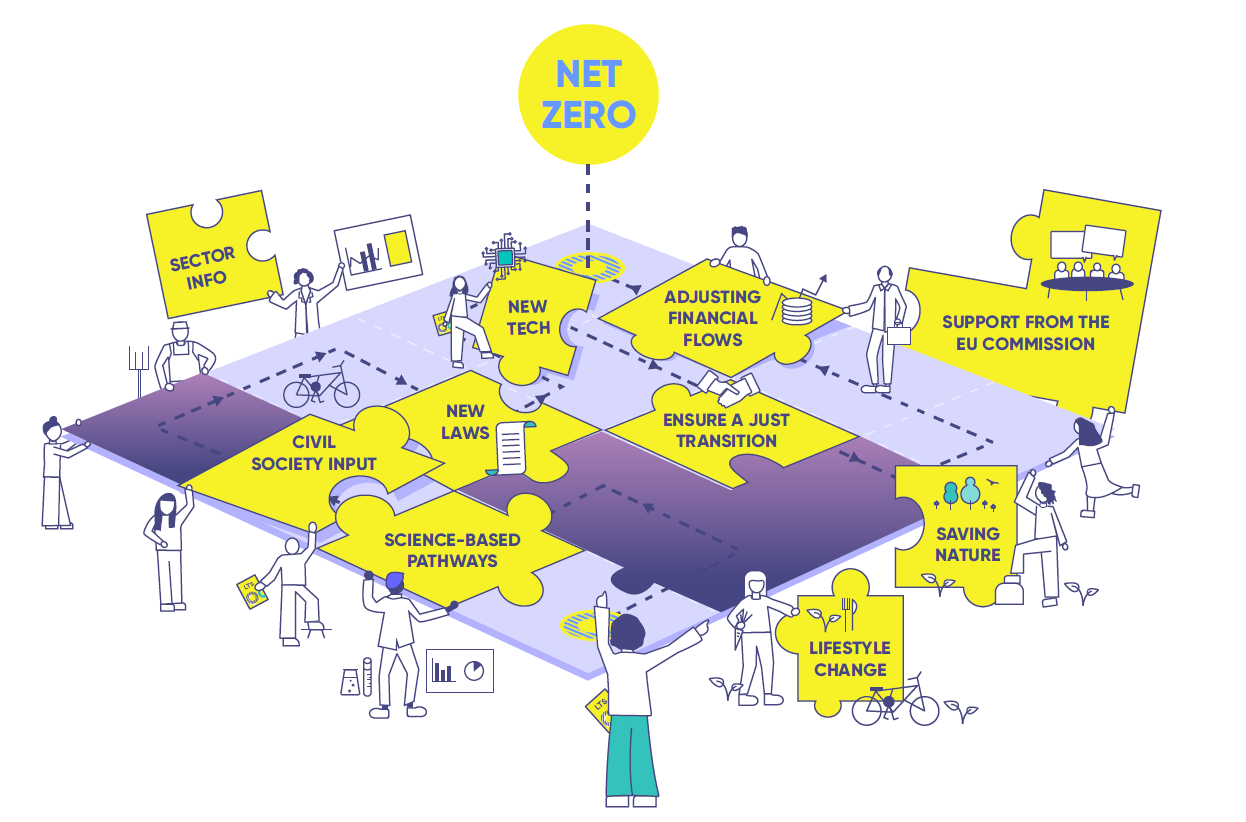
Preparing and then adopting a robust and sufficiently detailed long-term climate strategy is a crucial step. These strategies should include pathways that identify the necessary changes in the main emitting sectors and the economy as a whole. The plans need to take into consideration the specific national starting conditions and include economic, technical and social aspects, as well as other long-term objectives (e.g., adaptation needs or biodiversity goals). This infographic shows puzzle pieces that should be considered when developing strategies for moving toward net-zero emissions.
What models currently exist to promote photovoltaic systems on multi-unit buildings, and how can the regulatory framework be improved to further accelerate expansion? On 25 April 2023, three different models for the generation and use of PV electricity for multi-party buildings were presented in keynote speeches and then discussed with the expert audience.
On 6 May 2022, Ecologic Institute organized the "Theme Day Plastic in the Environment" to present to the public the research findings achieved since 2017 from 20 research projects with more than 100 participating institutions from science, industry and practice. Ecologic Institute developed a trailer for passenger television in Berlin's subways (Berliner Fenster) for Berlin-wide visibility of the event.
On 6 May 2022, Ecologic Institute organized the "Theme Day Plastic in the Environment" to present to the public the research findings achieved since 2017 from 20 research projects with more than 100 participating institutions from science, industry and practice. Ecologic Institute produced a reel to contribute to the visibility of the event.
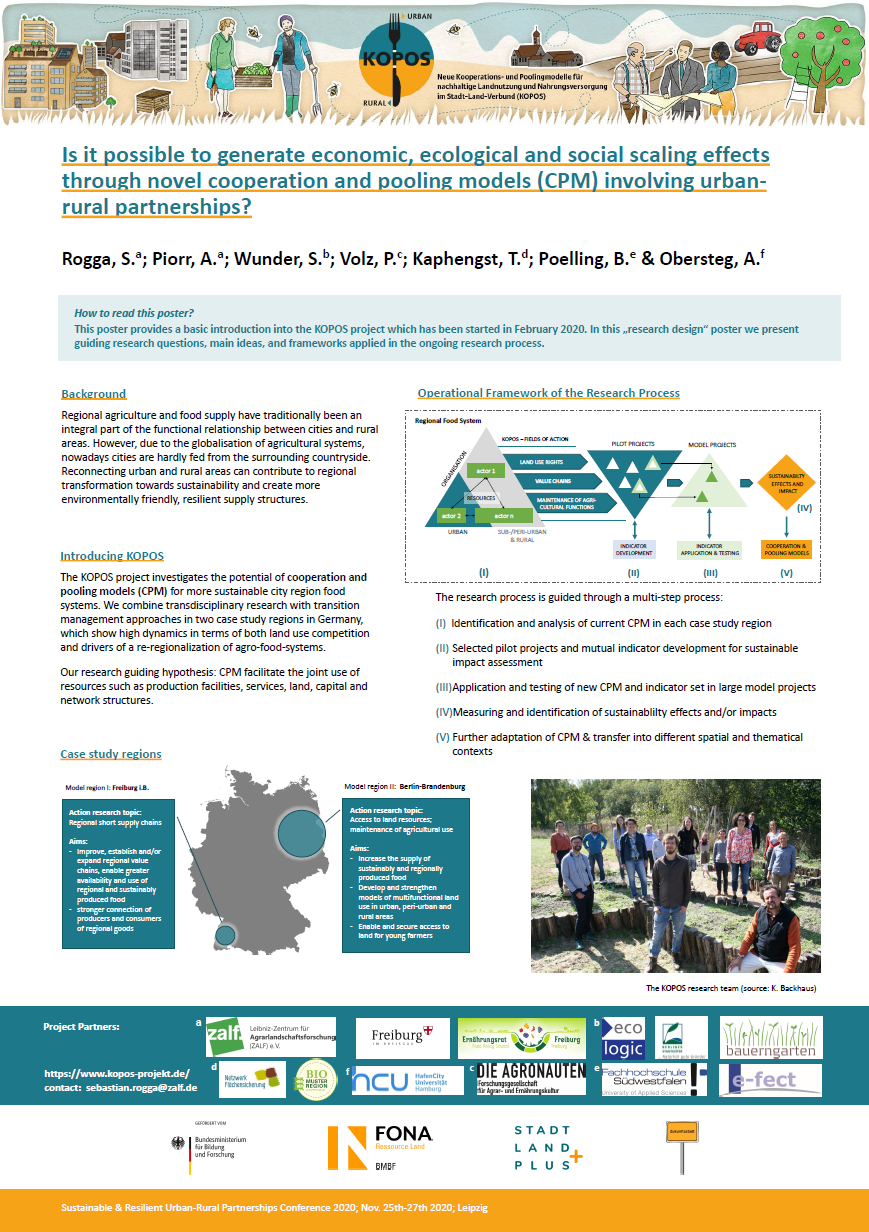
This poster provides a basic introduction into the KOPOS project, which has been started in February 2020. In this "research design" poster guiding research questions, main ideas, and frameworks applied in the ongoing research process are presented. The poster was designed according to the project's style guidelines for the "Sustainable & Resilient Urban-Rural Partnerships Conference 2020" in Leipzig.
The program "Bridging Global Divides" provides students from the University of Colorado Denver with the opportunity to spend three months in Berlin, while studying relevant contemporary issues such as the ecological crisis, the politics of injustice, international politics, and dictatorships.
For the project "New Cooperation for Sustainable Landuse and Food Supply in Urban-Rural Areas (KOPOS)", Ecologic Institute designed a ten-part postcard series. The postcard series promotes the first two episodes of the four-part KOPOS podcast series "Ernährungswende – Regional gedacht". In it, the focus of the two model projects (1) regional nutrition in Freiburg and (2) access to farmland in Brandenburg are discussed. The postcards are designed according to the project's style guidelines and also include a QR code to the corresponding podcast episode.
Ecologic Institute coordinated the organisation of the European event "Tackling microplastics in the environment". It focussed on specific results and policy recommendations from scientific research projects from Germany and other EU member states. We invited policy stakeholders at the EU level as well as other interested stakeholders to learn more about these new findings on microplastic emissions into the environment and how to reduce them. Social media cards were created to draw stakeholders' attention to the event.
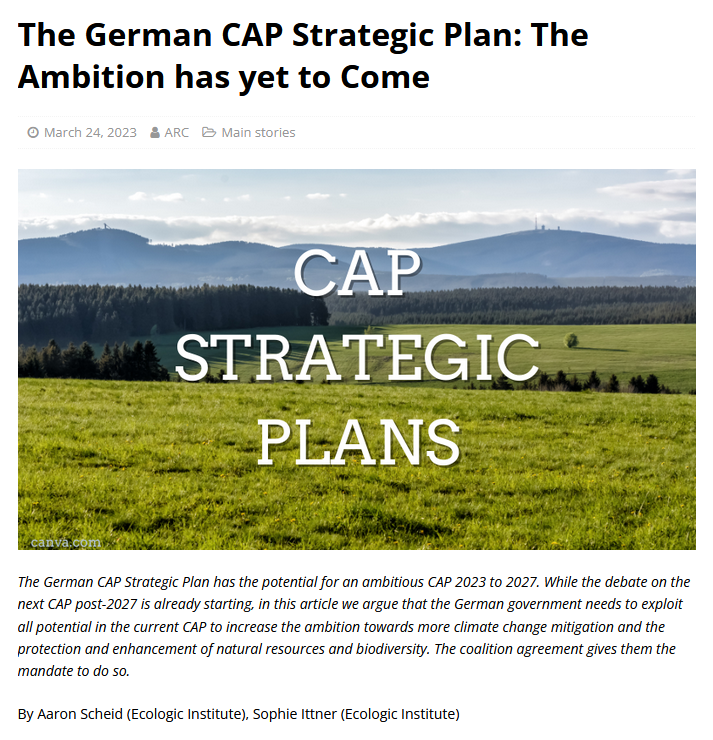
The German CAP Strategic Plan has the potential for an ambitious CAP 2023 to 2027. While the debate on the next CAP post-2027 is already starting, in this article Aaron Scheid and Sophie Ittner from Ecologic Institute argue that the German government needs to exploit all potential in the current CAP to increase the ambition towards more climate change mitigation and the protection and enhancement of natural resources and biodiversity. The coalition agreement gives them the mandate to do so.
In this 1st episode of the "CLIMATE ON AIR – Discussing the future of EU climate policy" podcast, hosts Aaron Best from Ecologic Institute and Bradlie Martz-Sigala from the University of Eastern Finland discuss with Anuschka Hilke, Program Director at the Institute for Climate Economics (I4CE) and Benjamin Görlach, Environmental Economist and Head of Economics and Policy Assessment at Ecologic Institute, what "transformative policy" actually means and how it differs from traditional policymaking.