Publication:Knowledge for Future – The Environment Podcast
To achieve the EU climate targets, a lot of money will have to be invested – according to estimates by the EU Commission, an additional 350 billion euros per year by 2030. In order to avoid greenwashing and ensure that these funds actually flow into sustainable economic activities, the EU taxonomy has been in place since 2020. What are the weaknesses of the taxonomy, and how could it be further developed in the future?
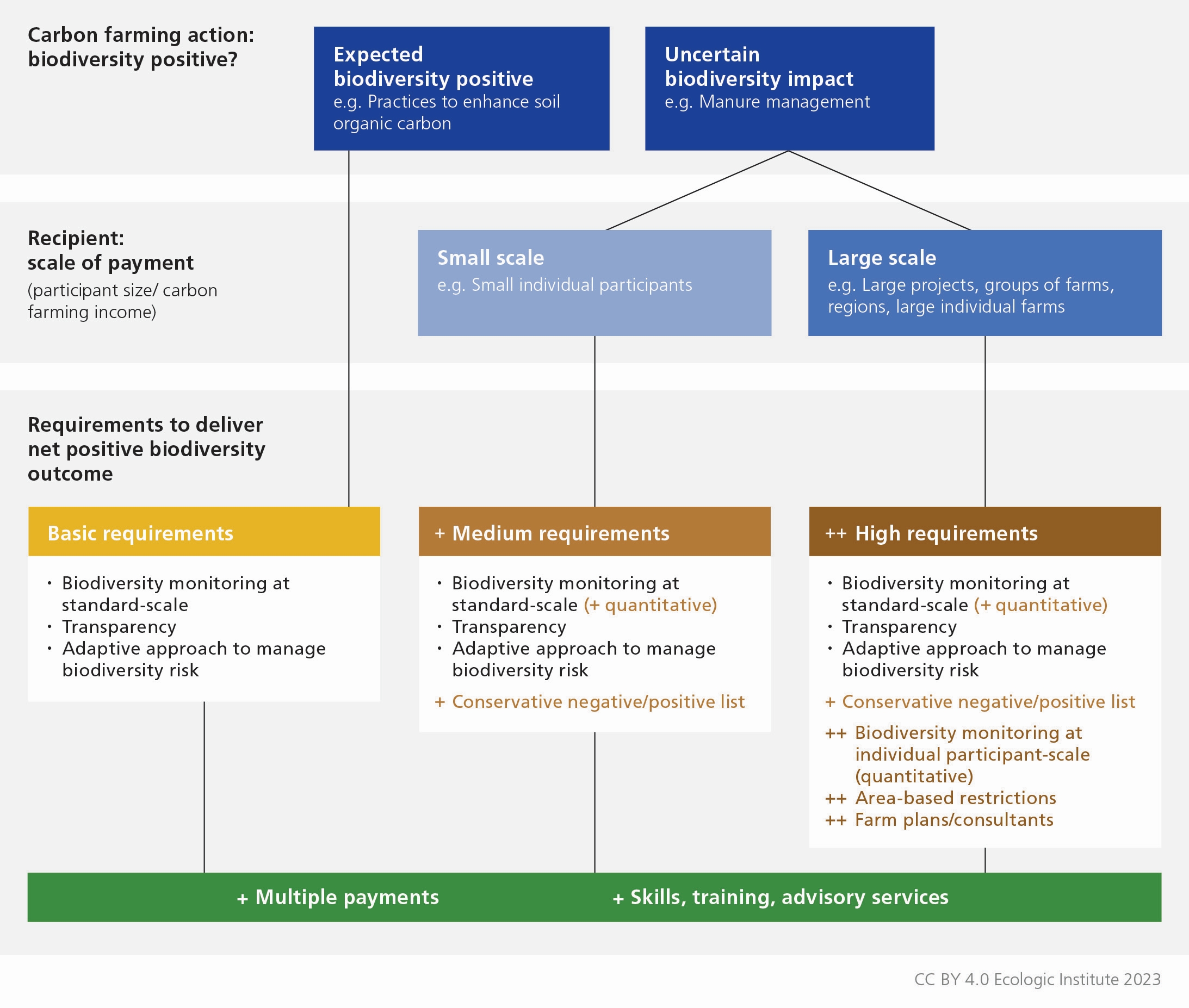
Drawing on our evaluation of ten existing carbon farming standard approaches to safeguard and promote biodiversity, this infographic proposes a differentiated approach to safeguarding and enhancing biodiversity in carbon farming standards.
In a report co-authored by Ecologic Institute and IEEP, we demonstrate that despite both the potential benefits and risks of carbon farming for biodiversity, most of the current carbon farming mechanisms fail to safeguard biodiversity and incorporate approaches to ensure net positive biodiversity impacts. We identify challenges and opportunities for implementing standards for biodiversity into carbon farming mechanisms and propose requirements to ensure that carbon farming standards enhance and safeguard biodiversity, alongside delivering climate change mitigation.
On 30 November 2022, the Commission proposed an EU carbon removal certification framework (CRCF). The proposed framework could undermine the environmental integrity of EU climate policies. Within this project, Ecologic Institute and Oeko-Institut assess the Commission's proposal for the CRCF and discusses interlinkages of the CRCF with other pieces of EU climate law.
Sustainable development is a long-term political goal of the European Union (EU), which has become even more important since the adoption of sustainable development goals (SDGs) and the European Green Deal. Eurostat, the Statistical Office of the European Union, has been monitoring progress in the field of sustainable development for years with the help of indicator sets. Since 2008, Ecologic Institute, together with the Vienna University of Economics and Business Administration, INFRAS and the Haymarket Media Group, has been producing monitoring reports on the subject. During the project, four monitoring reports on the implementation of the SDGs will be published as part of Eurostat’s Flagship publication series.
This project analyzed different policy options that could counteract such export-related leakage, but which are problematic in different ways in terms of their environmental, political, and legal implications. The analysis identifies targeted innovation support as a promising option because it minimizes legal and political risks while also offering climate benefits beyond leakage protection for European industry. Guiding principles for technology support measures were derived.
In this research and dialogue project on behalf of the Climate Neutrality Foundation, Ecologic Institute analyzes the complex landscape of Germany's bilateral and plurilateral partnerships in the fields of energy, climate and raw materials, with a focus on partnerships with countries of the Global South.
This document presents main takeaways and insights from a workshop organised by the Ariadne Project in Brussels on 30 November 2022. The workshop convened experts from seven organisations that operate carbon market models – academic institutions as well as carbon market analysts.
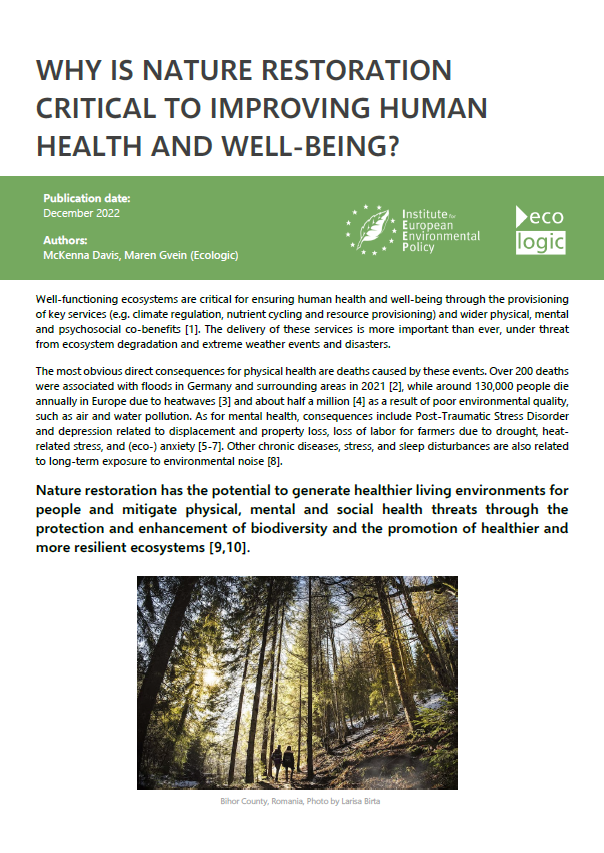
This policy brief highlights the importance of well-functioning ecosystems for ensuring human health and well-being, not least in light of climate change. Furthermore, it outlines the potential of nature restoration and specifically the law to generate healthier living environments and to mitigate diverse physical, mental and social health threats.
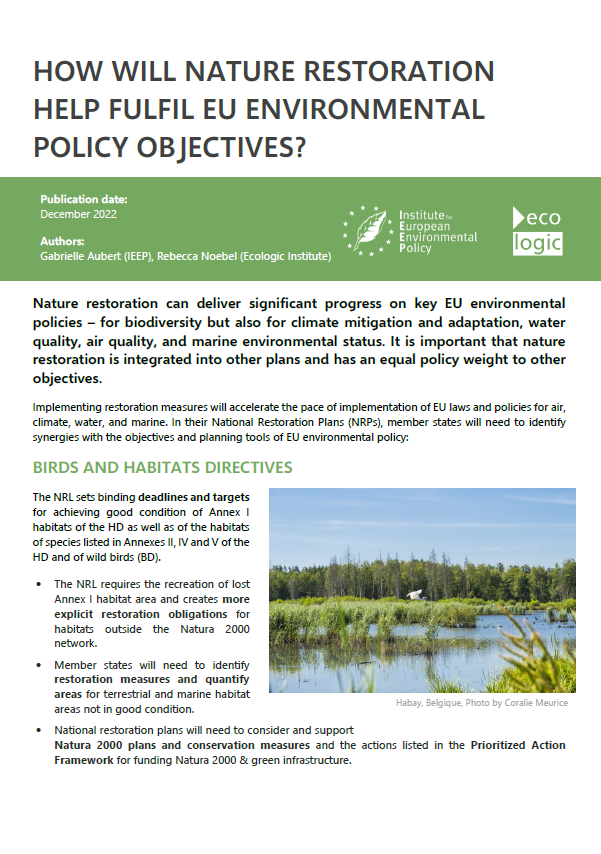
This policy brief targeted two main issues: 1) how the new nature restoration law would be beneficial to other existing EU policy objectives, and 2) which specific benefits would derive from the submission of the required National Restoration Plans (NRPs). As such, the law will – through the implementation of restoration measures – accelerate the pace of implementation of other EU laws and policies for air, climate, water, and marine.
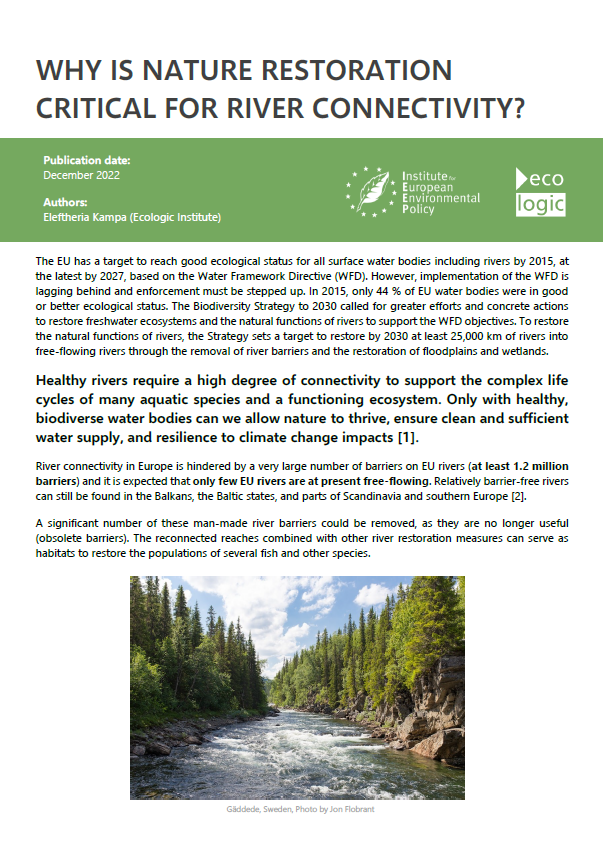
This policy brief highlights the importance of a high degree of river connectivity for healthy and biodiverse water bodies that can provide key ecosystem services such as water supply for different human uses and resilience to climate change impacts. The policy brief presents evidence and data on the decline of river connectivity due to human interventions, in particular river barriers and floodplain degradation, and the benefits offered by measures to restore free-flowing rivers.
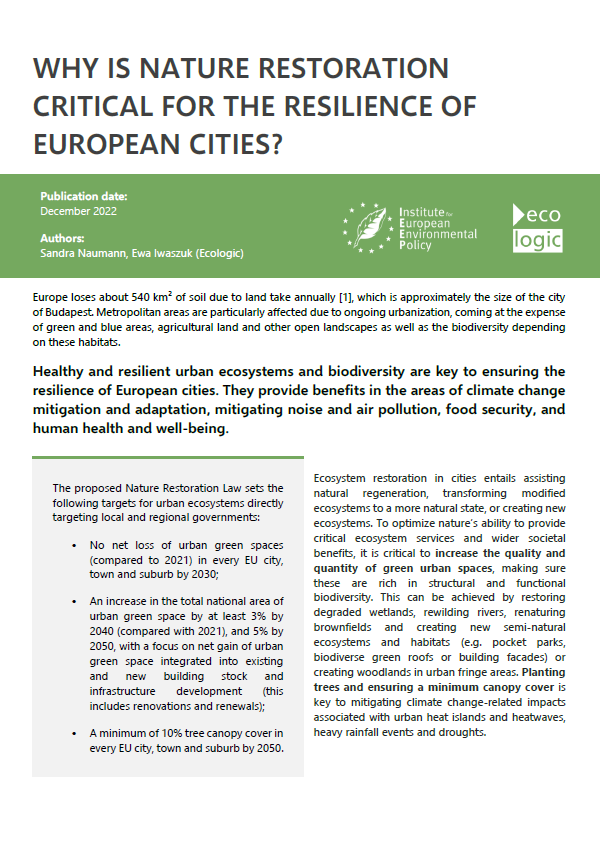
Healthy urban ecosystems and biodiversity are key to ensuring the resilience of European cities. This policy brief presents evidence and data to support strong targets for urban ecosystem restoration to be included in the Nature Restoration Law.
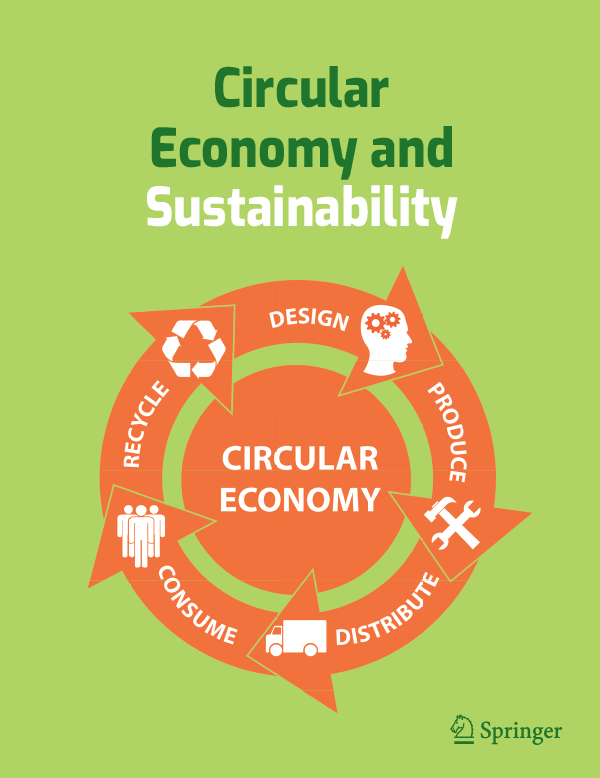
To tackle the "plastic crisis", the concept of circular economy has attracted considerable attention over the past years, both by practitioners and scholars alike. Against this background, Linda Mederake, Ecologic Institute, reflects in this opinion paper from a political scientist's point of view on key issues currently under discussion regarding the implementation of a circular plastics economy.
From 13 to 15 December (1 – 4pm CET), the International Carbon Action Partnership (ICAP) convened a three-day workshop on monitoring, reporting, verification of emissions and the accreditation of verifiers (MRVA) in emissions trading systems (ETS). Participation in the online workshop was open to anyone with an interest in, or professional link to, climate policy and the implementation of MRVA systems for carbon pricing mechanisms. Over 100 participants attended the event from across the globe.