The European Environmental Agency (EEA) published their landmark report on the state of nature in the EU on 19 October 2020, representing the most comprehensive assessment of the status of European nature and biodiversity to date. The State of Nature 2020 provides invaluable insights about the impact of conservation measures that have been applied as well as remaining gaps. The findings indicate that the majority of Europe's biodiversity continues to decline at an alarming rate, threatening the survival of thousands of animal species and habitats.
Nature-based solutions (NBS) are emerging as a tool to integrate nature into territorial planning, with great opportunities to address these threats and benefit humans and ecosystems in parallel. The guide for integrating nature-based solutions in urban planning, a first approach for Colombia has been developed to facilitate the inclusion of nature in urban planning through a seven-step process. The guide was written by Carolina Figueroa during her time at Ecologic Institute as an Alexander von Humboldt International Climate Protection Fellow. The guide is available for download.
Nature-based solutions (NBS) are solutions that are inspired and supported by nature. They can be used in urban settings to complement or replace "traditional" or "grey" solutions to social and environmental challenges, such as air pollution, the heat island effect, water scarcity, flooding, loss of nature and lack of social cohesion. This guidance document highlights a range of policy and supporting instruments relevant for NBS design, implementation and maintenance.
This report is complementary to the third edition of the State of Nature report, which describes the state of nature in the EU based on reports from Member States under the Birds (2009/147/EC) and the Habitats (92/43/EEC) Directives for the period 2013-2018. It details the methodologies applied in the current State of Nature report, complementing the reporting guidelines for the Member States.
To meet its increasingly stringent emissions reduction targets, the European Union plans to extend the use of emissions trading, to also cover emissions from road transport and buildings. To understand the effects of this move, DG CLIMA commissioned a comprehensive analysis to investigate the economic, social, environmental, and regulatory / administrative implications. Together with partners ICF, eclareon, Enerdata, Fraunhofer Institut, Cambridge Econometrics, CITEPA, and Milieu, the Ecologic Institute investigated the general options for either the extension of the existing EU ETS or the introduction of a stand-alone scheme.
This paper examines the role that the post-2020 Common Agricultural Policy (CAP) can play in the transformation towards more sustainable and resilient agri-food systems in the EU.
Achieving the Paris Agreement Long-term temperature goal (PA LTTG) requires closing the 2030 ambition and action gap between emissions levels consistent with the Paris Agreement and emissions levels projected with current targets and policies. G20 countries have a crucial role to play in realising increased climate policy ambition, given their economic power and prosperity, as well as their influence on investments, technology deployment and financial flows. This briefing paper provides an overview of mitigation options that have been analysed in recent literature and that can contribute to closing the emissions gap in 2030. This provides the basis to identify key policy areas and promising options for intergovernmental cooperation between the G20 nations, as well as possibly other relevant actors.
In this publication for the German Federal Environment Agency, the project team (Oeko-Institut, Ecologic Institute, University of Mannheim and the Institute of Development Studies) formulates requirements for a sustainable bioeconomy from the SDGs of the 2030 Agenda. They highlight that the policy goals behind specific implementation have a major impact on the sustainability of the bioeconomy. The positive potential can be unlocked primarily through goals such as ensuring global food security and reducing fossil fuels.
Sustainable use of natural resources in the long term requires not only the application and dissemination of resource-saving technologies and infrastructures, but also changes in individual and collective behaviour and social practices. Against this background, different methods were combined in the project "Trendradar Resource Policy" to identify and evaluate societal trends and resource policy measures. Using trend analysis, 20 socially relevant trends were identified and qualitatively described. These trends were then empirically reflected by eliciting perceptions, attitudes and interpretation patterns of the general population in a three-week Moderated Research Online Community (MROC). At the same time, policy measures were identified and qualitatively assessed in terms of relevance and possible barriers to implementation.
Int this report, Irina Herb and Christiane Gerstetter of Ecologic Institute, as well as Alexandru Matei (ICLEI), present insights on how nature-based solutions can contribute to achieving the Sustainable Development Goals (SDGs), defined in the 2030 Agenda, and recommend several pathways for doing so.
This background paper provides an overview of existing and new laws and initiatives regarding plastics in Germany and the EU. Despite the multitude of approaches, guidelines and laws, regulatory gaps remain. The greatest need for action exists in the areas of strengthening recycling and the use of recycled plastics as well as waste prevention. Waste prevention remains the unwanted child in the resource discourse, although it almost always represents the best option in terms of environmental policy.
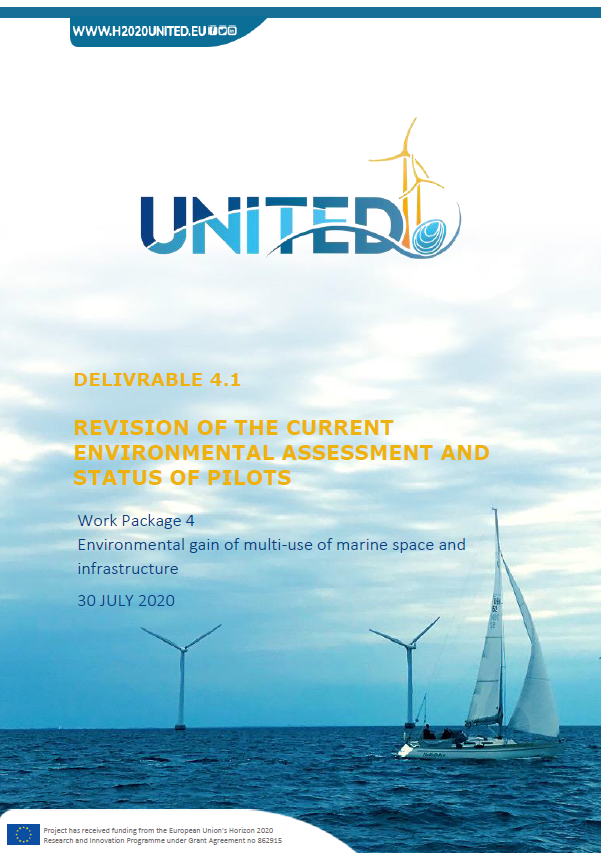
The UNITED project report "Current Environmental Assessment and Status of the Pilots" provides a comprehensive overview of the current environmental assessments and status of various pilot projects. These projects included a variety of multi-use concepts in the marine environment, including the combination of offshore wind energy with shellfish and kelp cultivation, offshore wind and solar energy, shallow estuarine aquaculture and kelp cultivation, and tourism. The report looks at the environmental aspects of these pilot projects and assesses their environmental impacts, regulatory requirements and existing environmental assessment results and monitoring capacity.
In this publication, Doris Knoblauch (Ecologic Institute), Lorenzo Felicetti, and Ulf Stein (Ecologic Institute) shed light on the untapped potential of ICT solutions in water management across Berlin, Milan, Copenhagen, Paris and Sofia, the five cities analysed in the project digital-water.city. In the analysis, the cross-cutting nature of digital water governance and, thereby, its multifunctionality in terms of policy goals became evident.
The EU Biodiversity Strategy for 2030 aims to secure healthy, resilient, biodiversity-rich ecosystems that deliver the range of services essential to the prosperity and well-being of citizens. Nature-based solutions (NBS) are central to achieving the objectives of this strategy. Sandra Naumann and McKenna Davis from the Ecologic Institute have published a report outlining the contribution of over 30 EU-funded research and innovation projects to EU biodiversity, climate and other policy objectives and sustainable transition processes.
For energy-intensive industries, the transformation towards a climate-neutral form of production is a particular challenge, not only because of their large carbon footprints, but also because they are embedded in value chains that are still predominantly fossil-based. However, they too are part of the effort to reach climate neutrality by 2050 and at the same time accelerate the transition by providing competitive clean technology solutions. This study explores how European energy-intensive industries can transition to a climate-neutral economy while maintaining, and ideally improving, their global competitiveness. It investigates different technology options, policy designs and financial instruments.