Photo: Canva.com, TrueFoodS project, 2026
Transforming European Food Systems (TrueFoodS)
Sustainability, Equity, Governance and Resilience as Core Elements
- Project
- Duration
-
-
European food systems are facing significant environmental, social, and economic challenges. Despite ongoing efforts to address these challenges, the post-harvest phase – including first handling, processing, storage, transport, distribution, and waste management – has so far remained insufficiently considered, despite its substantial contribution to food losses, resource inefficiencies, and social inequalities.
Against this background, the TrueFoodS project, funded under the European FutureFoodS Partnership, aims to make Europe’s post-harvest systems more sustainable, equitable, and resilient. The project brings together 13 partners from nine countries and adopts an integrated Food Systems Approach that considers environmental, economic, social, and regulatory dimensions.
Project Objectives
TrueFoodS addresses key structural challenges in European post-harvest systems, pursuing the following objectives in particular:
- Developing recommendations to strengthen the integration of the post-harvest phase within legal and policy frameworks
- Designing circular strategies to reduce food losses and environmental impacts
- Strengthening the capacities of small and medium-sized enterprises through targeted measures and inclusive business models
- Developing a governance framework for adaptive and resilient post-harvest systems
- Co-creating practical solutions in collaboration with municipalities, businesses, and civil society actors
Ecologic Institute in TrueFoodS
Ecologic Institute is leading Work Package 3, which focuses on analysing the legal and policy frameworks shaping the post-harvest phase in Europe, with particular attention given to the CAP Strategic Plans of the consortium countries. The work combines the legal expertise of the AgLaw Research Group at Sculoa Superiore Sant'Anna with the policy expertise of Ecologic Institute. The objective is to assess the extent to which the post-harvest phase is currently addressed and supported, identify regulatory gaps and inconsistencies, and develop targeted guidance and recommendations to strengthen the integration and coherence of post-harvest considerations within legal and policy frameworks to ensure more effective support across the value chain.
Contact

- Funding
-
Federal Ministry of Research, Technology and Space (BMFTR), Germany - Partner
-
Vrije Universiteit Brussel (VU Brussel), Belgium Institute for Climate, Economic and Social Resilience (IRCES), Romania Municipality of Alba Iulia, Romania Ecologic Institute, Germany Sustainable Development Skåne, Sweden Institute of Natural Products and Agrobiology (IPNA), Spain University of Porto (U.Porto), Portugal University of Food Technology (UFT), Bulgaria Region Skåne, Sweden Finca Marañuela, Spain - Team
- Duration
-
-
- Project ID
- Keywords
-
sustainable food systems, sustainable food value chains, food loss reduction, circular food systems, resilient food systems, sustainable post-harvest systems, resource efficiency in food systems, food waste prevention, sustainable food processing, climate-resilient food systems, sustainable food supply chains, food systems governance, inclusive food business models, sustainable agri-food policy, food system transformation, sustainable food distribution, social equity in food systems, sustainable food infrastructure, environmentally sustainable post-harvest practices, European agri-food sustainabilityEuropeFood Systems Approach, legal framework analysis, policy analysis, governance framework development, co-creation processes, stakeholder engagement, SME capacity building, regulatory gap analysis, CAP Strategic Plans analysis, cross-sector collaboration, integrated systems analysis, policy recommendations development, adaptive governance approaches, inclusive business models, collaborative solution development, value chain analysis, legal and policy expertise integration
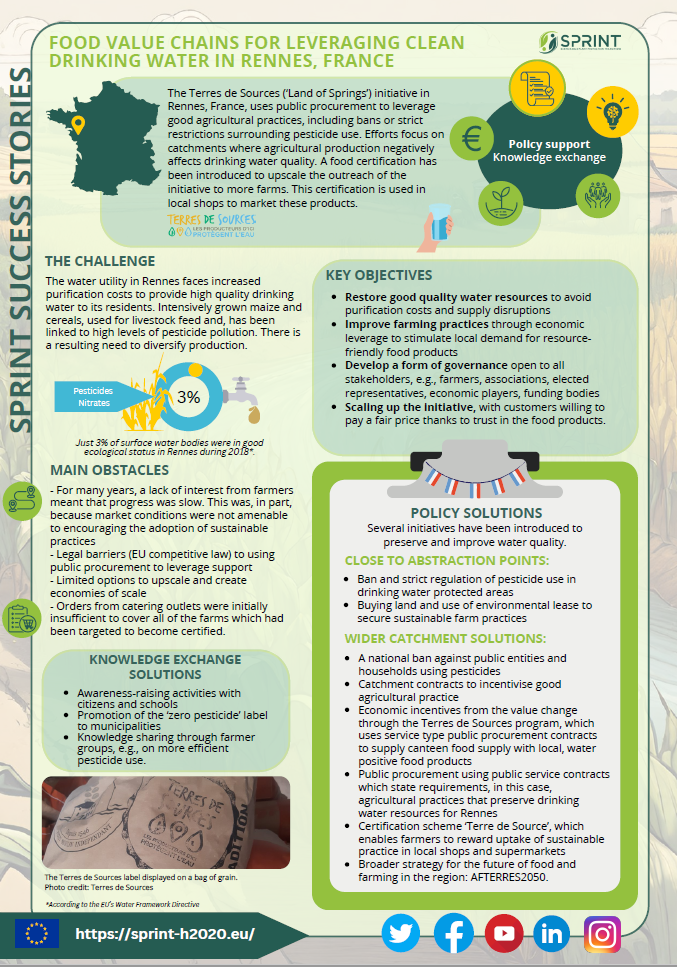
Rouillard, Josselin et al. 2024: Food Value Chains for Leveraging Clean Drinking Water in Rennes, France. SPRINT fact sheet.
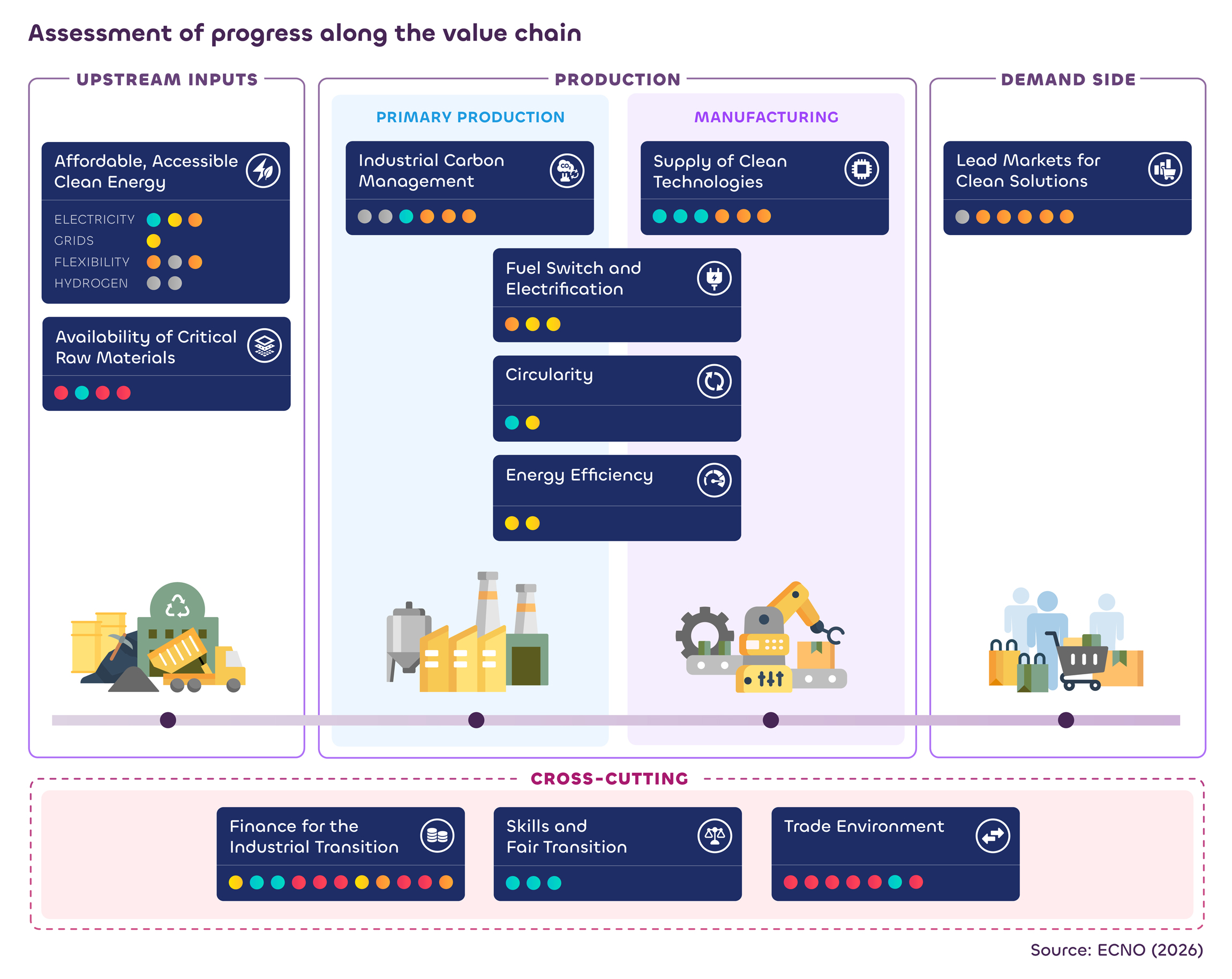
ECNO (2026): Clean Industrial Transition Monitor – Progress, Gaps and Policy Implications of the Clean Industrial Deal. Infographic (CC BY 4.0).
Bognar, Julia et al. 2023: Pricing agricultural emissions and rewarding climate action in the agri-food value chain. Rotterdam: Trinomics.
Market Information Talks for the Organic Sector 2026
- Duration
-
-
- Funding
-
Ministry of Agriculture, Food, Environment and Consumer Protection (MLEUV), Germany
Rogga, Sebastian; Annette Piorr, Katrin Martens 2024. Neue Kooperationsformen für die Transformation regionaler Agri-Food-Systeme. Eine Zusammenstellung für das Handlungsfeld "Zugang zu Land". ZALF, Ecologic Institute: Müncheberg, Berlin.
Hanke, G.; Brunn, C.; Jägle, J.; Jánszky, B.; Meier, J.; Mering, F. v.; Quack, D.; Wolff, F. (2023): Components for the Transformation towards a Sustainable Food System; German Environment Agency, Dessau.