Ecologic Institute Newsletter No 286 – July 2026
- Ecologic Institute Newsletter
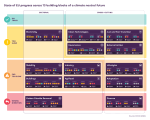
State of EU Progress to Climate Neutrality – ECNO's 2026 Flagship Report
Good news and bad from the fourth whole-economy assessment report of the European Climate Neutrality Observatory (ECNO). Its 2026 Flagship Report finds that more than half of the indicators tracked have accelerated since last year’s assessment. Yet overall progress remains too slow, with none of the 13 building blocks assessed fully on track. This leaves the EU exposed to strategic dependencies and worsening climate impacts. The report identifies six key actions to strengthen resilience – from accelerating renewables to advancing circularity – in support of a competitive, climate-neutral economy.
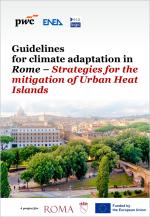
Climate Adaptation in Rome – Guidelines and Action Plans for Heat-Resilient Urban Neighbourhoods
As heatwaves intensify across Europe, cities need practical solutions to protect residents and reduce urban heat. Two new publications bring together strategies and practical measures to mitigate the urban heat island effect in Rome. A guidelines document presents around 30 nature-based, technical and enabling solutions to cool streets, squares and buildings – ranging from street trees and green roofs to shading structures and climate shelters. Complementing these guidelines, action plans for the pilot areas of Centocelle–Alessandrino and Rome's historic city centre propose site-specific intervention packages, outline governance responsibilities, financing options and monitoring approaches, and explain how these measures can be adapted for use across the city.
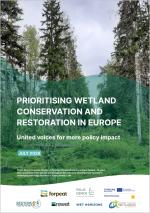
Prioritising Wetland Conservation and Restoration in Europe – White Paper
Restoring Europe's wetlands is essential for achieving the EU's biodiversity and climate goals, but success depends on coordinated action across policy, finance and local implementation. Drawing on seven EU-funded projects, including RESTORE4Cs, this white paper identifies four policy priorities: coherent EU frameworks, public and private finance, landscape-scale implementation, and monitoring with stakeholder engagement. Examples from Finland, Germany and Spain demonstrate how coordinated governance, fair incentives for land users and community involvement can support effective restoration. The recommendations support policymakers in implementing the Nature Restoration Regulation and developing National Restoration Plans.
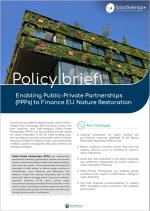
Enabling Public-Private Partnerships (PPPs) to Finance EU Nature Restoration – Policy Brief
Implementing the EU Nature Restoration Regulation at the required scale will depend on securing sufficient long-term funding. As budgets come under increasing pressure, mobilising private finance is becoming essential. A new Biodiversa+ policy brief explores how well-designed Public-Private Partnerships (PPPs) can help close this financing gap while safeguarding ecological integrity and public interest.
Expert Hearing on the Federal Government’s Draft Bill to Transpose the Environmental Crime Directive
Expert Hearing: Dr. Stephan Sina
Germany is preparing to transpose the new EU Environmental Crime Directive into national law. At a public hearing of the Bundestag's Committee on Legal Affairs and Consumer Protection, Ecologic Institute's Dr. Stephan Sina presented his expert assessment of the Federal Government's draft bill and discussed key legal issues with members of parliament. His contribution addressed key aspects of the transposition of Directive (EU) 2024/1203 into German criminal law.
Legal Frameworks for Tackling Climate Change in Germany
Speech: Dr. Stephan Sina
Germany's approach to embedding climate change mitigation and adaptation in its legal framework was the focus of a presentation to a delegation from the Legislative Affairs Commission (LAC) of the Standing Committee of the National People's Congress of the People's Republic of China. Ecologic Institute's Dr. Stephan Sina outlined the key provisions of the Federal Climate Change Act (Bundes-Klimaschutzgesetz, KSG) and the Federal Climate Adaptation Act (Bundes-Klimaanpassungsgesetz, KAnG), highlighting implementation experiences and ongoing challenges. The presentation concluded with a discussion and Q&A on the legal approaches presented.
Bringing Science, Policy and Fishers Together for Sustainable Fisheries
Speech: Dr. Grit Martinez
Sustainable fisheries depend on combining scientific knowledge, effective policy and the practical experience of fishers. On 19 June 2026, the Italian National Research Council hosted a workshop in Mazara del Vallo in Western Sicily, bringing together fishers, policymakers, and researchers to discuss "Strengthening the Resilience of Marine Ecosystems through Innovative Technologies and Ecosystem-Based Approaches to Fisheries in the Strait of Sicily". Ecologic Institute's Dr. Grit Martinez participated on behalf of SEA4FUTURE, representing the policy-related activities of the 4-year EU project led by Ecologic Institute.
Actor Coalitions, Frames and Political Time in EU Plastics Policy
Speech: Linda Mederake
The EU significantly expanded its plastics legislation between 2015 and 2019 despite a broader period of environmental policy stagnation. At the 2026 Joint Conference of the German, Austrian and Swiss Political Science Associations, Ecologic Institute's Linda Mederake presented findings from her doctoral research explaining how the European Commission linked different problem framings with the circular economy agenda and capitalised on political timing to secure support for the 2019 Single-Use Plastics Directive.
Transatlantic Exchange on Nature-based Solutions in Urban and Rural Contexts
Speech: McKenna Davis
At the workshop "Nature-based Solutions in Urban and Rural Contexts in the United States and Germany" held in Berlin on 15 June 2026, Ecologic Institute's McKenna Davis presented approaches to mainstreaming nature-based solutions in municipal planning and decision-making. She identified four key prerequisites for successful implementation: cross-departmental coordination, participation, continuous learning, and institutionalisation. The presentation also emphasised that there is no one-size-fits-all governance model. Instead, policy instruments and administrative structures need to be tailored to local contexts.
Enhancing Sustainable Resource Use in Times of Conflict and Crises
Mandy Hinzmann
From 8–12 June, the International Resource Panel met in Berlin, hosted by the German Ministry for the Environment. At a time when resource security is becoming an increasingly important political and economic issue, the Panel discussed the latest scientific evidence on global resource use. Ecologic Institute’s Mandy Hinzmann joined the meeting as an observer and supported the German delegation as part of the project IntRess. Key discussions underscored that resource policies must address social inequalities and that long-term human well-being depends on keeping global resource use within planetary boundaries.
Nature-based Climate Adaptation
Speech: Jenny Tröltzsch and McKenna Davis
Nature-based solutions are widely recognised as essential for climate adaptation, yet many municipalities still face legal, financial and institutional barriers to implementation. At a meeting of the parliamentary working groups of Alliance 90/The Greens in the German Bundestag, Ecologic Institute’s Jenny Tröltzsch and McKenna Davis presented findings from the German Environment Agency (UBA) project "Climate Adaptation Naturally!" (Natürlich Klimaanpassung!) and discussed the legal, financial and institutional barriers that continue to limit wider implementation. The exchange also explored policy recommendations and practical tools to support municipalities in the planning, financing and implementation of nature-based climate adaptation.
Ten Years of Plastic Pirates: New Citizen Science Campaigns Launch in 2026/27
For the past decade, more than 24,00 young people have contributed to environmental research by documenting plastic pollution in Germany's rivers and coastal areas through the Plastic Pirates citizen science project. The anniversary also marks the launch of new sampling campaigns in autumn 2026 and spring 2027, alongside focus groups exploring microplastics and how young people perceive and engage with this environmental challenge.
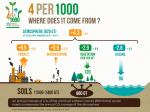
Ecologic Institute Joins the "4 per 1000" Initiative
Healthy soils store carbon, strengthen food security and increase resilience to climate change. By joining the international "4 per 1000" Initiative, Ecologic Institute supports knowledge exchange on sustainable soil management and carbon farming. Bringing together more than 830 partners from governments, research, agriculture, civil society and the private sector, the initiative promotes knowledge exchange and collaboration to unlock the climate and food security benefits of healthy agricultural soils.
Contents
| ► | State of EU Progress to Climate Neutrality – ECNO's 2026 Flagship Report |
| ► | Climate Adaptation in Rome – Guidelines and Action Plans for Heat-Resilient Urban Neighbourhoods |
| ► | Prioritising Wetland Conservation and Restoration in Europe – White Paper |
| ► | Enabling Public-Private Partnerships (PPPs) to Finance EU Nature Restoration – Policy Brief |
| ► | Expert Hearing on the Federal Government’s Draft Bill to Transpose the Environmental Crime Directive |
| ► | Legal Frameworks for Tackling Climate Change in Germany |
| ► | Bringing Science, Policy and Fishers Together for Sustainable Fisheries |
| ► | Actor Coalitions, Frames and Political Time in EU Plastics Policy |
| ► | Transatlantic Exchange on Nature-based Solutions in Urban and Rural Contexts |
| ► | Enhancing Sustainable Resource Use in Times of Conflict and Crises |
| ► | Nature-based Climate Adaptation |
| ► | Ten Years of Plastic Pirates: New Citizen Science Campaigns Launch in 2026/27 |
| ► | Ecologic Institute Joins the "4 per 1000" Initiative |
| ► | Researcher with Focus on Climate Policy |
| ► | Student Assistant in the Climate Programme |