© S. Kreibich, 2026
Nature-based Climate Adaptation
Presentation to Green parliamentary working groups
- Presentation
- Date
-
- Location
- online and Berlin, Germany
- Speech
On 8 June 2026, Jenny Tröltzsch and McKenna Davis from Ecologic Institute were invited to present insights on nature-based climate adaptation to the Working Group of the Green Parliamentary Group on the Committee for Housing, Urban Development, Building and Local Government (WSBK). Members of the Green working group on the Committee for the Environment, Climate Action, Nature Conservation and Nuclear Safety (UKN) were also invited to join the exchange. The hybrid meeting took place in the German Bundestag, focusing on the results of and emerging recommendations from the NatürlichKlimanpassung! Project.
Nature-based solutions for municipal climate adaptation
In their presentation, Jenny Tröltzsch, Senior Fellow and Coordinator Climate Adaptation, and McKenna Davis, Senior Fellow and Coordinator Nature-based Solutions, introduced findings from the "Climate Adaptation Naturally!" project. This project, coordinated by Jenny Trölzsch, was initiated and funded by the German Environment Agency and implemented by Ecologic Institute together with Birgit Georgi.
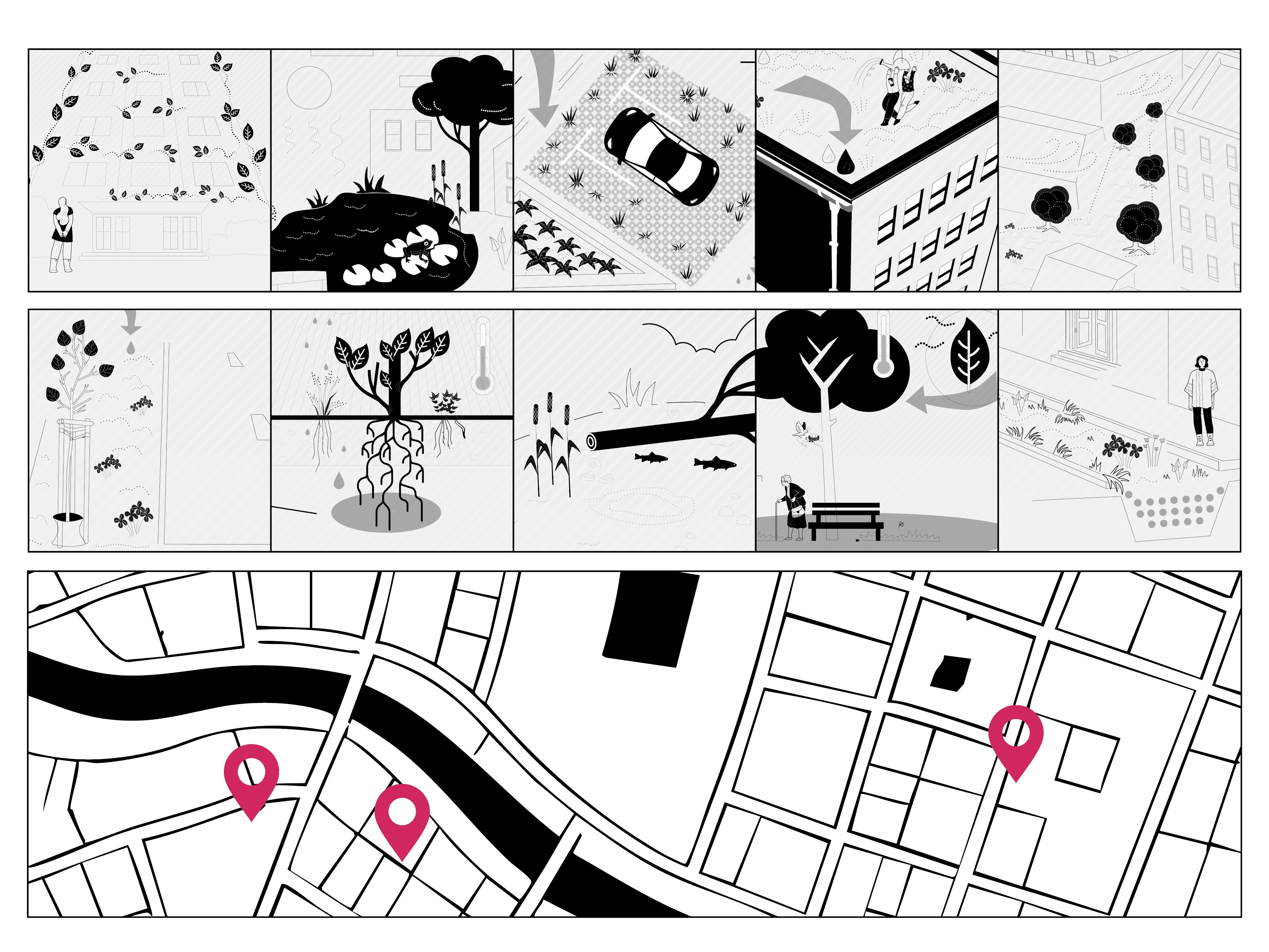
The project examined how municipalities can be supported in planning and implementing nature-based solutions for climate adaptation. Drawing on literature, interviews and exchanges with municipal actors, planning offices and associations, the presentation highlighted that nature-based solutions are effective but continue to face structural barriers, including legal questions, financing constraints, limited staff capacity and the need for stronger cross-sectoral cooperation.
The speakers emphasised how nature-based solutions can support municipalities in adapting to climate impacts, what obstacles currently limit implementation, and which policy measures could accelerate uptake over the coming years. Municipal structures, cooperation formats and networks were highlighted as central enabling conditions, particularly where climate adaptation needs to be integrated into urban development, water management, biodiversity protection and public space planning.
Financing, tools and communication as implementation levers
The exchange addressed several questions raised by the parliamentary working groups, including
- which nature-based measures municipalities currently request most often,
- which highly effective measures remain underused, and
- where the most significant bottlenecks lie: funding, staff capacity, legal frameworks or political prioritisation.
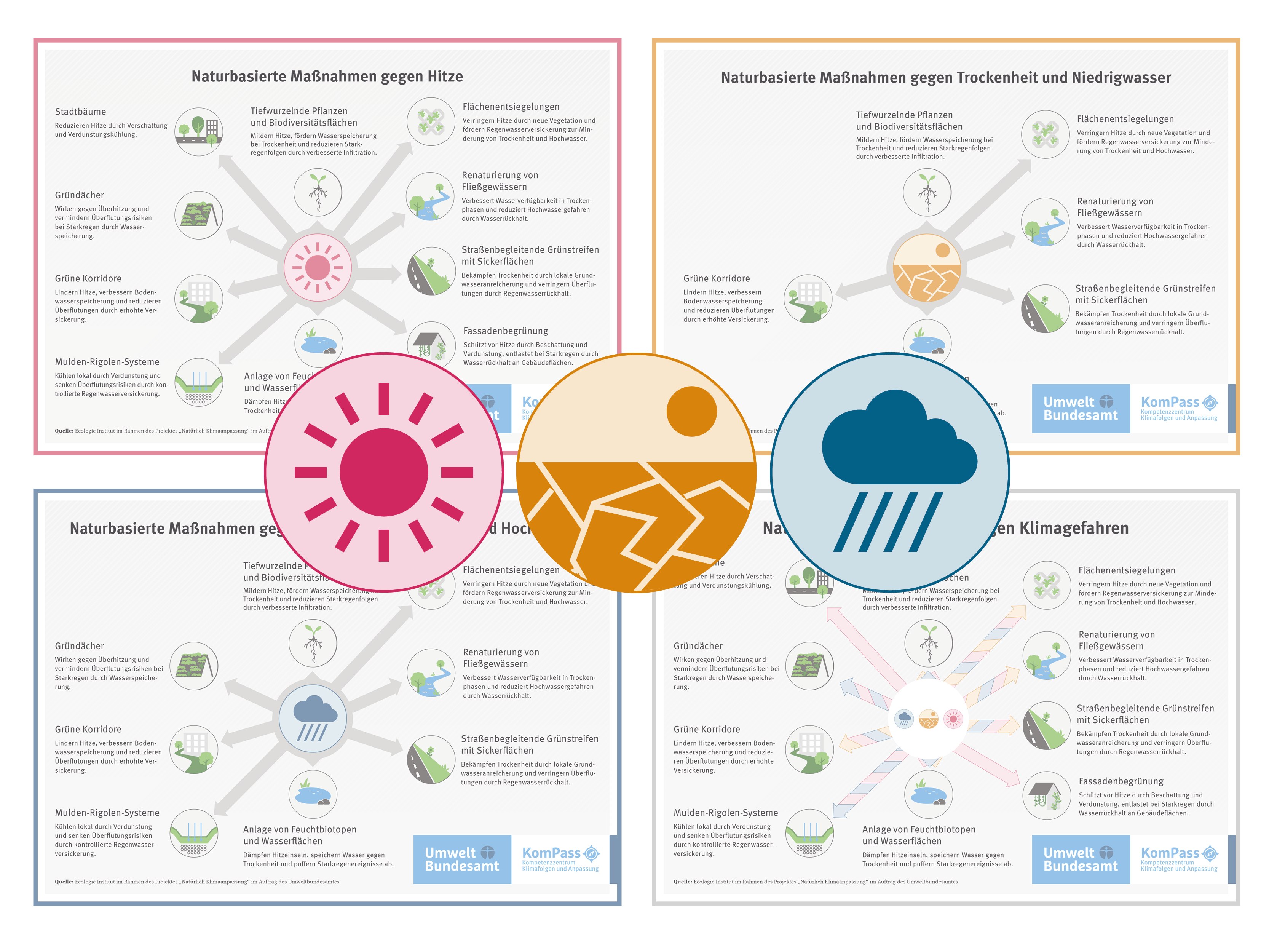
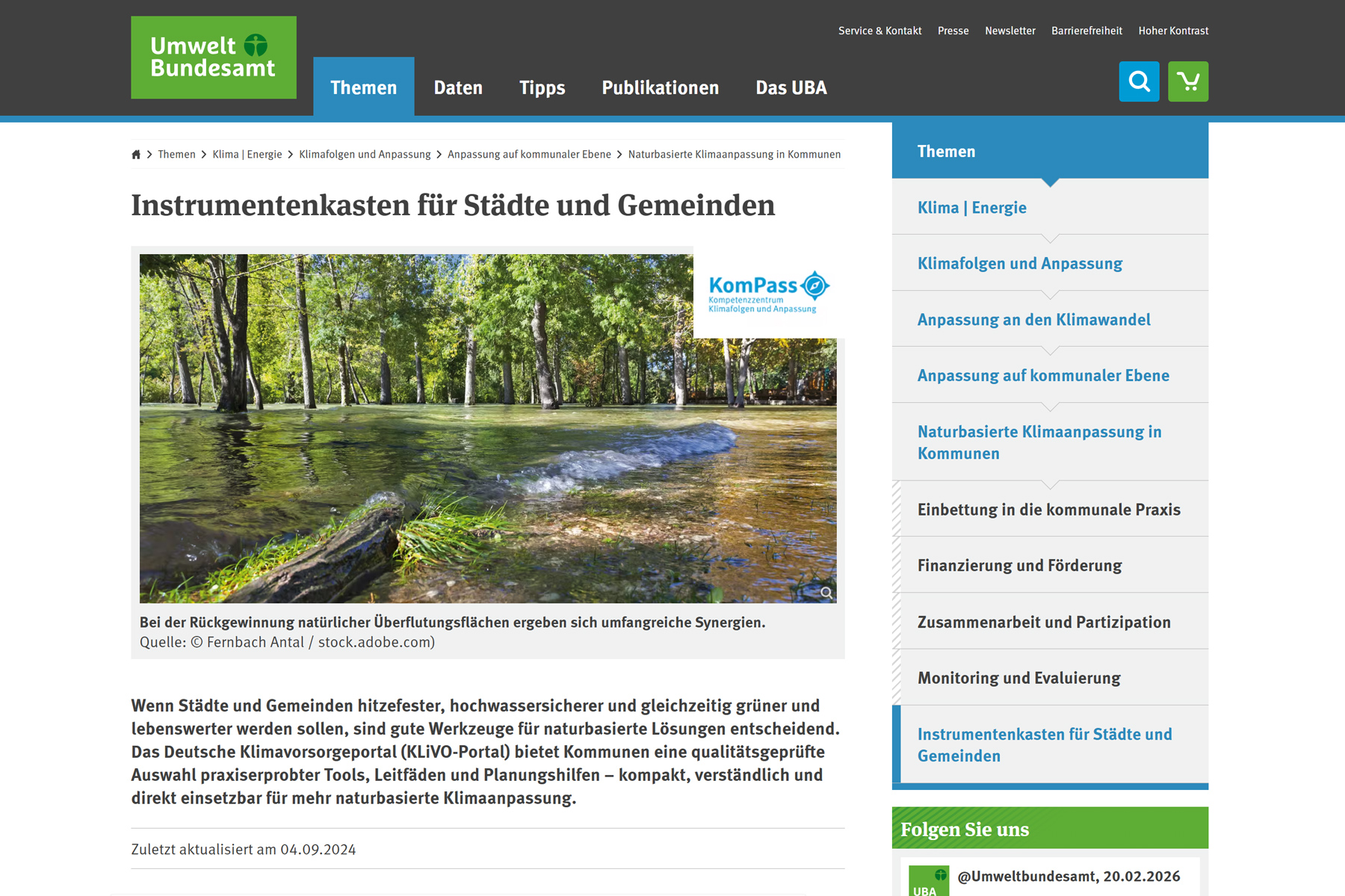
Jenny Tröltzsch and McKenna Davis presented practical support tools developed through the project, including a municipal instrument toolbox for nature-based climate adaptation. The toolbox is designed to make existing planning and implementation resources more accessible and user-friendly for municipalities. Around 30 tools and guidance documents are being integrated into the German Climate Preparedness Portal (KLiVo) and made accessible via the German Environment Agency’s thematic page.
They also discussed financing options beyond traditional public funding. The project’s financing brochure explores approaches such as differentiated stormwater fees, municipal crowdfunding, sponsorship, business improvement districts, green municipal bonds, green municipal loans and revolving funds. These options can help municipalities cover investment costs as well as the long-term maintenance and care needs of nature-based solutions, although their suitability depends on municipal size, financial capacity and project requirements.
A further focus was communication. The presentation underlined that public outreach is not an add-on, but a key success factor for nature-based climate adaptation. Clear communication, inclusive outreach and early stakeholder involvement can strengthen acceptance, political support and long-term effectiveness.
Recommendations for accelerating implementation
The discussion also addressed what the German Bundestag could do to accelerate nature-based climate adaptation over the next five years. Based on project findings and the Urban Governance Atlas, the presentation pointed to three priorities:
- Municipalities need more reliable and long-term financing, including funding for maintenance, monitoring and administrative capacity, not only for pilot projects.
- Legal and planning frameworks should make it easier to integrate nature-based solutions into routine municipal planning, procurement and urban development processes.
- Federal policy should support knowledge transfer, practical guidance and cross-departmental cooperation so that municipalities can move from individual projects to systematic implementation.
Contact

- Organizer
-
German Bundestag, Germany - Speech
- Date
-
- Location
- online and Berlin, Germany
- Language
-
English
- Project
- Project ID
- Keywords
-
nature-based climate adaptation, climate-resilient municipalities, climate-resilient urban development, green infrastructure, urban climate resilience, ecosystem-based adaptation, municipal climate governance, climate adaptation planning, sustainable urban development, urban resilience, nature-positive cities, climate adaptation finance, climate-proof cities, ecosystem services, integrated water management, urban biodiversity, adaptive urban planning, climate resilience policy, sustainable municipal planning, resilient infrastructureGermany, municipalitiesliterature review, stakeholder interviews, stakeholder engagement, municipal consultation, policy dialogue, governance analysis, Urban Governance Atlas, municipal toolbox development, financing analysis, communication strategy, evidence-based policy recommendations, knowledge transfer, monitoring approaches, participatory communication, cross-sector collaboration, policy briefings, implementation guidance, decision-support tools, best practice analysis, capacity-building approaches
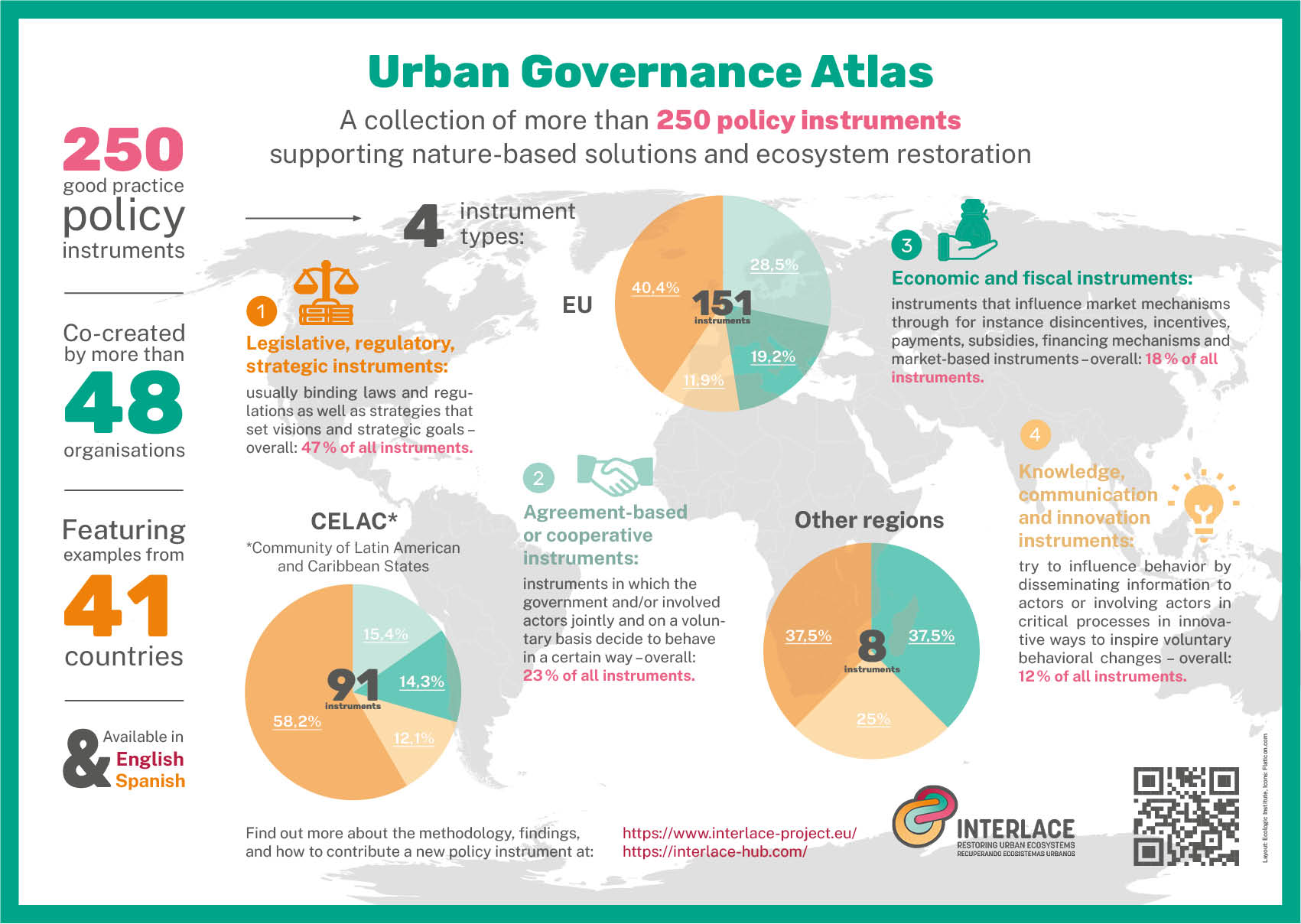
INTERLACE project consortium 2023: Urban Governance Atlas. Interactive database. Published on 11 May 2023. Online: https://interlace-hub.com/urban-governance-atlas.
Ecologic Institute 2025: Increasing Flood Resilience: tools for city planners. Video. Online: https://youtu.be/nIPD_DnoOq0.
Ecologic Institute 2018: Urban Nature Atlas – NATURVATION. URL: https://naturvation.eu/atlas