Ecologic Institute Newsletter No 287 – August 2026
- Ecologic Institute Newsletter
Environmental Pharmaceutical Index – Feasibility Study
Medicinal products have so far been assessed primarily in terms of efficacy, safety and cost-effectiveness. A feasibility study shows how environmental information can also be systematically incorporated into the decision-making process. An ‘Environmental Pharmaceutical Index’ for Germany aims to provide standardised environmental information on active pharmaceutical ingredients and make it accessible for use in clinical practice.
Better Assessment of Pesticide Risks – before and after authorisation – Policy Briefs
EU pesticide regulation needs to assess environmental and health risks in a way that reflects real-world conditions. Two new SPRINT policy briefs highlight the need for action: before authorisation, greater consideration should be given to mixtures, environmental fate, exposure pathways and sensitive species. After authorisation, more comprehensive monitoring and closer integration with regulatory decision-making are needed.
Strengthening EU Competitiveness Through a More Effective Energy Transition – Policy Brief
Geopolitical tensions and volatile energy markets are bringing Europe’s competitiveness into sharper focus. An Ariadne background paper shows how climate policy, investment certainty and industrial transformation need to work together. It focuses on governance, financing, the EU Emissions Trading System and energy infrastructure for a resilient, climate-neutral economy.
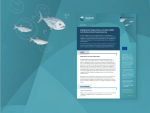
Strengthening the Resilience of Pelagic Fisheries in the Arctic North-East Atlantic – Policy Brief
Climate-driven changes in fish stocks are posing challenges for fisheries management in the North-East Atlantic. A policy brief from the Marine SABRES project shows how more flexible quotas, international cooperation, and climate and ecosystem data can make pelagic fisheries more resilient. It considers ecological, economic and social aspects together.
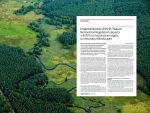
Register Now!
Putting innovative solutions for clean waters and circularity into practice
9 September 2026 | online | Mission Ocean & Waters Matchmaking Workshop
Producer groups and cooperation
9 September 2026 | Herzberg (Mark) | Market Information Meeting
Raw materials exchange for communal catering
30 September 2026 | Oranienburg | Market Information Meeting
Contents
| ► | Environmental Pharmaceutical Index – Feasibility Study |
| ► | Better Assessment of Pesticide Risks – before and after authorisation – Policy Briefs |
| ► | Strengthening EU Competitiveness Through a More Effective Energy Transition – Policy Brief |
| ► | Strengthening the Resilience of Pelagic Fisheries in the Arctic North-East Atlantic – Policy Brief |
| ► | From Individual Targets to Landscape-level Thinking – Article |
| ► | Register Now! |