This virtual conference shared ideas for advancing additional multilateral action in support of the goals of the Paris Agreement and discuss them with international experts.
The economies and populations that are the main contributors to the climate crisis are least affected by the consequences. With the European Green Deal, the EU claims for itself a pioneering role in climate protection, but does it have solutions ready that do justice to the structural inequality and unfair distribution of social, economic and political opportunities between the communities that populate the earth? In the online event on 24 November 2021, the discussion drew on Concepts for Climate Justice, featuring Maria Fernanda Espinosa, Ecuadorian diplomat, politician, academic and former president of the 73rd UN General Assembly. The full recording of the event is available online.
To continue the successful exchange on various aspects of Arctic marine conservation in November 2020, twenty international experts from research and policy came together again in a virtual meeting for the "Arctic Marine Conservation Dialogue" on 17 and 18 November 2021.
Climate change with the resulting global warming is the largest and most all-encompassing global crisis of our time. As an ecological crisis, it stands for the misuse of fossil fuels and the exploitation of natural life-support systems, which includes the destruction of biodiversity and also irreversible damaging impact on the geological sphere. Furthermore, climate change is a geopolitical problem. It is already stoking sociopolitical instability, creating migratory pressure, exacerbating global inequality, endangering human rights and putting peace in the world at risk.
The more stringent climate targets of the state of Berlin require that both the heat supply be converted to renewable energies in the next few years and that the building envelopes be ambitiously renovated to make them more energy efficient. This poses great challenges for the state and districts as well as the real estate industry. At the same time, due to the tense situation on the Berlin housing market, there is a need for regulations to protect tenants, which is why the number of milieu protection areas in Berlin's districts has risen sharply. In these areas, which already contain a relevant proportion of old buildings which are in need of refurbishment, there are additional obstacles to climate protection measures that are in line with the objectives.
Europe is on its way towards a circular economy and has set itself an extremely ambitious plan to this end in the form of the Circular Economy Action Plan; among other things, non-recyclable residual waste is to be halved by 2030. But how is it being put into practice? And what does it take to gain more speed here – for example, in the textile sector, which is virtually exemplary for the linear thinking of a throwaway culture?
Infrastructure development in Germany must be increasingly geared towards increased climate targets and the need for decarbonisation. At the same time, public participation is still needed to involve the population in the upcoming change processes and to ensure democratic achievements. Thus, leveraging efficiency potentials in planning processes is considered key to managing infrastructure development in a more targeted manner in the years to come. What are the possibilities, limits and sensible approaches to accelerating planning?
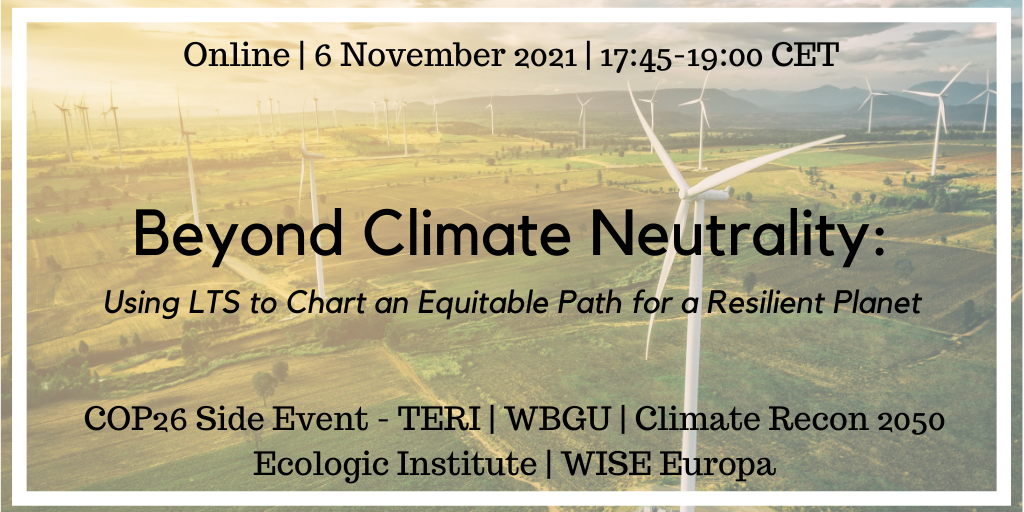
On 6 November 2021 at 17:45 CET, this online COP26 side event explored the role of long-term climate strategies in sustainability governance, raising short-term ambition on climate action, ecosystem stewardship and adaptation. The event was live streamed on YouTube.
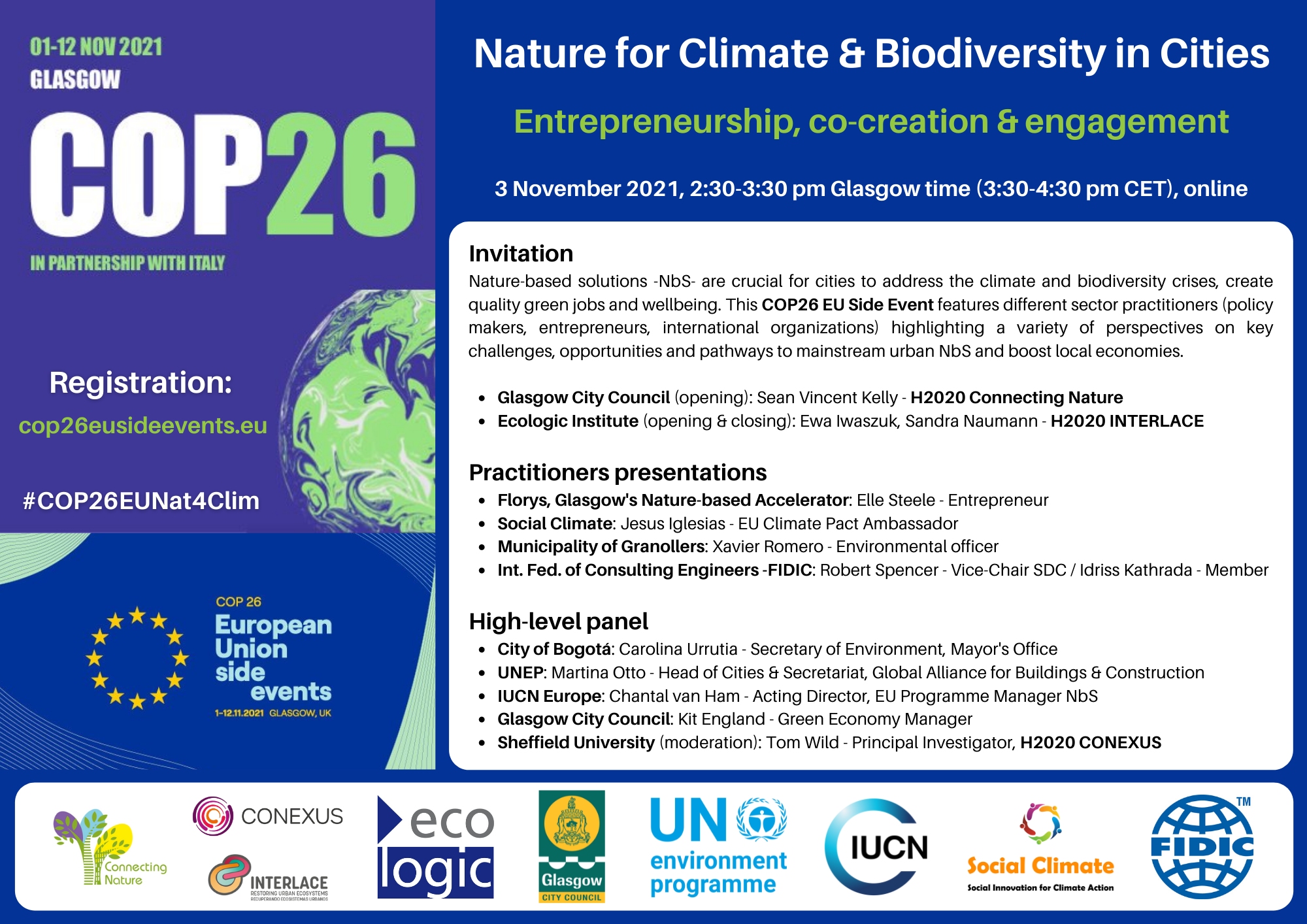
Nature-based solutions (NbS) are crucial for cities to jointly address the climate and biodiversity crises, while creating quality green jobs and wellbeing for local communities. This COP26 EU Side Event featured different sector practitioners (policy makers, entrepreneurs, international organizations) delivering inspiring presentations and engaging in a panel discussion highlighting a variety of perspectives on key challenges, opportunities, and pathways to mainstream urban NbS and boost local economies.
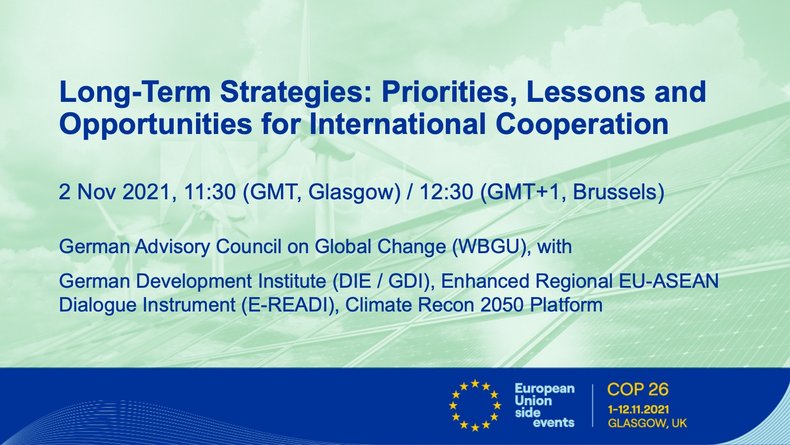
In this COP26 side event, we discussed priorities for the further development of long-term strategies, lessons from strategy formulation and implementation processes in the EU and ASEAN, and prospects for international cooperation. We draw on recent analyses by the German Advisory Council on Global Change (WBGU), the German Development Institute (DIE / GDI), the EU, including the EU-funded Enhanced Regional EU-ASEAN Dialogue Instrument (E-READI) study on the development of LTS in ASEAN and the Climate Recon 2050 platform (CR2050) experiences.
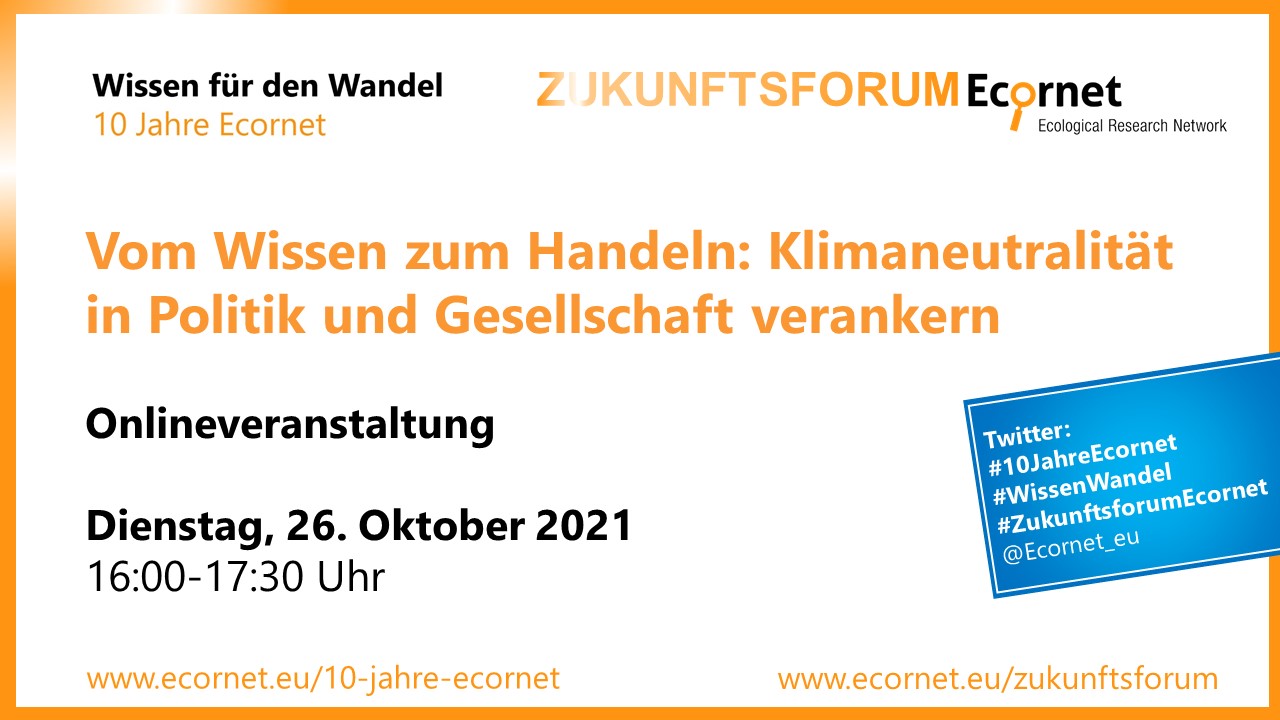
Germany wants to become climate-neutral by 2045 and the EU by 2050. Both targets became legally binding in 2021, an important breakthrough on the way to structural transformation to a climate-friendly economy. What further breakthroughs are needed to anchor this transformation in society and enable its implementation? How can the responsibility of individuals as well as economic actors for climate protection be realised?
In Berlin, a variety of initiatives show how the economy can be different: with more solidarity, more democracy, more ecological and better for all. We discuss why this is not easy, but can be promising. In the sixth edition of Wandelwecker, our morning impulse for a social and ecological metropolis, we discussed these questions with two experts.
The expert dialogue aimed at informing and discussing the implementation of Re-Use and recycling measures for insulation materials. The Berlin Senate Department for the Environment, Transport and Climate Protection, the "Verband für Dämmsysteme, Putz und Mörtel" (Association for Insulation Systems, Plaster and Mortar) and the "Gesamtverband Deutscher Holzhandel" (German Timber Trade Association) invited participants to attend – alongside around 250 expected participants – the Webinar, that took place on 6 October 2021. Ecologic Institute supported organising and implementing the event logistically and technically.
The digital, or perhaps in this case "intelligent" technologies that are to shape all areas of society in the future, especially our cities, need regulation. After all, these kinds of technologies inform, decide and control — but in whose interest and with which objectives in mind? Recently, there has been increasing thought and debate about the possibilities of democratic data governance "from below". Citizens should (also) be able to decide what intelligent, data-driven machines are used for by consciously sharing their data. Can such approaches be a model for the sustainable digitalization of cities and municipalities and provide a counterweight to the data monopolies of large corporations? What could democratic data governance in Berlin look like?
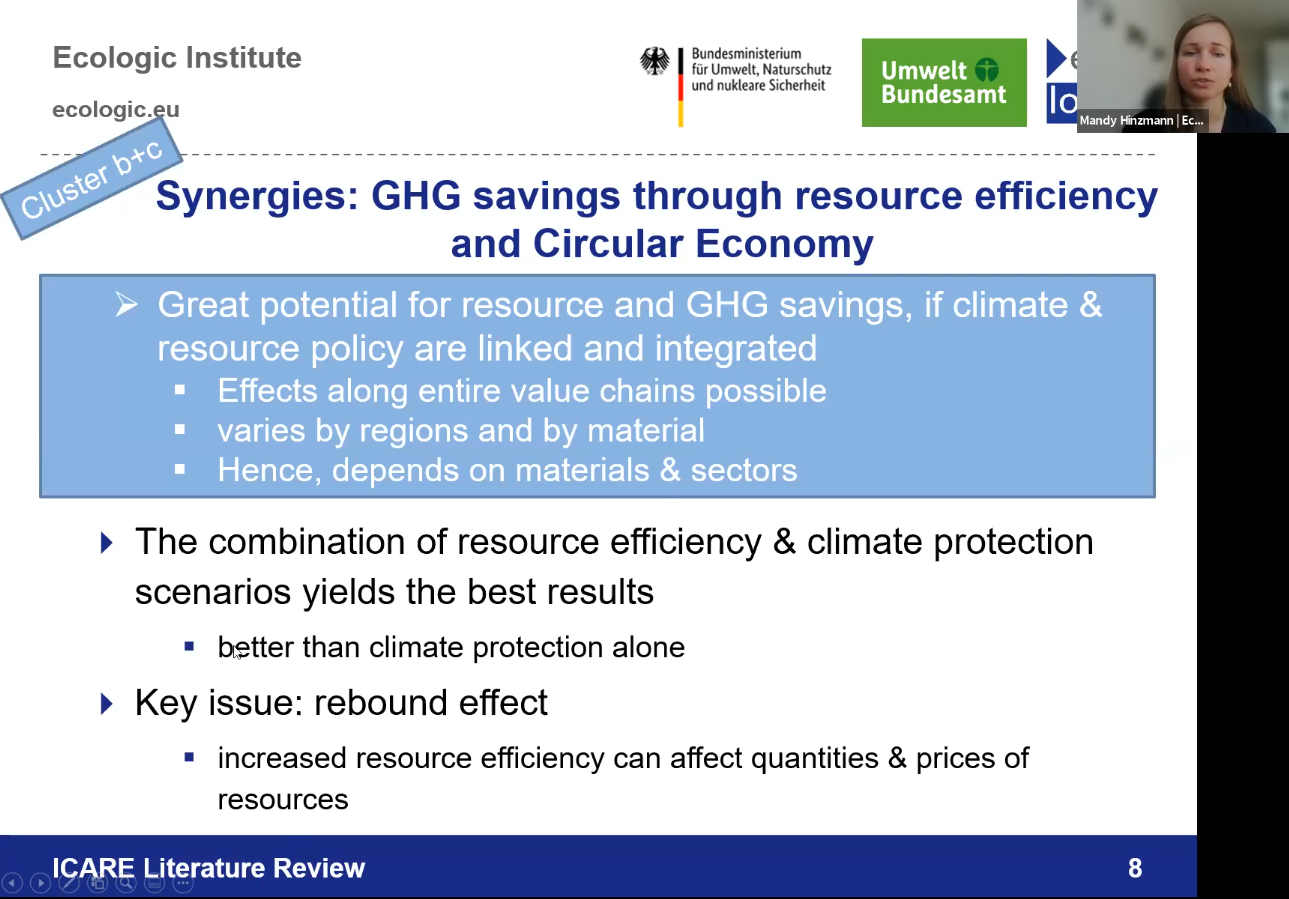
Interactions between climate and resource policy – the so-called "climate-resource-nexus" – still need to be much better understood and potential impacts of effective policies systemically analysed. Against this background, the final conference served to present and discuss key findings from the ICARE project, in particular results from system dynamics model simulations of potential environmental and economic impacts of different climate protection and resource policy measures in different world regions.