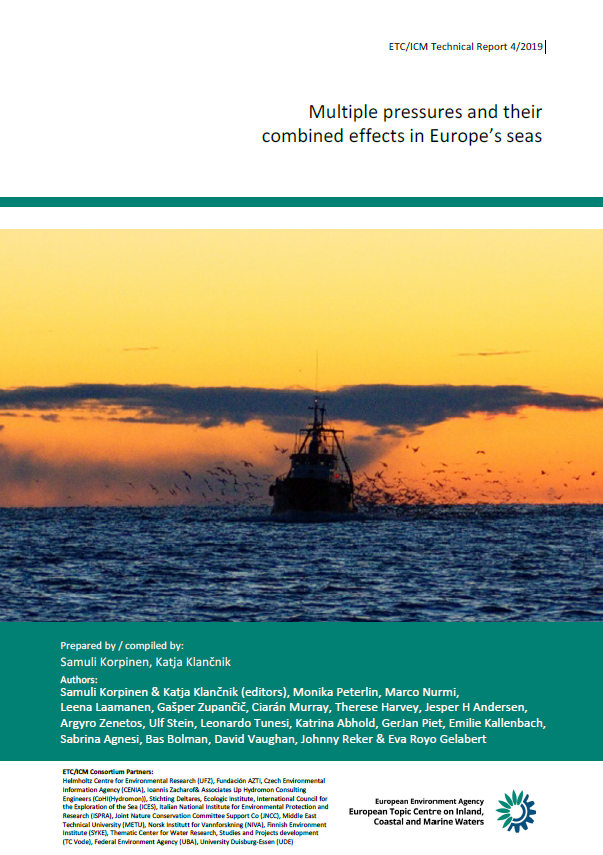
This report presents for the first time an overview of anthropogenic pressures and their combined effects on Europe's seas. The assessment covers the period of 2011 to 2016 and presents how human activities and pressures on seas have changed over a longer time horizon. The highest potential combined effects are found along coastal areas of the North Sea, Southern Baltic Sea, Adriatic and Western Mediterranean. However, there are also positive developments and the report points to improvements in nutrient levels, hazardous substances and northern fish and tuna stocks.
Dr. Camilla Bausch provided live comments for the news service WELT during Ursula von der Leyen's keynote address on the European Green Deal (EGN) at the World Economic Forum in Davos. Von der Leyen presented tenets of the EGN – her key political project as the new EC President. The EGN aims to set a path for a climate neutral economy by 2050.
The WDR reports how Europe can become climate neutral by 2050. Quoting the Ecologic Institute, WDR presents the European Green Deal and an EU climate protection law, two flagship initiatives to make the EU climate neutral by 2050. The German article "Green Deal – "green Europe" not an overnight success" is available for listening on the WDR website until 15 January 2025.
The German article "Seven at one blow! Regional Food Strategies as key to more sustainable Urban-Rural cooperations" deals with the role of regional food strategies as a promising approach for an integrated, sustainable development of urban and rural areas. The article, written by Stephanie Wunder, Coordinator Food Systems at the Ecologic Institute and Franziska Wolff, Head of Environmental Law & Governance at Öko-Institut summarizes the results of the UBA project "Rural Urban Nexus", led by Ecologic Institute. The text is part of "The Critical Agricultural Report". Since 1993 "Der kritische Agrarbericht" is an annually published flagship book, that critically reflects about agriculture in Germany in the context of the EU Common Agricultural Policy. The 2020 edition focused on the changing relationship between rural and urban areas.
Public opinion seems to have settled on the conviction that the climate crisis is Europe's latest political divide - after migration, the Euro and conflicts over the rule of law. But there is another story that needs to be told. Climate policies have always been contentious. They are bound to be. But contrary to the growing perception of climate policies as Europe's new political divide, climate is a policy field where Europe works together, writes Nils Meyer-Ohlendorf in the Tagesspiegel.
Dr. Stephan Sina, Senior Fellow at Ecologic Legal, has published an article on the Federal Climate Protection Act in the first edition of this year's Neue Zeitschrift für Verwaltungsrecht (NVwZ). The contribution is a joint effort by several authors, two of them officials at the Federal Ministry of the Environment, Nature Protection and Nuclear Safety (BMU) who have worked on the Climate Protection Act. The article presents the main elements of the new law and discusses its legal and practical impact. It can be obtained via the website of the NVwZ.
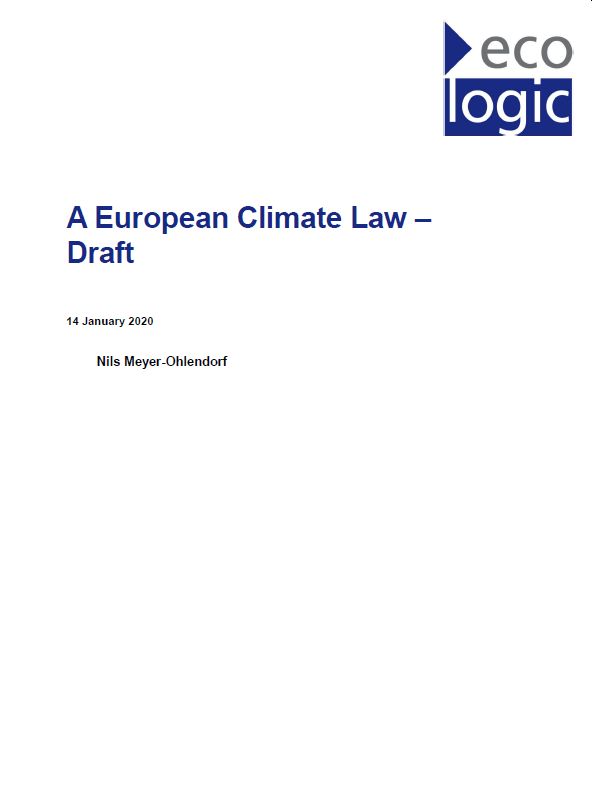
The European Commission will propose a European Climate Law in early March 2020. This 'Law' is a critical step to make Europe climate neutral. It can close gaps in existing EU climate rules. These gaps will impede the EU from becoming climate neutral before 2050. A new Ecologic paper presents a draft European Climate Law. The paper is available for download.
Under this contract, the Ecologic Institute continues its programme of ETS training and capacity building activities implemented under the auspices of the International Carbon Action Partnership (ICAP), supported by the European Commission. In an Ecologic-led consortium with ICF and Get2C, the programme seeks to provide participants from developing countries and emerging economies with knowledge to develop and implement emissions trading as a cost-effective policy instrument to reduce greenhouse gas emissions.
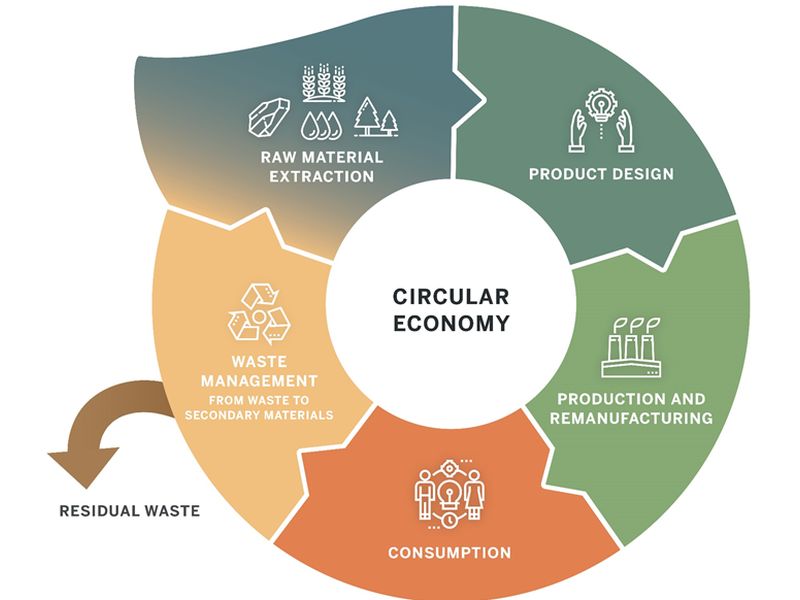
The European Union is strongly committed to shifting to a competitive, low-carbon circular economy. The first European Circular Economy Action Plan (CEAP) from December 2015 set a framework for stimulating the transition towards a circular economy. It is foreseen to revise the CEAP in 2020 to further strengthen the momentum and enable businesses, industry and society to transition to a circular economy.
With the adoption of the European Green Deal as a new overarching EU strategy, climate policy goals have officially become integrated across EU policy as a whole. The goal of becoming climate neutral by 2050 is at the heart of the European Green Deal – but how will it be operationalized? This project brings together IDDRI, ECF and Ecologic Institute in their aim to enhance transparency of progress towards the net-zero goal and improving long-term climate governance.
The UNITED project provides evidence by means of pilot demonstrators that the development of multi-use platforms or co-location of different activities in a marine and ocean space is a viable approach (economically, socially and environmentally) for European maritime industry and local ecosystems. The economic and environmental benefits of multiple use of the marine and ocean space include the possibility of increasing resource efficiency by sharing infrastructure and logistics. However, the practicability of multiple use depends on a variety of factors, which the UNITED project is seeking to address through five pillars: Technology, economy, environment, society and legal/policy/governance/.
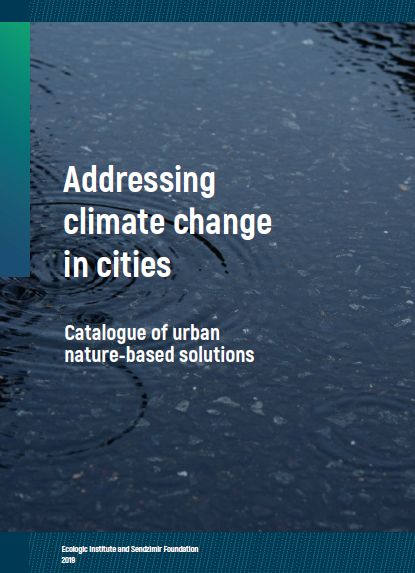
Nature-based solutions (NBS) are solutions that are inspired and supported by nature. They can be used in urban settings to complement or replace "traditional" or "grey" solutions to perform functions, such as thermal insulation and stormwater retention and filtration. Focusing on addressing climate change, this catalogue presents a wide selection of NBS that exemplify high climate mitigation potential and applicability across a range of urban contexts.
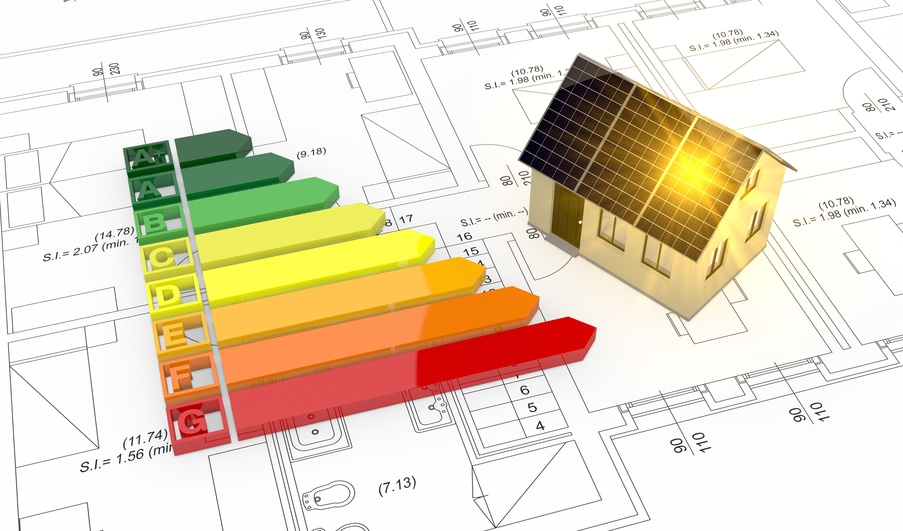
Addressing energy consumption and related GHG emissions from buildings constitute a major challenge in the light of the climate crisis. At the same time, the interplay of building policies with other policy areas comes into focus with sector coupling, digitalization but also lifecycle considerations and adaptation to climate change. For the European Commission Directorate-General for Energy, the Buildings Performance Institute Europe (BPIE), Climact, Creara Consultores and Ecologic Institute investigate which lessons can be learned from already existent integrated policy approaches for new buildings and buildings undergoing a major renovation.