While key barriers faced by community renewable energy projects are generally well understood, there is much less information available about the actual costs and financing implications. This report sheds light on the costs and corresponding financial impacts faced by community-owned renewable energy projects, especially in comparison to commercial renewable energy projects. The report, which was written collaboratively by Christine Lucha and Andreas Prahl(Ecologic Institute), is available for download.
A new report presents the conclusions and policy recommendations of the EU-funded research project, "European Union Action to Fight Environmental Crime" (EFFACE). The report includes recommendations for action to better combat environmental crime at the EU and Member State level, distinguishing between core and supplementary recommendations. In addition to these recommendations, questions for further research are identified. The report is available for download.
According to Chinese authorities, the coronavirus spread to humans from wildlife at a wildlife market in Wuhan. Most likely, Ebola and AIDS also originated from wildlife. Besides the serious threats to biodiversity and sustainable development, the risk for human health is thus an additional reason to strengthen the efforts to combat wildlife trafficking and other forms of wildlife crime. Over the last years, Ecologic Institute has published several studies on environmental compliance and crime related to wildlife crime. The most comprehensive study on wildlife crime was presented to the Committee on the Environment, Public Health and Food Safety (ENVI) of the European Parliament in Brussels in April 2016.
This BioSTEP document builds on the previous Deliverable 2.1 which collected information about the impacts of bioeconomy-related products in a database. Rather than attempting to exhaustively list the whole plethora of products and processes in the bioeconomy, the database presents a taxonomy of the main product categories, production processes and types of feedstock in the bioeconomy as well as some salient sustainability impacts and governance issues. The document is available for download.
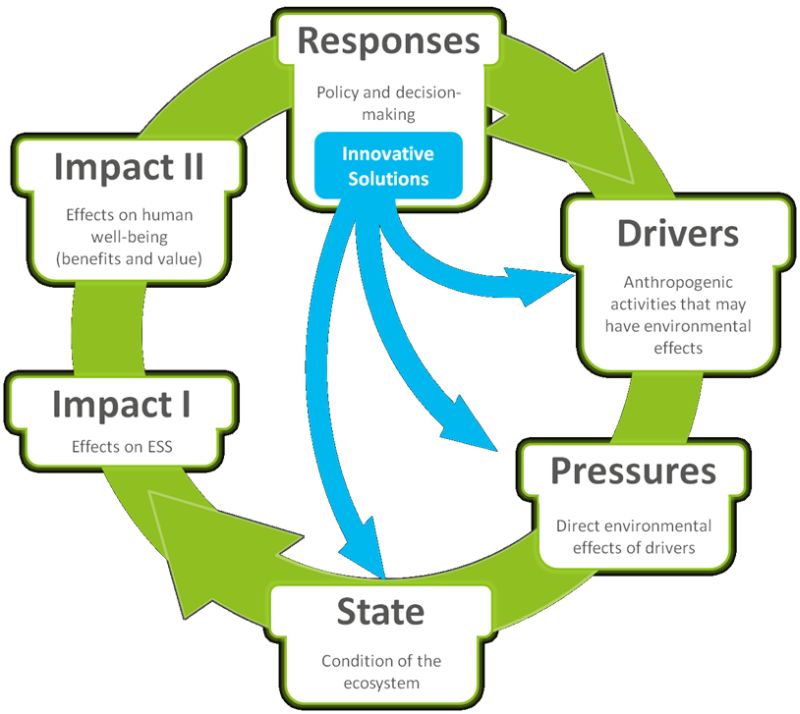
Gómez et al. (2016) The AQUACROSS Innovative Concept. Deliverable 3.1, European Union's Horizon 2020 Framework Programme for Research and Innovation grant agreement No. 642317.
This document aims to offer a synthesis and discussion of the methodological process and results of implementing climate change adaptation case study research, reporting on the key messages and lessons learnt through a critical comparison of case studies that equally accounts for the stakeholders' perspectives. The deliverable is structured in four chapters.
Overbeek, Greet; Erik de Bakker; Zoritza Kiresiewa 2016: Review of Bioeconomy Strategies at Regional and National Levels. Promoting stakeholder engagement and public awareness for a participative governance of the European bioeconomy.
The EU overseas entities support unique ecosystems which are home to an estimated one-third of the globally threatened species, including many endemic species. Because of the importance of biodiversity and ecosystems services in EU ORs/OCTs both locally and to the EU and member states (MS), it is essential to develop effective approaches to biodiversity governance. Yet often short-term economic interests are given priority over the preservation of ecosystem services. Ecosystem valuations offer a policy tool to convert the concrete and abstract value that ecosystems and biodiversity contribute to EU OR/OCT economies into numbers.
Meyer-Ohlendorf, Nils and Arne Riedel 2016: Erhöhte Absetzbarkeit von Klimaschutzinvestitionen – den alten § 7d EStG neu fassen? Kurzstudie im Rahmen des Projekts "Rahmen für Klimaschutzinvestitionen". Ecologic Institute: Berlin.
The RECREATE consortium developed fourteen evidence-based narratives covering the three DG Research and Innovation flagship objectives that were presented to the European Commission in March 2015. On the basis of those narratives, the RECREATE consortium has been asked to deepen the investigation concerning selected narratives. The present deliverable represents the output of this request.
This report summarizes conclusions of the research project PolRess for the further development of the German resource policy. In the following, the project team summarizes considerations and conclusions, which emerged of the conducted research and are meant to provide a stimulus regarding the further development of resource policy.
Naturkapital Deutschland – TEEB DE (2015): Naturkapital und Klimapolitik – Synergien und Konflikte. Hrsg. von Volkmar Hartje, Henry Wüstemann und Aletta Bonn. Technische Universität Berlin, Helmholtz-Zentrum für Umweltforschung – UFZ. Berlin, Leipzig.
This volume presents strategic lines of instrumentation for the future climate policy instrumentation in the EU, both for the short and the long term, closely related to energy policy and other policy domains like transport and housing.
Measuring and monitoring as well as communicating on progress in the context of European and national resource policy (in particular ProgRess) requires comprehensive and robust material input and consumption indicators. Several different methods have already been developed that quantify direct and indirect (material extractions in export countries needed to produce imported goods) material flows. However, the different methods used for and the data basis underlying the indicator calculations lack harmonization, which renders the calculation results less comparable and less robust. The report is available for download.
Since 2000 the Transport and Environment Reporting Mechanism (TERM) has monitored the progress of the integration of environmental objectives into transport policy in the EU. The TERM 2015 report investigates key developments in the transport sector with regards to environment, identifying what has improved and what has been a barrier to the sector's environmental performance. Ecologic Institute contributed to the TERM 2015 report with a chapter on transport and biodiversity. The full report is available for download.