The Future of EU Climate Policy – Aligning mitigation targets and adaptation challenges
Stakeholder Consultation on the CoR Statement
- Presentation
- Date
-
- Location
- Brussels, Belgium
- Speech
On 13 June 2024, the European Committee of the Regions (CoR) organised a stakeholder consultation in Brussels to gather input for a draft statement on “The future of EU climate policy: aligning mitigation targets and adaptation challenges”. The statement was prepared under the leadership of rapporteur Markku Markkula, President of the Helsinki Region.
The consultation focused on several key aspects: actions to strengthen the implementation of climate adaptation measures and enhance the resilience of EU territories from a local perspective; policies to advance the EU’s systematic transformation at local and regional levels and strengthen its capacity to meet mitigation targets while leaving no one behind; instruments and measures to close the financing gap for the green transition and ensure effective climate mainstreaming in the EU budget; and possible strategic measures to accelerate essential processes, including technological breakthroughs, social innovation and the revitalisation of financing practices to achieve the EU’s climate targets.
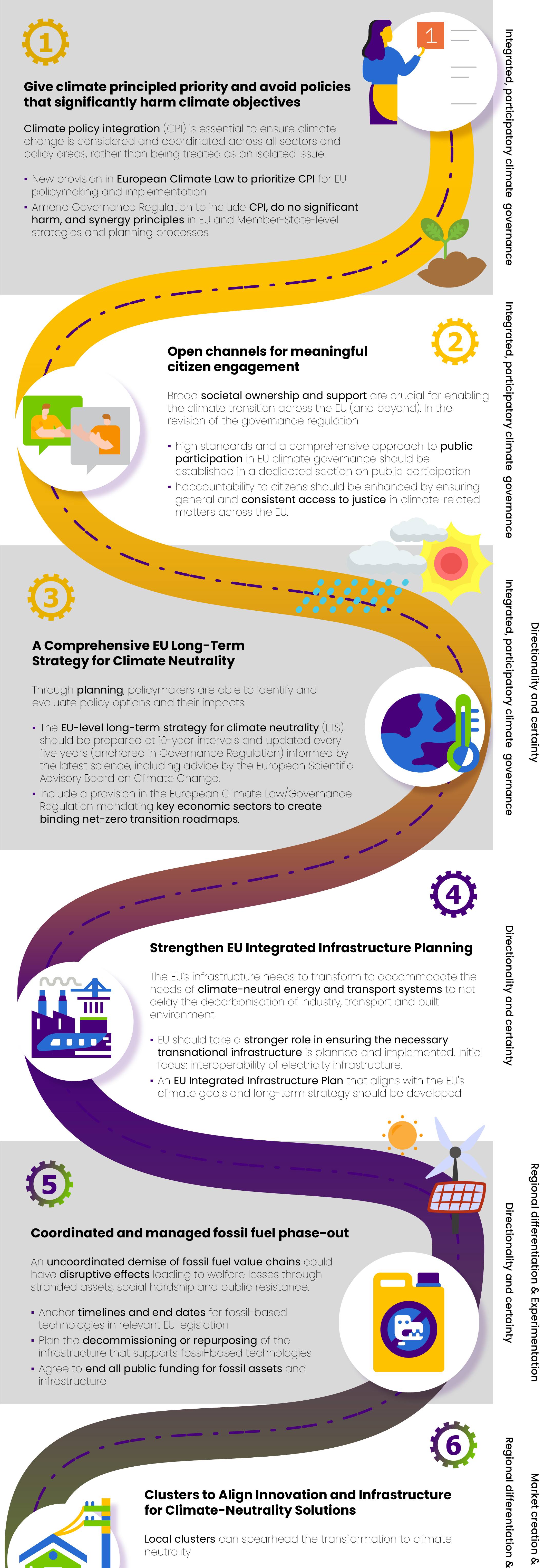
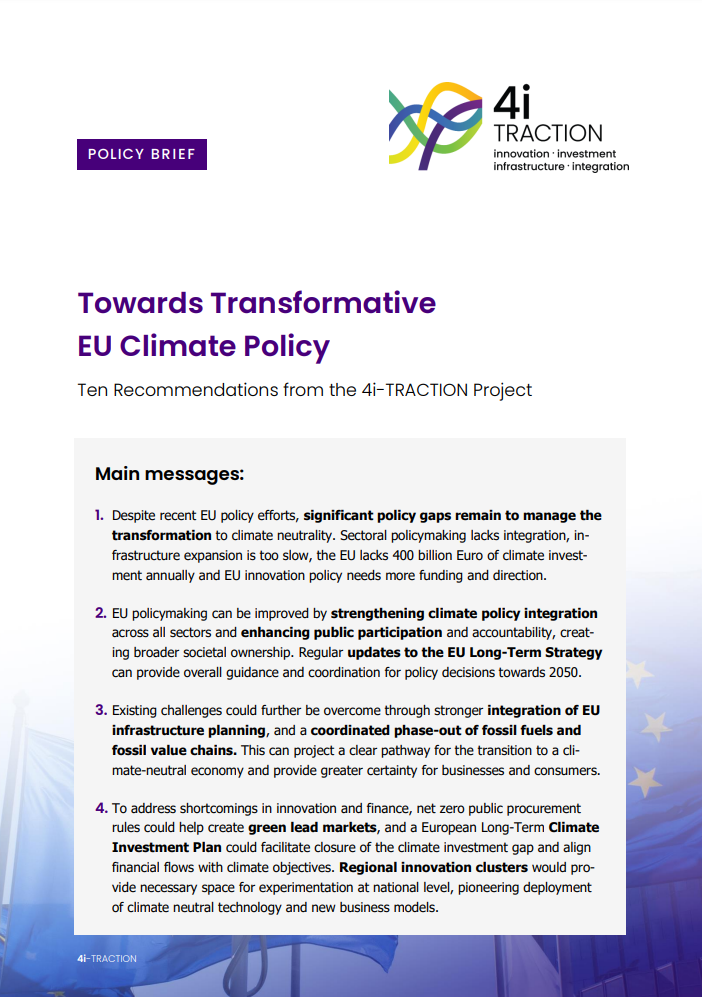
Matthias Duwe presented input at the consultation based on insights from the 4i-TRACTION project, outlining recommendations for a consistent climate policy framework. His presentation provided an overview of the key elements required to achieve climate neutrality, highlighting the need to move from incremental policies towards transformational approaches.
Matthias Duwe recommended strengthening climate policy integration (CPI) by considering innovation, investment, integration and infrastructure as cross-cutting themes across all EU policymaking. He also highlighted the need to update long-term strategies (LTS) to create a common vision and guide policymaking ahead of the next policy package, enhance coordination between sectoral strategies, provide input to infrastructure and investment plans, and create a benchmark for consistency checks and monitoring.
He further recommended improving public participation under the Governance Regulation in order to foster a just transition and strengthen public support through better implementation of multilevel dialogues, enhanced accountability to citizens and access to justice in climate-related matters.
Lastly, the presentation proposed establishing a system for measuring the progress of climate policies, through which framework conditions within and across sectors can be assessed. Concrete instruments should address all four dimensions of the 4i-TRACTION project, with a particular emphasis on closing the investment gap through a targeted investment plan.
Contact