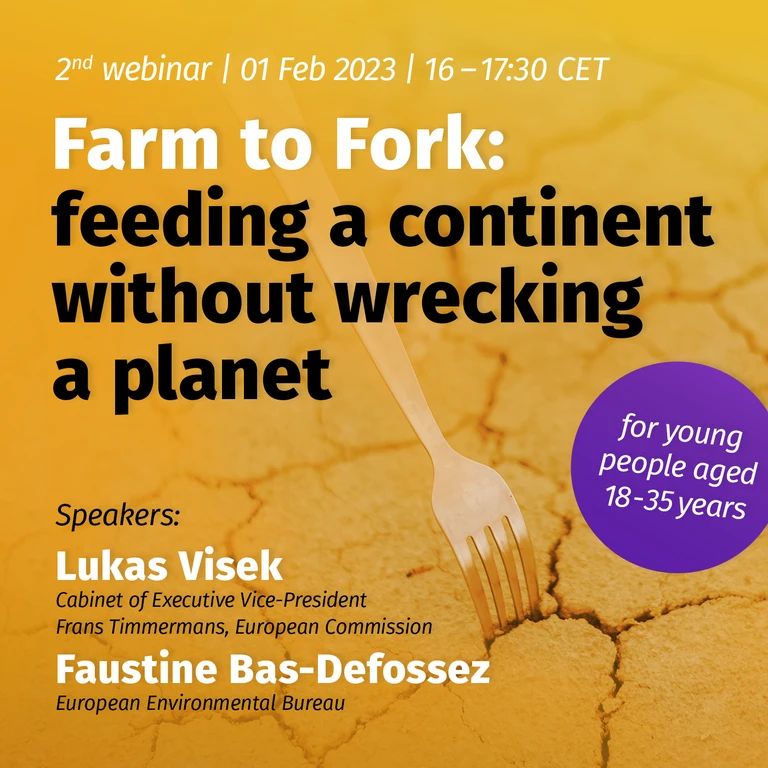
On 1 February 2023, we discussed the food systems approach adopted by the "Farm to fork" strategy and investigated how the strategy will impact producers, consumers and global food markets. We discussed strategies to address food waste and explored why meat is a politically sensitive topic.
From 13 to 15 December (1 – 4pm CET), the International Carbon Action Partnership (ICAP) convened a three-day workshop on monitoring, reporting, verification of emissions and the accreditation of verifiers (MRVA) in emissions trading systems (ETS). Participation in the online workshop was open to anyone with an interest in, or professional link to, climate policy and the implementation of MRVA systems for carbon pricing mechanisms. Over 100 participants attended the event from across the globe.
This webinar presented and discussed the findings of a report by SEI Tallinn. The analysis, conducted as part of the Climate Recon 2050 project, analysed the role of the LULUCF sector in Member States’ Long-Term Strategies (LTSs). Although the majority of LTSs published so far address the topic, the extent to which countries with significant potential in the sector explore its contribution to climate neutrality varies, even among Member States with significant needs for modernisation of their existing legacy networks.
The panel broached the issue about the impact of climate change on countries, especially in the Global South, many of them former colonies still struggling with the socioeconomic consequences of colonial exploitation. The panel also examined how cultural relations between states and societies could be an important component of international climate policy and transnational climate action.
The German Environment Agency (UBA) announced the 6th European Resources Forum – "Transformative approaches for sustainable resource use and a circular economy".
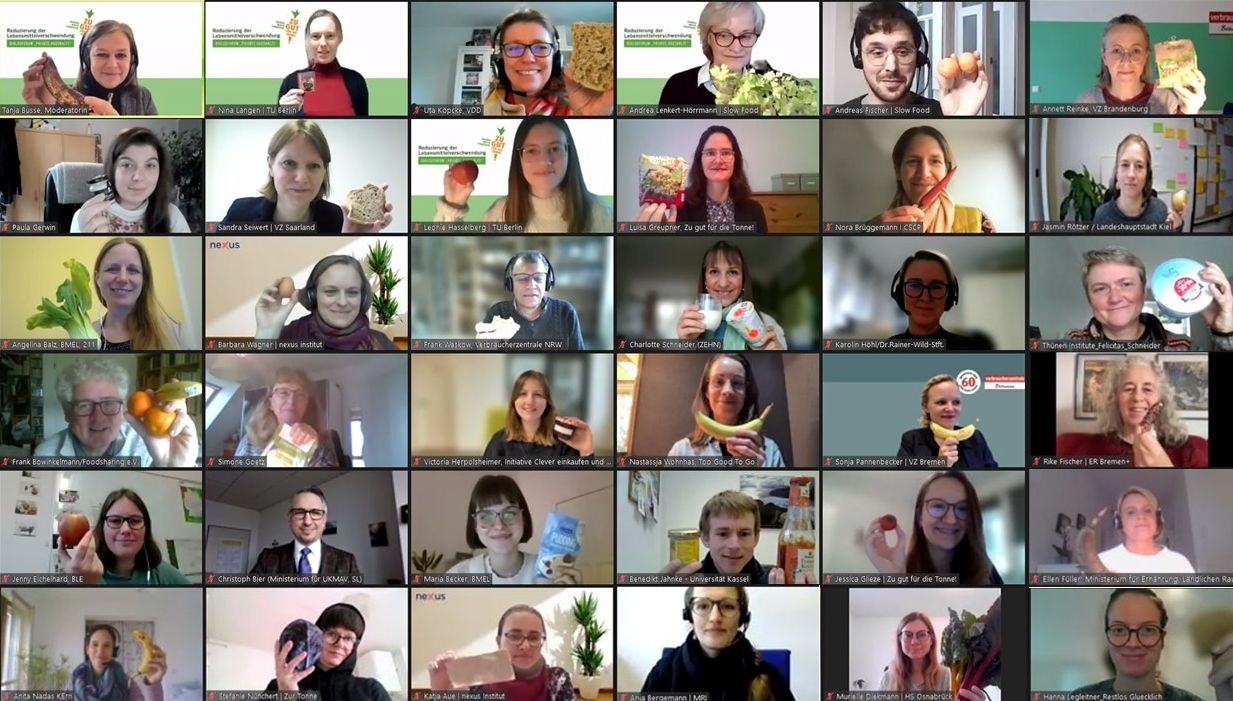
The fourth online dialogue forum "Private Households" took place on 01 December 2022. The event focused on the Citizen Science project "Deutschland rettet Lebensmittel!". More than 70 participants from civil society, science, administration, and associations exchanged views with the Dialogue Forum team and three speakers from the field on actions carried out during the action week, (survey-)tools and initial findings from the Citizen Science project during the three-and-a-half-hour event.
With the Fit-for-55 package about to be put into law, and the RePowerEU plan adopted in response to the energy crisis, EU climate and energy is undergoing the most profound change in years, getting the EU on track to a post-fossil energy system. In a three-day series of events, partners from the Ariadne research project presented key insights from their work that is relevant for the further development of EU climate and energy policy, and discussed these with representatives from political institutions, academia, civil society and business. The events served to share research insights, to discuss and validate findings and their relevance for EU policy process, and to gather inputs for further research.
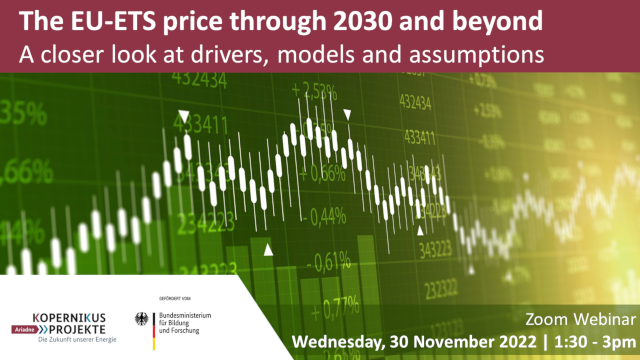
While policymakers are currently mulling over the EU-ETS reform, it is a good time for analysts and scientists to take a step back and discuss the analytical tools used to project the outcome – specifically, the expected, predicted or necessary carbon price(s) towards 2030. To that end, the Potsdam-Institute for Climate Impact Research (PIK) and Ecologic Institute organised a workshop in Brussels on 30 November 2022.
This event discussed how stable long-term policy direction can be maintained despite uncertainties, and in this context will zoom into the role of long-term strategies and scientific climate advisory councils. To exchange views on these tools with each other and the audience, Climate Recon 2050 and ARIADNE have brought together several experienced practitioners.
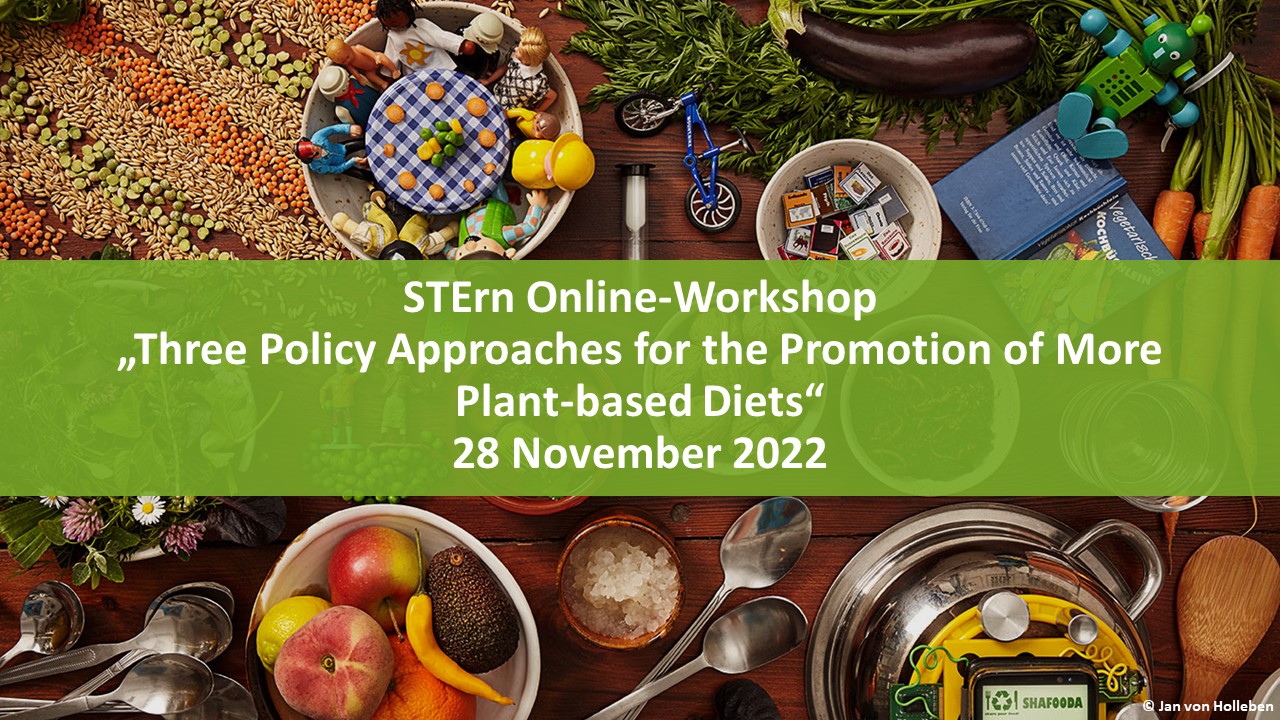
The online workshop on 28 November 2022 dealt with three political approaches to promote plant-based diets in Germany. Around 30 experts discussed the three approaches in the five-hour workshop: The institutionalisation through a federal programme and a foundation, urban and spatial planning, and vocational education and training.
Pesticide reduction, which is urgently needed, is already anchored as a goal in the German coalition agreement between SPD, Bündnis 90/Die Grünen and FDP and also in the EU Commission's Farm to Fork Strategy. However, in order to motivate farmers to use non-chemical alternatives, some adjustments are still necessary. Financial compensation is an important part of this. We cordially invited you to the launch of the BUND study "Alternatives to chemical-synthetic pesticides in agriculture" and appreciated your interest.
On 21 November 2022, Ecologic Institute kick-started a new webinar series for young people in Europe. Participants entered the dialogue with the webinar hosts Ewa Iwaszuk and Aaron Best from Ecologic Institute and their expert guests Adam Wallin from We Don’t Have Time and Stefan De Keersmaecker, Coordinating Spokesperson for the European Green Deal from the European Commission to discuss what the European Green Deal means for young people in Europe.
Representatives from EU institutions and experts from 10 EU Member States discussed the Conference on the Future of Europe (CFE), and its impacts on EU climate and energy policies. Participants also discussed whether citizens' panels should become a standard feature of EU decision-making. The event concluded the project "The Future of the EU – Make Climate Action its Trademark", funded by the European Climate Initiative (EUKI).