This report provides the context and justification for the development of BE-Rural's Sustainability Screening, a description of its methodological procedure, and the syntheses of results from the two experimental implementations of the approach in the Stara Zagora and Vidzeme regions, which are included in full as annexes to this report. The last chapters present the main lessons learned from these two pilots and the overall conclusions of the task.
As a last step of the project, the RECIPES team has developed a Guidance for application of the precautionary principle in the EU. The guidance advises on how to deal responsibly with uncertain risks in the development and implementation of technology in the EU. Target groups of this guidance are primarily EU policy makers, EU agencies, and EU policy support organisations and bodies that are concerned with risk regulation or the governance of science, technology and innovation. Ecologic Institute made the layout of the eBook.
How does subsoil management affect the provision of ecosystem services – and what is its economic value to society? These questions are at the heart of a study by Sophie Ittner, Holger Gerdes and Zoritza Kiresiewa from Ecologic Institute. Using a Benefit Transfer approach, the authors assess the societal costs and benefits of two subsoil management practices in German agriculture. The results demonstrate that sustainable subsoil management can generate not only ecological, but also substantial economic value – offering important insights for targeted support through agri-environmental policy.
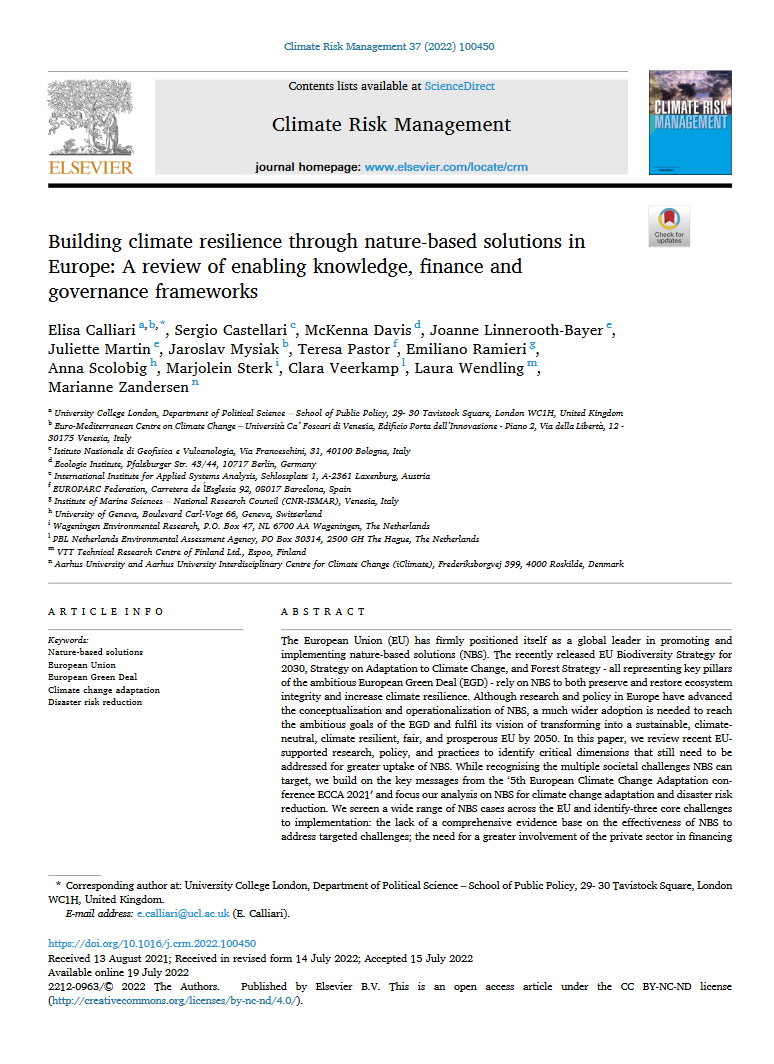
In this paper, the authors review recent EU-supported research, policy, and practices to identify critical dimensions that still need to be addressed for greater uptake of NBS. While recognising the multiple societal challenges NBS can target, the authors build on the key messages from the '5th European Climate Change Adaptation conference ECCA 2021' and focus their analysis on NBS for climate change adaptation and disaster risk reduction.
In view of a strong waste management sector with good separate waste collection rates and high recycling rates of over 80 %, Germany is generally well positioned to increase the use of recyclates. So far, however, this potential has only been partially exploited. Against this background, Ecologic Institute, together with the Policy Assessment Research Group of the Freie Universität Berlin, identifies and describes barriers to the use of recyclates and policy instruments to overcome these barriers. Options for action are shown on the basis of selected practical examples.
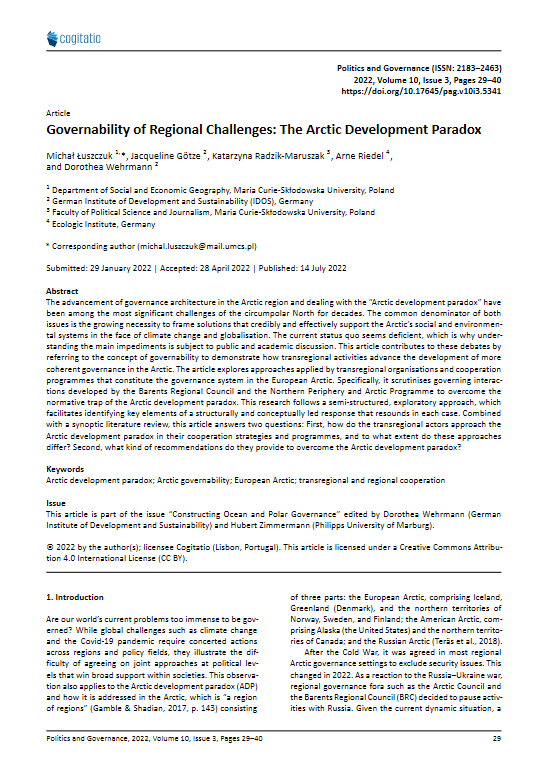
This article explores approaches applied by transregional organisations and cooperation programmes that constitute the governance system in the European Arctic. Specifically, it scrutinises governing interactions developed by the Barents Regional Council and the Northern Periphery and Arctic Programme to overcome the normative trap of the Arctic development paradox. The article answers two questions: First, how do the transregional actors approach the Arctic development paradox in their cooperation strategies and programmes, and to what extent do these approaches differ? Second, what kind of recommendations do they provide to overcome the Arctic development paradox?
For the project, "Green Deal – Big Deal? Discussing Europe's Green Future", Ecologic Institute designed a postcard series. The postcard series promotes the podcast itself and on two cards in particular the third episode Sustainability in Style: Circular fashion in the European Green Deal. The postcards are designed according to the project's style guidelines and also include a QR code to the podcast (episode).
Hydropower is at the cross-road of different policies on renewable energy, climate change, water and nature. Knowledge of current policies and regulations at different levels is crucial for understanding the framework conditions for more sustainable hydropower. In this chapter, Ecologic Institute's Dr. Eleftheria Kampa examines the role of policy in planning and implementing mitigation actions for European hydropower. The chapter is available for download.
This chapter provides an overview of public perception of hydropower projects, describes methods for studying public acceptance and presents an application of the Q-methodology in four Europe case studies from hydropower-intensive regions. The chapter, written by Mandy Hinzmann, Holger Gerdes (both Ecologic Institute) and Terese E. Venus is available for download.
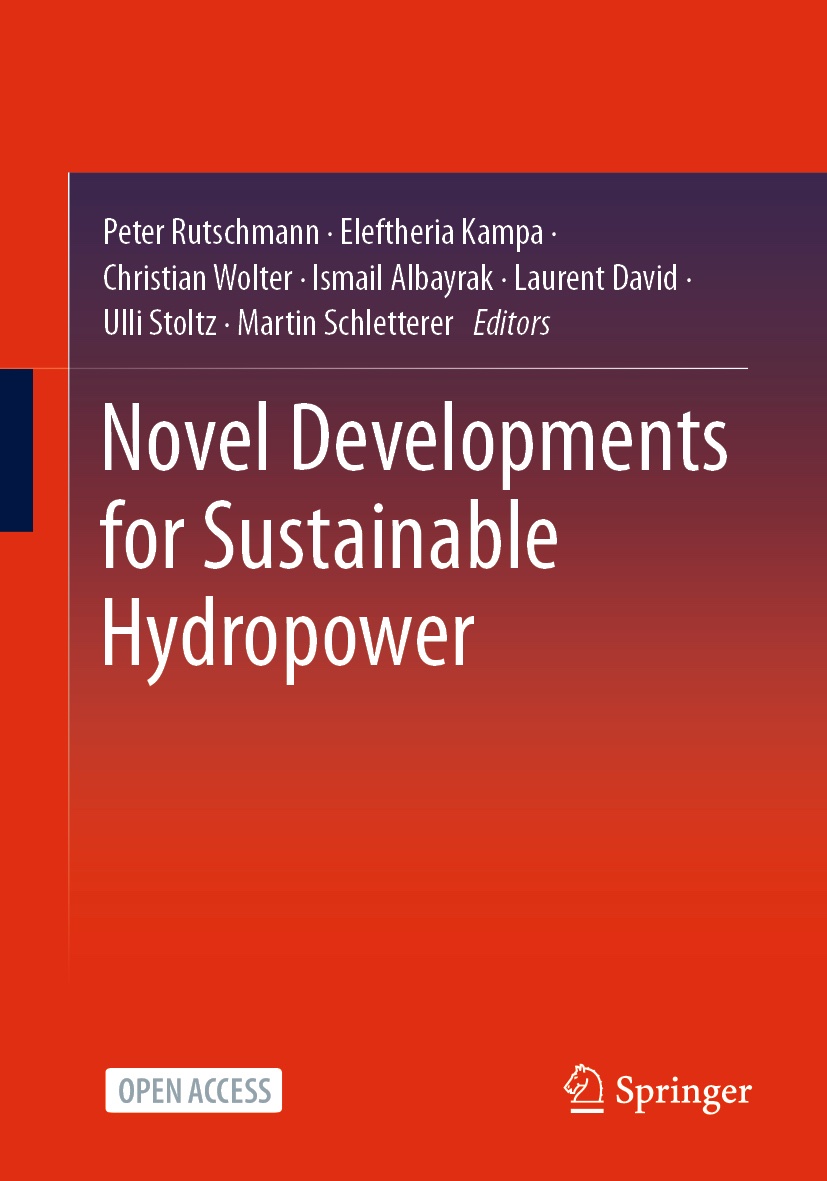
This open access book presents (selected) new and innovative developments for sustainable and fish-friendly hydropower. It offers unique insights into the challenges, practices and policies of hydropower developments across 8 European countries, providing examples from on-site studies and European-wide analyses. The case studies throughout the book are practical "real-world" examples, which are intended to serve as inspiration for anyone who would like to know more about how solutions for more sustainable hydropower production can be designed and implemented. The book was co-edited by Ecologic Institute's Dr. Eleftheria Kampa. Authors of the Ecologic Institute contributed to the chapters on "Policy Framework for Hydropower Mitigation" and "Public Acceptance of Hydropower."
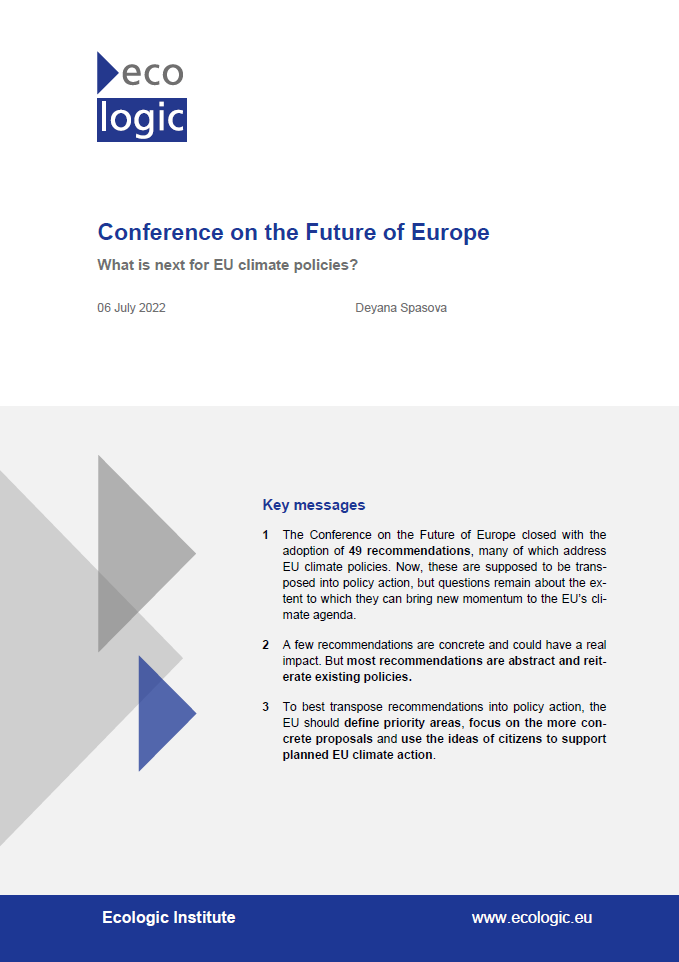
On 9 May 2022, Europe Day, the Conference on the Future of Europe (CFE) closed – with the adoption of 49 recommendations. This is not the end of the process, but the beginning of new political action. With the Russian invasion of Ukraine, the role of the CFE as a starting point for renewed discussions on important topics such as climate, energy policy and EU democracy has been reiterated. Indeed, many recommendations from the CFE address EU climate policies – especially the ones prepared by its third citizens' panel on climate change, the environment and health. In this Ecologic Institute paper, Deyana Spasova questions how the panel's recommendations can improve EU climate policy? Where do the recommendations merely reiterate what is already in place? And how could the EU best translate the suggestions into policy action? The paper is available for download.
The Berlin Energy Transition Act obliges district administrations to both set up an energy management system and appoint energy officers for their property areas. But what does this mean in concrete terms for the implementation of the energy transition in the districts? What are the tasks and what influence do the energy officers have? Where are the pitfalls, and where is there a need for action and improvement? We discussed these questions with our guests in the twelfth edition of Wandelwecker.
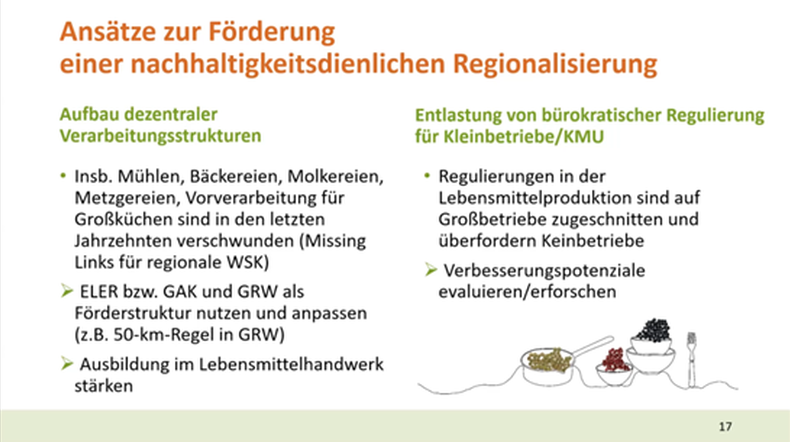
On 4 July 2022, around 30 experts discussed political strategies for a regionalization of the food system, achieving as many positive sustainability effects as possible and avoiding negative impacts. The discussion was based on an input paper by the project team, the core statements of which were presented in two short presentations by the main author, Gerolf Hanke (Oeko-Institut).
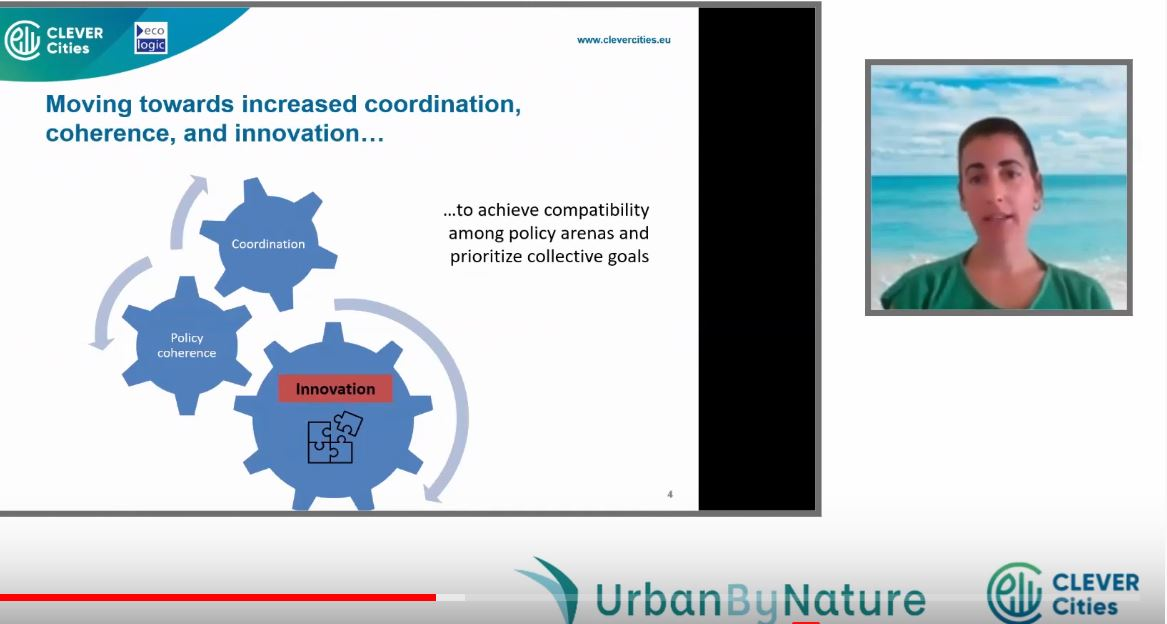
On 4 July 2022, McKenna Davis from the Ecologic Institute spoke to the 2nd step of this methodology: EXPLORING existing urban greening policies, plans and regulations to identify gaps and understand local needs. Representing the CLEVER Cities project, she provided insights on how to ensure coherent and coordinated policymaking and align objectives across sectors and policies. She also highlighted relevant EU policies and initiatives supporting nature-based solutions to contextualise local action towards NBS mainstreaming.
The brief highlights opportunities for agricultural residue utilisation to foster competitiveness, calls for stronger cooperation across borders and sectors, and stresses the need for participatory regional bioeconomy strategies. It also points to IPARD (Instrument for Pre-Accession Assistance for Rural Development) as a funding instrument for circular, rural development and recommends embedding the bioeconomy in national strategic documents to ensure long-term policy coherence.