Europe's environment is in an alarming state, with climate change expected to further aggravate the situation. This substantially threatens economic prosperity, human wellbeing and social peace. Our society and economy need systemic transformative change, and ecosystem restoration integrated into nature-based solutions lies at its heart. MERLIN (Mainstreaming Ecological Restoration of freshwater-related ecosystems in a Landscape context: Innovation, upscaling and transformation) is a 4-year Innovation Action project (funded by the EU) which aims to support transformative ecosystem restoration. The project will work in 17 flagship projects, from Finland to Israel, in order to generate a blueprint for to implement, upscale and replicate restoration and nature based solutions in freshwater ecosystems.
The project "Information and teaching materials for an environmentally conscious use of pharmaceuticals", led by Ecologic Institute, aimed to promote an environmentally responsible use of human pharmaceuticals and to anchor the topic of pharmaceuticals and the environment in pharmaceutical and medical teaching. The overriding goal is to reduce the entry of pharmaceuticals into the environment and their effects on animals and plants. To this end, freely available teaching materials are developed for university teaching, for professional trainings and for vocational schools. In addition, customer information materials on the proper use and disposal of medicines were created and disseminated. Finally, all information and materials were made available on an online information platform at www.uba.de/ham.
The formulation and implementation of climate adaptation plans in cities worldwide needs to speed up rapidly to keep in pace with projections of climate risks. The research project: "Resilience in Europe through Activating City Hubs reaching Out to Users with Triple-A climate adaptation Tools" (REACHOUT) aims to support the implementation of the European Green Deal by developing user-oriented climate services. It is funded through the European Commission's Horizon 2020 programme. Research partners, climate service providers and city stakeholders are co-developing a coherent set of tools and services for seven City Hubs (Cork, Ireland; Athens, Greece; Lillestrøm, Norway; Milan, Italy; Logroño, Spain; Gdynia, Poland; and Amsterdam/APG, the Netherlands).
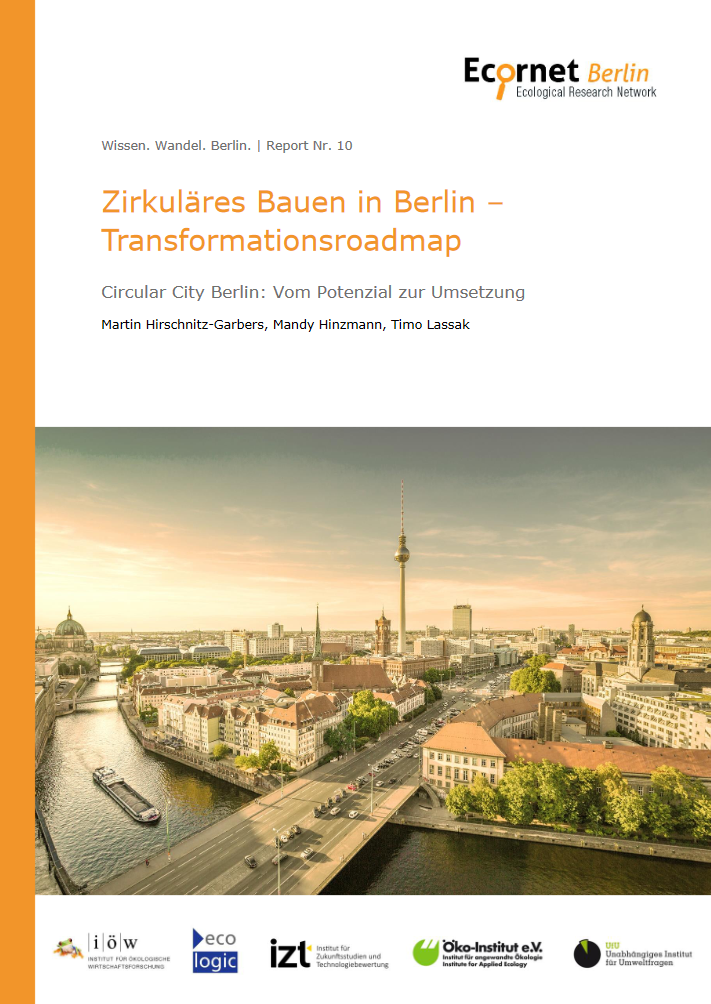
Promising approaches were identified via participatory stakeholder workshops, that could contribute to establishing circular construction in Berlin. Such approaches include a stronger orientation of the legal framework towards the circular economy, for example through an obligation to selective deconstruction in the Berlin Building Code. On the other hand, there is a need for even stronger public procurement of circular approaches in the building sector by facilitating the consideration of life-cycle costs in procurement practice. With the combination of these approaches, it seems possible to establish Berlin as a Circular City in the building sector in the long term.
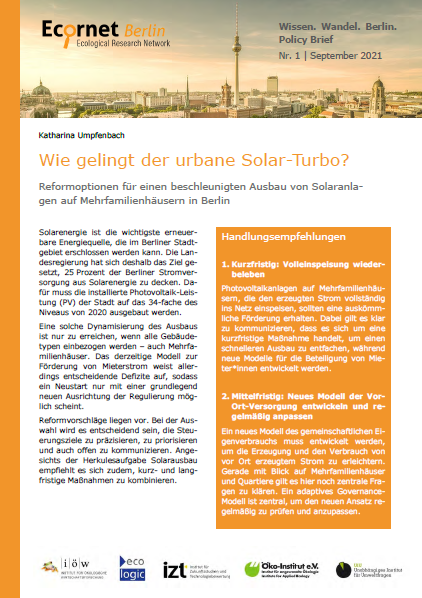
This policy brief examines current proposals for the further expansion of photovoltaics. It shows that the two central goals – accelerating the PV expansion and involving residents – are in tension with each other, at least in the short term. Based on the analysis, the following sequence of measures is proposed: First, as an immediate intervention, PV plants that feed all of their electricity generation into the grid should be made economically viable again.
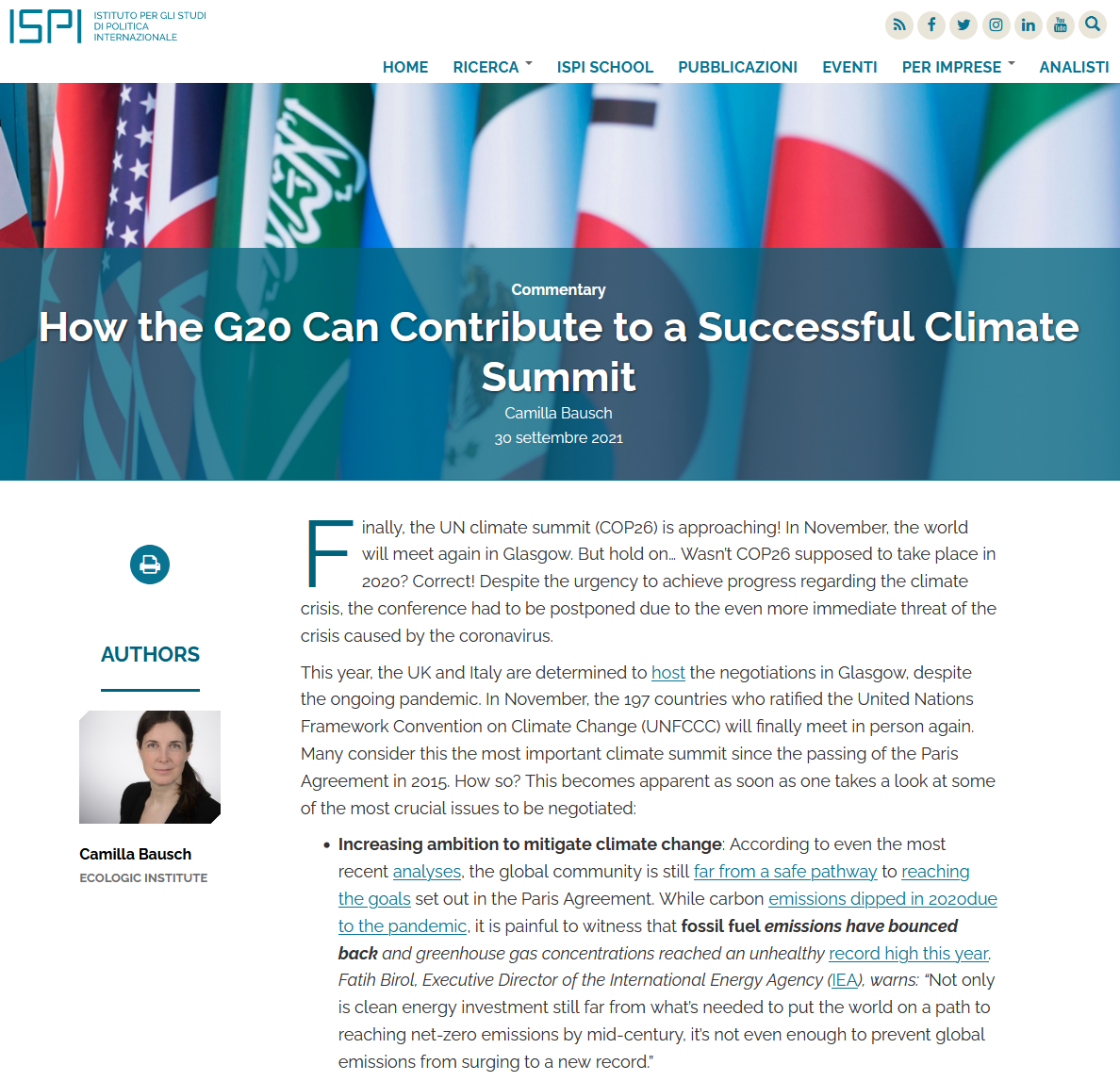
Just a few weeks before the UN climate summit (COP26), Dr. Camilla Bausch responded to the invitation to contribute to the most recent dossier published by ISPI under the tagline "Climate Change: A Global Fight at a Crossroads". Her timely contribution outlines the complexity of the issues and the international political landscape in the eve of COP26.
Ecologic Institute, together with the Oeko-Institut and Prof. Dr. Klinski of the HWR Berlin, supports the Federal Ministry for Economic Affairs and Climate Action (BMWK) in the preparation of negotiations at the EU level, the implementation of EU law, and the further development of the national legal framework. The support is provided by elaborating legal issues including economic and other effects as well as by ad hoc analyses.
Everybody who loves the sea has a story to share. In the podcast "If Oceans Could Speak", scientists and experts from different fields, scholars and sailors, artists and activists share their stories about the oceans around us, their value and vulnerability.
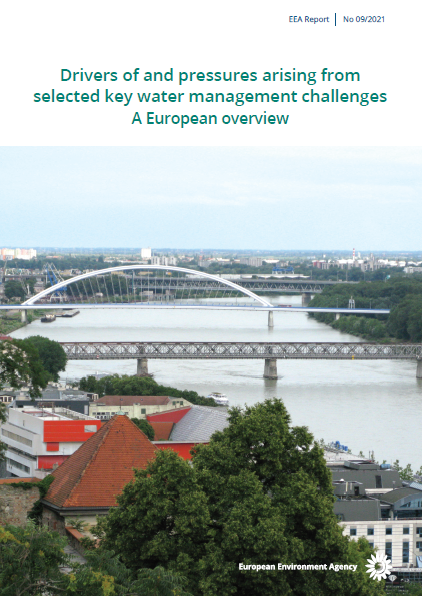
This report gives a European overview of the main drivers and pressures that are at the core of key water management challenges putting European water bodies most at risk of not achieving key environmental objectives.
The digital, or perhaps in this case "intelligent" technologies that are to shape all areas of society in the future, especially our cities, need regulation. After all, these kinds of technologies inform, decide and control — but in whose interest and with which objectives in mind? Recently, there has been increasing thought and debate about the possibilities of democratic data governance "from below". Citizens should (also) be able to decide what intelligent, data-driven machines are used for by consciously sharing their data. Can such approaches be a model for the sustainable digitalization of cities and municipalities and provide a counterweight to the data monopolies of large corporations? What could democratic data governance in Berlin look like?
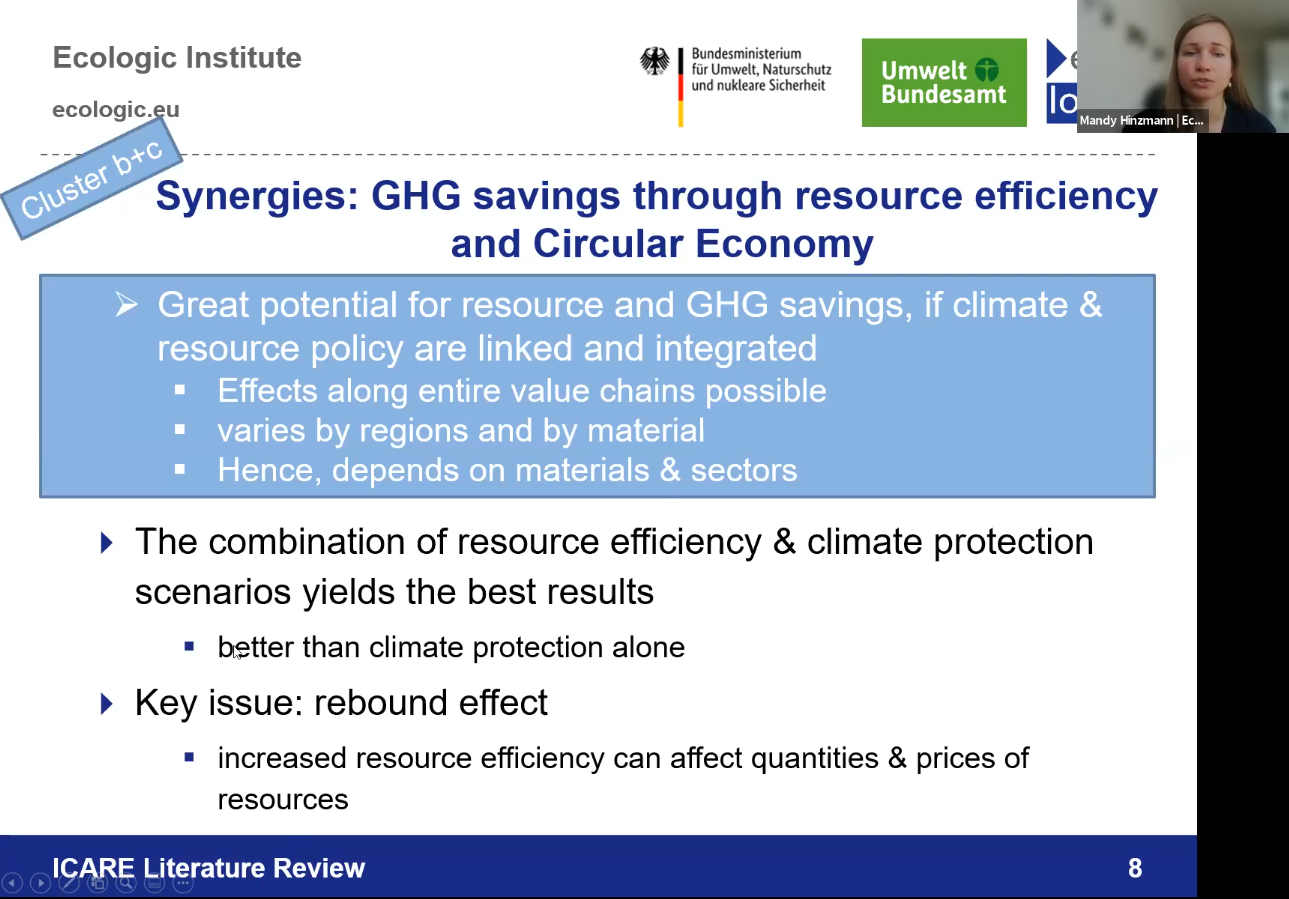
Interactions between climate and resource policy – the so-called "climate-resource-nexus" – still need to be much better understood and potential impacts of effective policies systemically analysed. Against this background, the final conference served to present and discuss key findings from the ICARE project, in particular results from system dynamics model simulations of potential environmental and economic impacts of different climate protection and resource policy measures in different world regions.
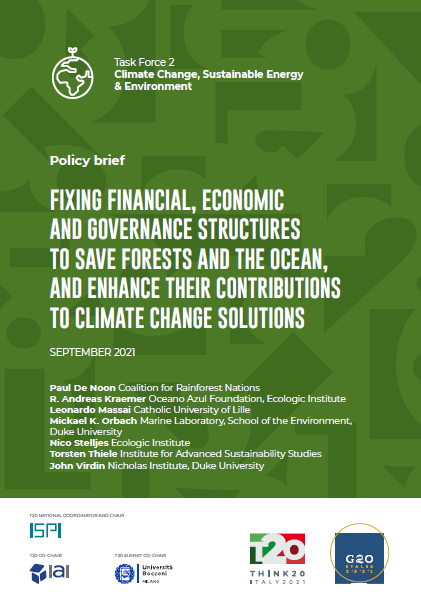
Forests and the ocean are vital for climate, biological diversity, and human communities, but they are degraded and their ecosystem services are seriously impaired, mainly because financial, economic and governance structures are misconfigured. The authors of this T20 policy brief propose that G20 help strengthen the REDD+ climate instrument for forests and extend it to Blue Carbon from coastal and marine ecosystems. Scaled up to cover the Earth's two largest, most diverse and most productive ecosystems, these two approaches can deliver significant economic and climate benefits. The T20 policy brief is available for download.
All over the world, the number of think tanks is growing. They differ greatly regarding their focus areas, their structures and their business models. But what do they have in common and why are they needed? In an interview with André Martinuzzi of the European Sustainable Development Network (ESDN), Dr. Camilla Bausch (Director of Ecologic Institute) reflects on the role and the objectives of environmental think tanks with respect to some of the most relevant policy fields of our times, including the European Green Deal.
On behalf of the European Parliament, Ecologic Institute with support from IEEP investigate the potential of carbon farming to mitigate emissions in the EU and how to effectively increase carbon farming action. Ahead of two key EU Commission policy proposals in December 2021 (the 'Carbon Farming Initiative' and 'Carbon Removals Certification Mechanism'), the study summarises existing knowledge on carbon farming options, business models, and challenges. It also evaluates funding and policy opportunities to support its uptake.
The "Development Plan for the Sea – Strategy for an Integrated German Maritime Policy" was published back in 2011 and has so far set the framework for all sea-related policies in Germany. An integrated maritime policy encompasses all facets of sea-based activities across different sectors. Basically, they can be summarised in the three sustainability pillars 'ecology, economy, and social'. A comprehensive evaluation of Germany's integrated maritime policy has not yet taken place due to the lack of a compilation of appropriate indicators for assessment. The project 'Indicators of an Integrated German Maritime Policy' aims to close this gap.