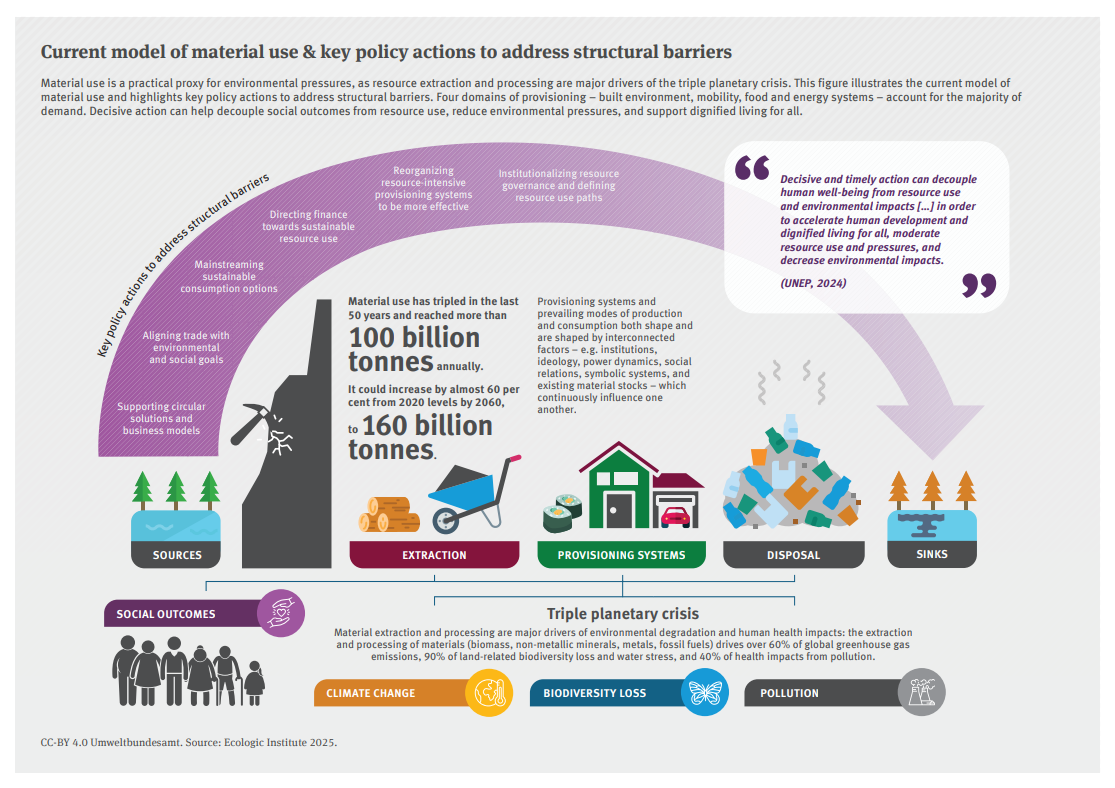
Current model of material use & key policy actions to address structural barriers
|CC-BY 4.0 Umweltbundesamt. Source: Ecologic Institute 2025.
Current Model of Material Use & Key Policy Actions to Address Structural Barriers
Infographic Series
- Publication
- Citation
Umweltbundesamt 2025: Current model of material use & key policy actions to address structural barriers. Infographic.
This infographic presents the current model of material use and shows how extraction, production, consumption and disposal drive environmental pressures. It also outlines key policy actions to overcome structural barriers, reduce resource use and decouple human well-being from environmental harm. It is based on the report “Moving from Interconnected Crises to Systemic Solutions. Resource Efficiency, Nature-based Solutions, and Systemic Transformation as Responses to the Complexity of the Triple Planetary Crisis” and highlights concrete pathways for action. The infographic is also included in the accompanying fact sheet under the same title.
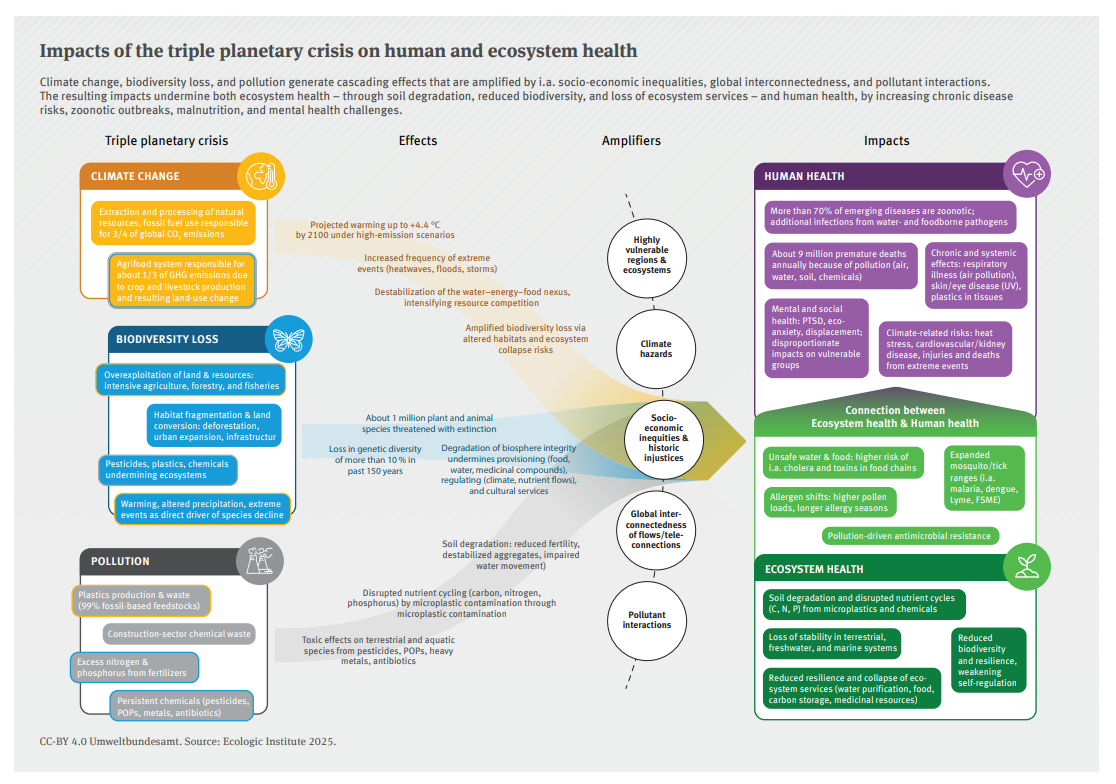
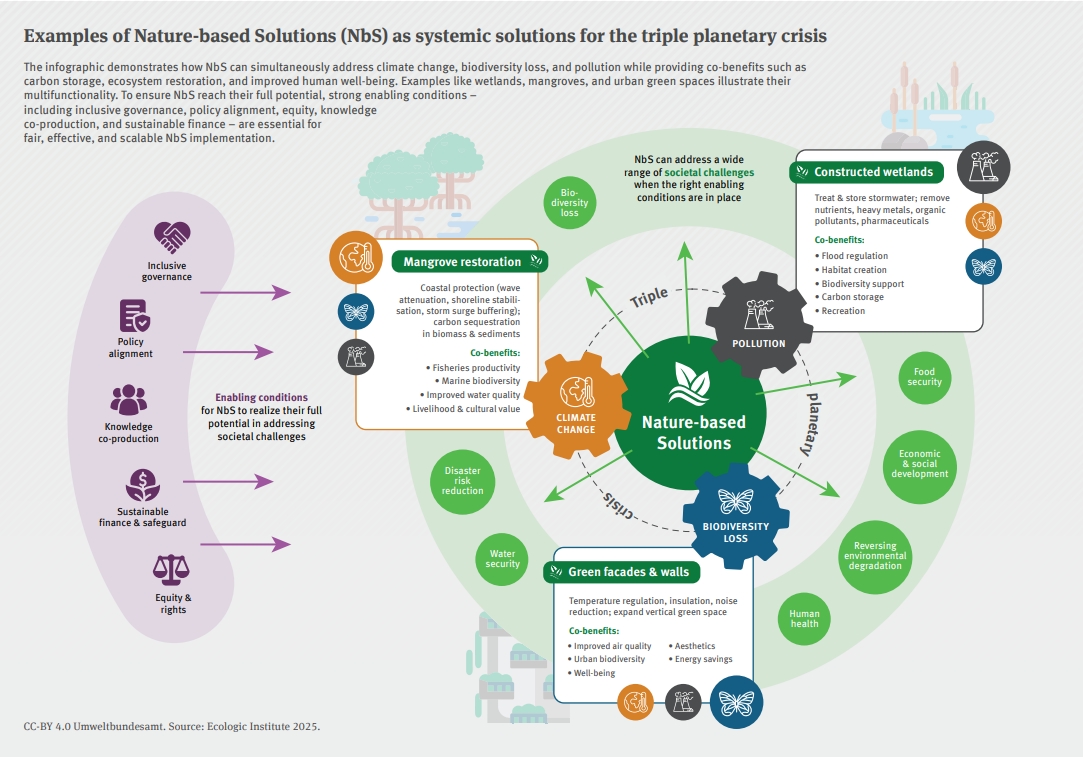
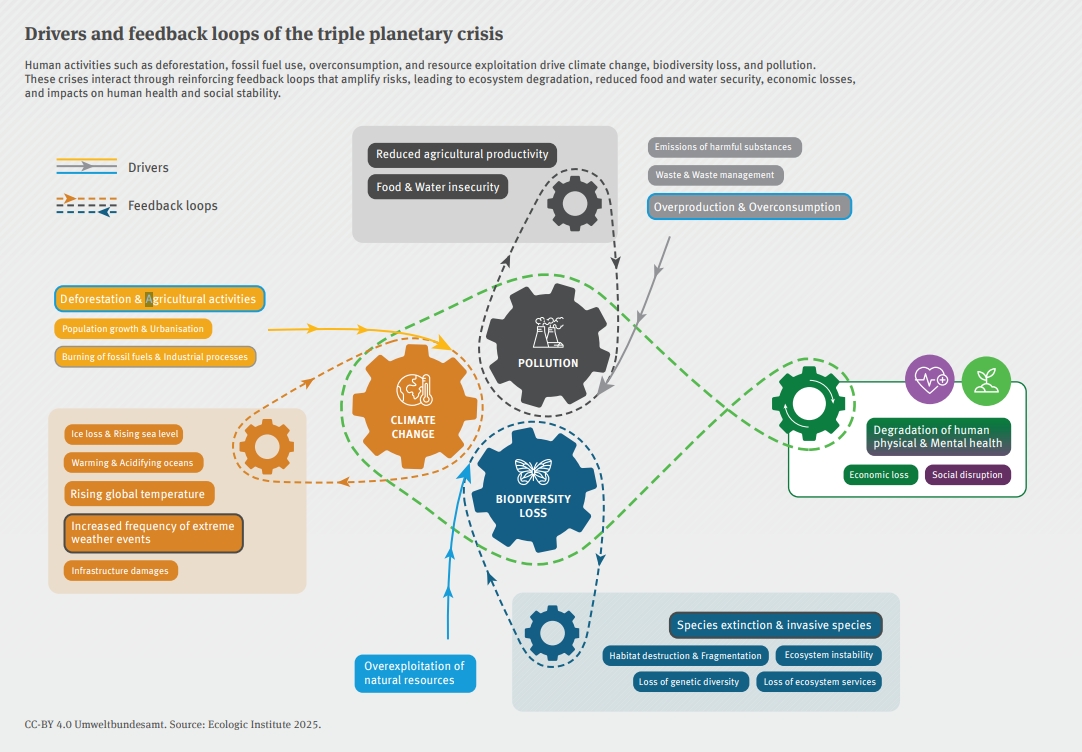
Together with the infographic “Impacts of the Triple Planetary Crisis on Human and Ecosystem Health”, the two visuals provide a clear overview of the triple planetary crisis, tracing it from underlying drivers and impacts to systemic solution pathways. They are designed to make complex relationships easier to understand and to support informed decision-making in policy, research and practice.
Download the infographic series on the triple planetary crisis:
- Drivers and feedback loops of the triple planetary crisis
- Impacts of the triple planetary crisis on human and ecosystem health
- Current model of material use & key policy actions to address structural barriers
- Examples of nature-based solutions as systemic solutions for the triple planetary crisis
The infographics are part of the UBA publications on the triple planetary crisis. Published under a CC BY 4.0 license, they may be shared and adapted provided that the source is credited. We encourage their use and dissemination to support a better understanding of the systemic drivers, impacts and solution pathways of the triple planetary crisis in policy, research and practice.
Contact