Ecologic Institute Newsletter No 284 – May 2026
- Ecologic Institute Newsletter
Systemic and Complex Risk Governance for Europe' Preparedness and Sustainability – Report
Droughts, biodiversity loss and extreme weather are increasingly triggering chain reactions across Europe's environmental, economic and social systems. This report examines how cascading and compounding environmental risks affect Europe's resilience, preparedness and long-term sustainability. In it, our experts introduce innovative methods such as risk constellations and a "risk playing card" methodology that help policymakers and experts map interdependencies, prioritise systemic risks and assess cascading impacts across societal and ecological systems. A key finding of the report is the need to integrate environmental dependencies more explicitly into industrial, energy and food-system policies while strengthening cross-system coordination and anticipatory governance capacities. The report provides practical guidance for institutions seeking to manage uncertainty, strengthen preparedness and respond more effectively to interconnected environmental risks.
Delivering the EU's 2030 Climate and Energy Targets – Briefing
ECNO's 2026 assessment of all 27 National Energy and Climate Plans shows the EU remains off track in several key areas of its 2030 climate agenda. The analysis examines contribution gaps and policy gaps in emissions covered by the Effort Sharing Regulation (ESR), natural carbon sinks, renewable energy, energy consumption, and fossil fuel subsidies. Significant gaps persist in energy efficiency, Land use, Land use change and forestry (LULUCF) targets, and the phase-out of fossil fuel subsidies. The briefing supports policymakers, public authorities, and researchers in evaluating national planning efforts and identifying implementation needs.
Challenges for Assessing and Implementing Nature-based Solutions at Landscape-scale – Article
Implementing nature-based solutions (NbS) at landscape scale remains challenging due to fragmented governance structures, limited financing, insufficient data availability and competing stakeholder interests. Using interconnected pondscapes as a case study, the article examines how NbS can be effectively assessed and implemented across larger landscapes. It highlights concrete barriers related to governance and policy frameworks, financing mechanisms, data foundations and balancing the interests of different actors. The authors further demonstrate why context-specific assessment methods and participatory approaches are essential for reliably capturing the ecological and socio-economic functions and benefits of NbS. The findings provide practical guidance for policymakers and practitioners seeking to systematically integrate NbS into landscape-scale planning and governance.
Comparison of Downstream Market-based Policies to Reduce Agricultural Emissions – Report
Reducing greenhouse gas emissions from agriculture remains a major challenge for the EU, with progress lagging behind most other sectors. A new report by Ecologic Institute, commissioned by the German Environment Agency, examines how market-based instruments, including emissions trading systems and mandatory climate standards, could help close this gap. Comparing three policy options, the study highlights key trade-offs between effectiveness, feasibility and cost-efficiency, and offers insights for the future design of EU climate policy in agriculture.
The Do's and Don'ts of a Buyers' Club – Policy Brief
As the EU develops its Carbon Removals and Carbon Farming (CRCF) framework, questions around financing and demand for carbon farming are becoming increasingly important. A new policy brief developed by Ecologic Institute experts within the Horizon Europe project CAFAMORE outlines recommendations for the design of a proposed EU Buyers' Club for carbon farming. The brief explores how such a mechanism could support early market development while ensuring environmental integrity and workable conditions for farmers.
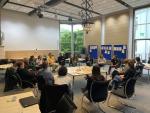
Urban Nature – European Networking Workshop
Moderation: McKenna Davis, Teresa Spantzel und Fenja Kroos
On 5–6 May 2026, experts from public authorities, cities, the scientific community, EU institutions and networks convened in Bonn for the European Urban Nature Networking Workshop. The event addressed urban nature planning, implementation, governance, financing, monitoring and capacity building for urban nature and biodiversity across Europe. A particular focus was the implementation of Article 8 of the EU Nature Restoration Regulation (NRR). Participants exchanged experiences from EU and non-EU contexts and discussed practical approaches for cities and national administrations.

Economic Impacts of Climate Change and Adaptation Strategies – ACCREU Workshop
The economic costs of climate impacts and the viability of adaptation strategies were at the centre of an ACCREU workshop held in Brussels on 29 April 2026. Representatives from industry, policy, finance and civil society discussed new research on sector-specific climate risks, adaptation costs and macroeconomic impacts across Europe. Presentations and case studies included the topics of wildfires, health, energy systems, coastal regions, as well as distributional and fiscal implications for regions and households. The project team also presented a digital handbook and a web-based Scenario Explorer designed to support decision-making on European climate adaptation.
Towards a New Research Agenda for the Economics of Transformational Adaptation – Reflexive Forum
On 28 April 2026, experts from industry, policy, finance and academia met in Brussels to discuss the economic assessment of transformational climate adaptation. The ACCREU reflexive forum examined how profound changes in socio-ecological systems can be evaluated economically and where existing assessment frameworks reach their limits. Presentations and workshop sessions addressed systemic transformation, equity, investment decisions and the implications of extreme events. The discussions will feed into a new research agenda and inform a jointly authored policy brief and scientific publication to support public strategies and private investment decisions on climate adaptation.
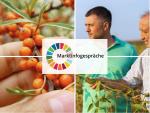
Innovations and New Crops for Brandenburg's Organic Market – Market Information Talk 2026
Alternative and niche crops such as millet, buckwheat, quinoa and sea buckthorn are gaining importance for Brandenburg’s organic market. The 2026 Market Information Dialogue, taking place on 12 June in Oranienburg, will address current developments in cultivation, processing and product development. Practice-oriented contributions from agriculture and product development will examine market opportunities, challenges along the value chain and new approaches for regional organic products. The event is aimed at stakeholders from farming, processing and product development interested in strengthening regional organic value chains in Brandenburg.

Voluntary Ecological Year (FÖJ)
Starting on 1 September 2026, we are offering two placements for a Voluntary Ecological Year (FÖJ) in Berlin. The positions are based in the areas of administration as well as communications and events. The programme is aimed at recent school graduates interested in environmental and sustainability issues who would like to gain practical experience in research, policy consulting and project work. Applications are open until 15 August 2026.
Student Assistant in Biodiversity
We are looking for a student assistant in biodiversity to join our Berlin office. The position includes research on biodiversity, nature conservation and nature restoration in Germany and the EU, as well as support for project management, workshops and the preparation of scientific materials. The role is aimed at master’s students in environmental and related fields with an interest in EU environmental policy and scientific research. Interested candidates can apply until 31 May 2026.
Student Assistant in Finance
We are looking for a student assistant to join our Finance Team in Berlin at the earliest possible date. The position includes tasks such as invoice verification, bookkeeping, controlling, and supporting digital processes and internal workflows. Interested candidates are invited to apply by 15 June 2026.
Submit your Research to Ecologic Institute's Sessions at the NbS International Congress
Researchers and practitioners working on nature-based solutions are invited to contribute to three Ecologic Institute-led sessions at the Nature-based Solutions International Congress in Paris (2–6 November 2026). Selected from more than 100 international proposals, the sessions will explore participatory governance, socio-ecological justice, and “sponge landscape” approaches for climate resilience. The Congress has now opened its Call for Abstracts and Posters, offering an opportunity to engage with the global NbS research community and contribute to the Scientific Conference programme.
Contents
- Publications
- Systemic and Complex Risk Governance for Europe' Preparedness and Sustainability – Report
- Delivering the EU's 2030 Climate and Energy Targets – Briefing
- Challenges for Assessing and Implementing Nature-based Solutions at Landscape-scale – Article
- Comparison of Downstream Market-based Policies to Reduce Agricultural Emissions – Report
- The Do's and Don'ts of a Buyers' Club – Policy Brief
- Recent: Presentations and events
- Urban Nature – European Networking Workshop
- Economic Impacts of Climate Change and Adaptation Strategies – ACCREU Workshop
- Towards a New Research Agenda for the Economics of Transformational Adaptation – Reflexive Forum
- Register now!
- Innovations and New Crops for Brandenburg's Organic Market – Market Information Talk 2026
- We are hiring
- Voluntary Ecological Year (FÖJ)
- Student Assistant in Biodiversity
- Student Assistant in Finance
- News
- Submit your Research to Ecologic Institute's Sessions at the NbS International Congress