In this project, Ecologic Institute in cooperation with Oeko-Institut and Giessen University, analyses measures for climate-friendly soil use and the challenges and opportunities of transfer-based instruments as well as other funding mechanisms to promote these measures. In addition, current legal and political framework conditions for nature-based solutions and climate-friendly soil use will be examined.
The EU Climate Action Regulation governs 60 percent of EU emissions. To achieve the climate targets for 2030 and 2050, the upcoming reform of the regulation must be a success, writes Nils Meyer-Ohlendorf in the Tagesspiegel. He makes a number of reform proposals. The article is available online.
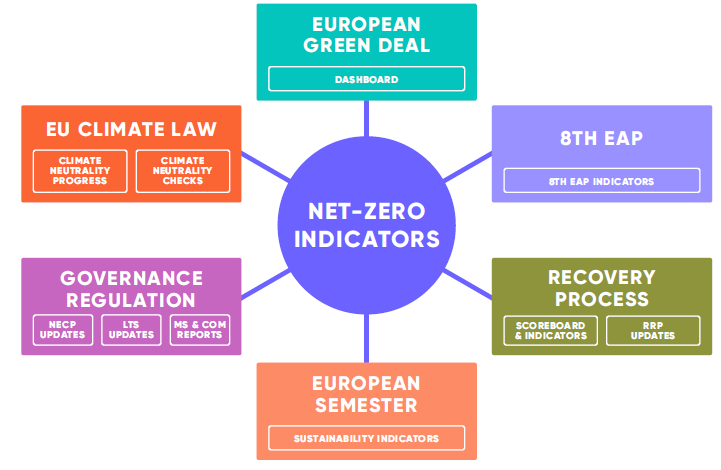
How well is the EU doing in its pursuit of climate neutrality by 2050? Are national long-term strategies and national energy and climate plans up to the task? Are the recovery efforts in line with this goal? Across EU policy, a range of processes are in the process of developing methods to assess progress towards climate neutrality – but there is no integrated set of "net zero indicators" being developed to do the job. And simple greenhouse gas emission data is not enough to judge whether the necessary transition is happening "under the hood" of Europe's economic sectors.
Achieving climate neutrality requires structural changes to our economic system, with solutions that work across sectors. Ecologic Institute has developed an assessment matrix based on net zero indicators that can measure climate neutrality, and proposes ways to integrate this framework into existing EU policy processes.
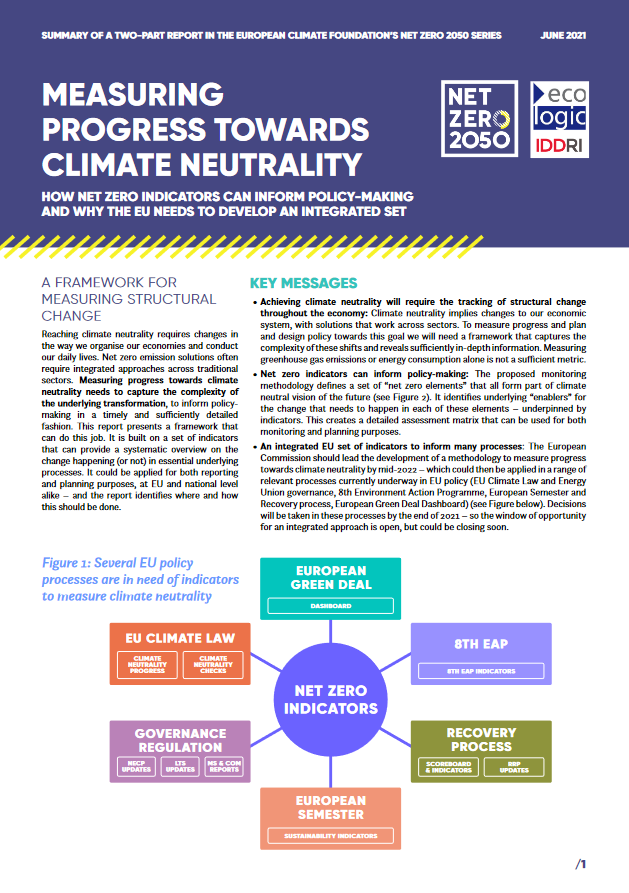
Achieving climate neutrality requires structural changes to our society and economic system. Ecologic Institute and IDDRI developed an assessment framework based on eleven elements with indicators to measure the progress towards climate neutrality, and proposed ways to integrate this framework into existing EU policy processes.
Achieving climate neutrality requires structural changes to our economic system, with solutions that work across sectors. Ecologic Institute has developed an assessment matrix based on net zero indicators that can measure climate neutrality, and proposes ways to integrate this framework into existing EU policy processes.
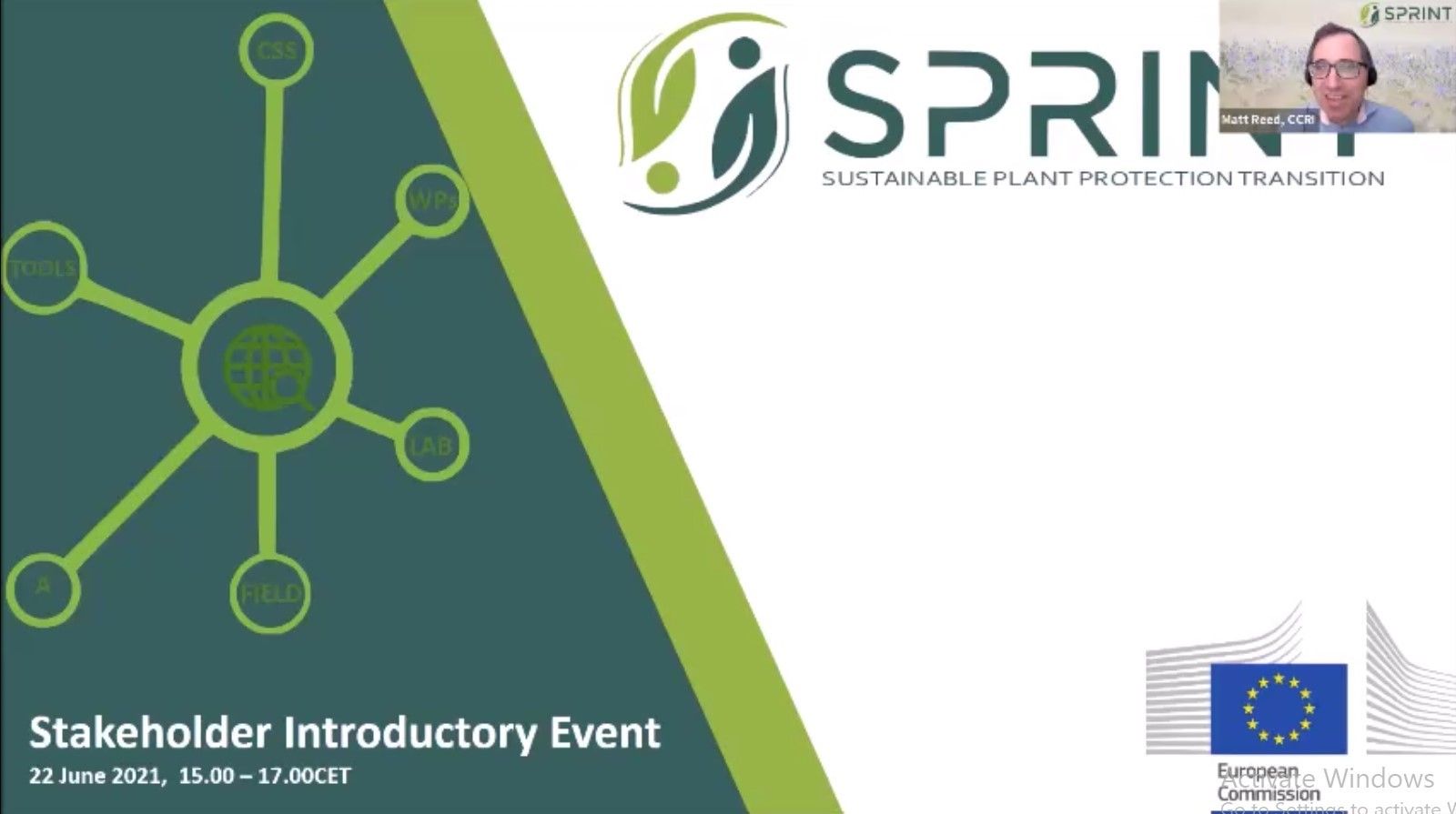
The aim of the SPRINT project (Sustainable Plant Protection Transition: A Global Health Approach) is to support the transition towards more sustainable plant protection. This relies on close interaction with stakeholders along the whole supply chain, civil society and regulatory bodies. The SPRINT Stakeholder Introductory event, co-organized by Ecologic Institute, took place on Tuesday 22nd June, 2021. With 117 participants and a lively discussion in breakout groups, the meeting was a great way to kick-off our exchanges with stakeholders.
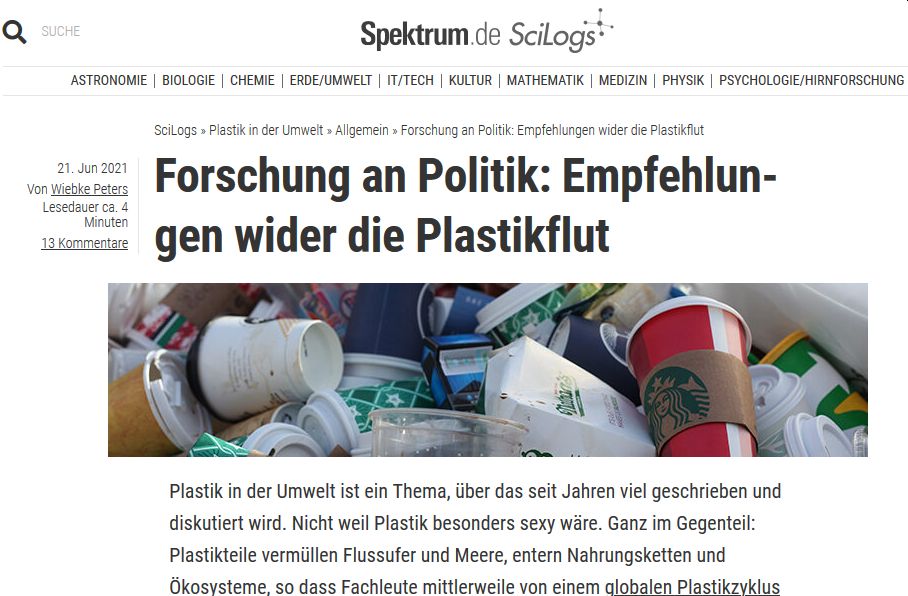
In this blog we presented the most exciting, innovative, current and urgent findings from the research focus "Plastics in the Environment". Plastic waste in the environment is a global problem with unforeseeable ecological consequences. Yet we still know far too little about how plastic enters the environment, how it spreads in rivers, oceans and in the soil and how it affects humans and animals. In order to close these knowledge gaps, Germany's Federal Ministry of Education and Research launched the research priority "Plastics in the Environment - Sources - Sinks - Solutions" in 2017.
A comparative study indicates that the collective memory of the 1872 storm is related to the background knowledge about floods, the damage extent, and the response to the storm. Flood marks and dikes help to remember the events. In general, coastal flood defence is to the largest degree implemented in the affected areas in Germany, followed by Denmark, and is almost absent in Sweden, corresponding to the extent of the collective memory of the 1872 storm. Within the affected countries, there is local variability of flood risk awareness associated with the collective memory of the storm.
On 17 June 2021, representatives from Berlin's public administration, business and civil society discussed how to accelerate the expansion of tenant electricity in Berlin in the virtual expert workshop of the StromNachbarn project. Practical experience inputs enriched the discussion.
Wehrmann, Dorothea et. al. 2021: Wie können wir die Ozeane retten? Die Bedeutung der transdisziplinären und kollaborativen Meeresforschung. Deutsches Institut für Entwicklungspolitik (DIE): Bonn.
Biodiversity continues to decline dramatically worldwide. However, current policy instruments, such as the EU Biodiversity Strategy 2030 and the UN Decade for Ecosystem Restoration 2021-2030, are generating new optimism and a great deal of political attention. Are these processes enough to tackle the biodiversity crisis? Or is radical change and rethinking necessary all the same? At the 6th Future Forum Ecornet, which was organized by Ecologic Institute in cooperation with ISOE on 15 June 2021, approaches for the protection of biodiversity were discussed.
Ecologic Institute developed evidence-based material for German and EU stakeholders and decision-makers to underpin the logic of the German CAP Strategic Plan, and thus a reference point for assessing the German government's needs assessment in its CAP Strategic Plan.
This report documents the project work and results of the R&D project "Information Platform for the restoration of rivers", which was jointly carried out by Ecologic Institute, Planungsbüro Zumbroich and the Institute of Aquatic Ecology and Fish Biology, Jena (IGF Jena) from 2017 to 2020. The aim of the project was to create an online information platform about river restoration (Part I of the project report) and the analysis of German restoration projects in regard to their monitoring (Part II of the project report). The report is available for download.