Bild von Henning Westerkamp auf Pixabay, Cover: Umweltbundesamt, 2026
MEER:STARK – Meeresentlastung und Resilienzstärkung
Sektorübergreifende Transformation, Anpassung, Revitalisierung und Klimaschutz für Nord- und Ostsee
- Publication
- Citation
Stelljes, N., Fuchs, G., Kroos, F., Haase, F., Martinez, G., & Maguire, C. (2026). MEER:STARK – Meeresentlastung und Resilienzstärkung: Sektorübergreifende Transformation, Anpassung, Revitalisierung und Klimaschutz für Nord- und Ostsee. Umweltbundesamt. https://doi.org/10.60810/openumwelt-8297
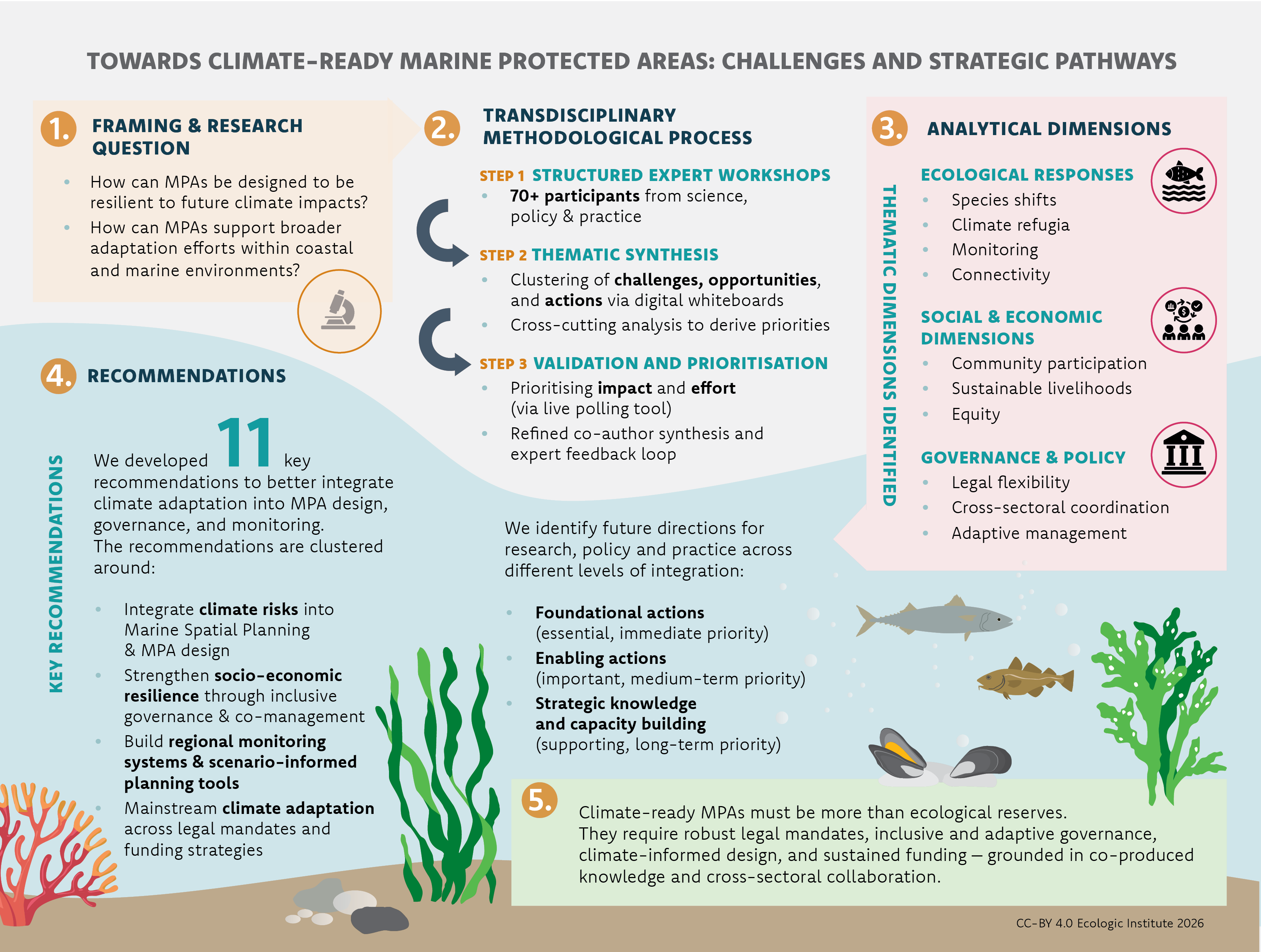
Marine ecosystems in the North Sea and Baltic Sea are increasingly affected by climate change while simultaneously facing a range of anthropogenic pressures. The MEER:STARK project examined the interactions between human-induced stressors, marine conservation, and climate adaptation with the aim of developing cross-sectoral recommendations for policy and management. Drawing on comprehensive literature reviews and expert dialogues, the project identified opportunities to better align marine protection measures with climate adaptation strategies and to strengthen the resilience of marine ecosystems.
Ecological Restoration, Adaptive Spatial Planning, and Coherent Governance
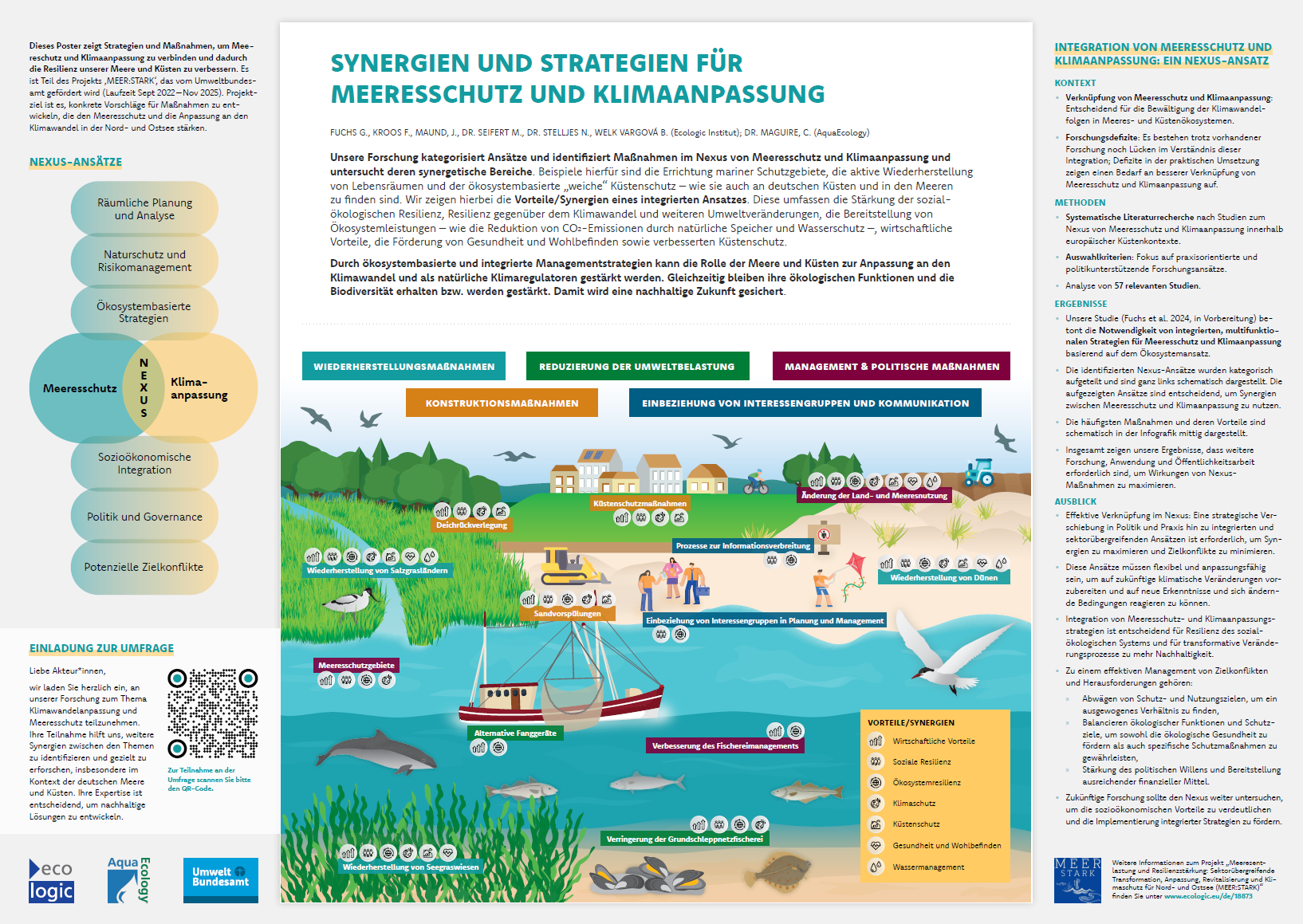
A central outcome of the project was the identification of key strategies that can generate synergies between marine conservation and climate adaptation. These include ecological restoration, adaptive spatial planning, and coherent governance approaches. Ecological restoration can contribute to the recovery and long-term resilience of marine habitats, while adaptive spatial planning enables management frameworks to respond to changing environmental conditions and emerging pressures. The project further highlighted the importance of coordinated governance structures that facilitate cooperation across sectors and administrative levels.
Improving the Implementation of Existing Policy Frameworks
The expert dialogue on eutrophication emphasised that effective implementation of existing regulatory instruments remains a critical challenge. While policy frameworks such as the Marine Strategy Framework Directive and the Nitrates Directive provide important foundations for addressing nutrient pollution, their successful implementation requires close coordination among governance levels and institutions. Participants also stressed the importance of early stakeholder involvement to support policy coherence and enhance the effectiveness of management measures across sectors.
Strengthening Nature-Based Coastal Protection and Marine Protected Areas
A dedicated workshop on nature-based coastal protection highlighted the potential of ecosystem-based approaches to support climate adaptation. Measures such as seagrass meadows, salt marshes, and biogenic reefs can contribute to coastal resilience while simultaneously promoting biodiversity conservation. Participants concluded that these approaches require stronger institutional integration as well as adaptive planning and financing mechanisms to facilitate their wider implementation. In addition, the project found that many existing marine protected areas remain insufficiently effective. Robust marine protection therefore depends on dynamic management approaches, cross-sectoral governance, and participatory decision-making processes capable of responding to changing environmental conditions.
An Integrated Framework for Resilient Marine Ecosystems
Overall, MEER:STARK provides practical recommendations and an integrated framework for strengthening the resilience of the North Sea and Baltic Sea to climate-related impacts. The project demonstrates that effective marine conservation and climate adaptation should be addressed jointly rather than as separate policy domains. By linking ecological restoration, adaptive governance, nature-based solutions, and participatory management approaches, the project offers a foundation for developing more coherent and resilient marine policies in the future.
MEER:STARK aimed to develop cross-sectoral recommendations for marine conservation and climate adaptation in the North Sea and Baltic Sea. Through literature reviews, expert dialogues, and stakeholder workshops, the project analysed the interactions between anthropogenic pressures, marine protection, and climate adaptation and translated these findings into coordinated policy recommendations.
Contact

- Language
-
German
- Authorship
- Funding
-
German Environment Agency (UBA), Germany - Published by
-
German Environment Agency (UBA), Germany - Year
- Dimension
- 65 pp.
- ISSN
-
1862-4804
- DOI
- Project
- Project ID
- Table of contents
-
Click to show full table of contents
- Keywords
-
marine conservation, climate adaptation, eutrophication, ecological restoration, nature-based coastal protection, marine governance, resilience, spatial planning, biodiversity conservationNorth Sea, Baltic Sea, Germany, coastal regions, marine protected areas, European marine regionsliterature review, expert dialogue, stakeholder engagement, workshop, policy analysis, governance assessment, synthesis approach, policy recommendations
Kampa, E., Elkina, E., Bueb, B., & Otero Villanueva, M. d. M. (2025). Restoring European Coastal Wetlands for Climate and Biodiversity: Do EU Policies and International Agreements Support Restoration? Sustainability, 17(21), 9469. https://doi.org/10.3390/su17219469
Kampa, E., Elkina, E., Otero, M., 2025. Unlocking potential of coastal wetlands in Europe: Integration into National Restoration Plans. Policy Brief. RESTORE4Cs project.
Elkina, E; Davis, M; Fuchs, G; Kupilas, B; McDonald, H; McCarron, Imelda (2025). Sectoral Brief: Blue Economy.GoNaturePositive! Horizon Europe Grant Agreement No. 101135264, European Commission. https://doi.org/10.5281/zenodo.15517005
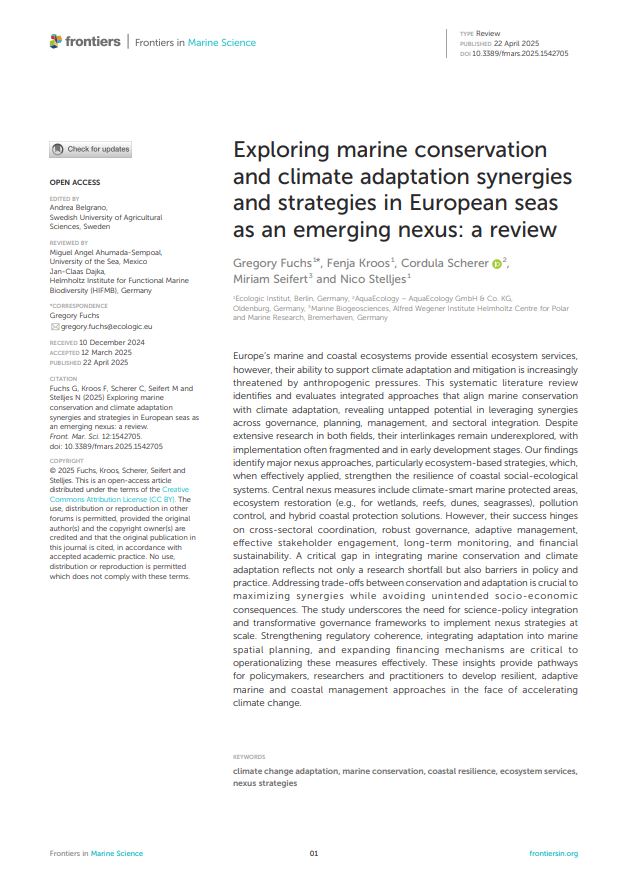
Fuchs G, Kroos F, Scherer C, Seifert M and Stelljes N (2025) Exploring marine conservation and climate adaptation synergies and strategies in European seas as an emerging nexus: a review. Front. Mar. Sci. 12:1542705. doi: 10.3389/fmars.2025.1542705
Dürselen, Claus-Dieter et al. 2024. Fachliche Unterstützung der Umsetzung der EG-Meeresstrategie-Rahmenrichtlinie (MSRL). Abschlussbericht. Umweltbundesamt, Dessau-Roßlau.