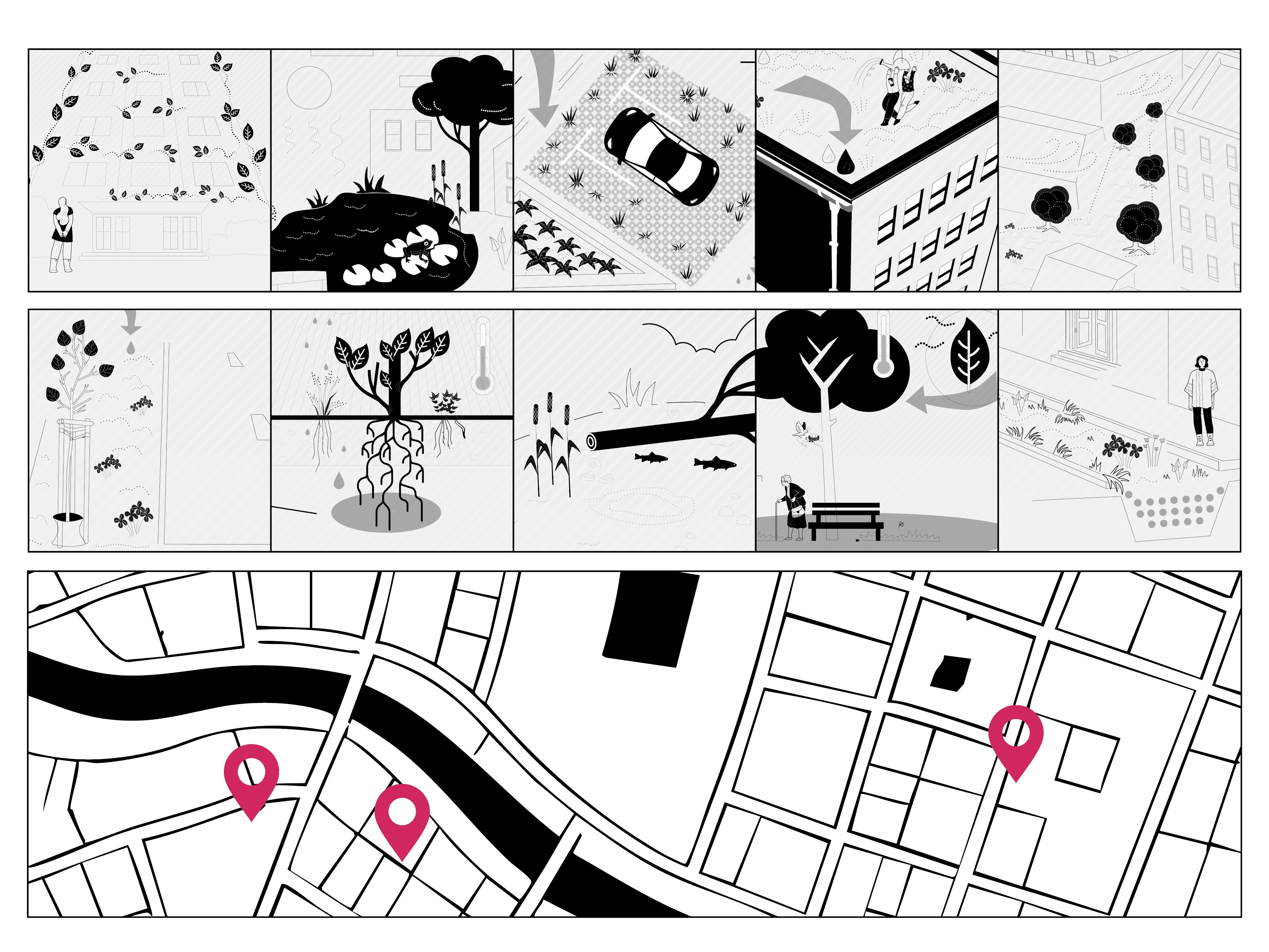
Nature-based climate adaptation can only be effective if it reaches the people it is meant to serve. Inclusive public communication plays a key role in this process: it helps ensure that nature-based solutions are not only planned and implemented but also understood, accepted and shaped by a wide range of communities. This guide, published by the German Environment Agency, provides practical guidance on how municipalities can design inclusive communication strategies for nature-based climate adaptation.
What do shaded paths, green roofs and restored waterways have in common? In many cities, they are already part of the urban landscape – yet often remain unnoticed. This guide, published by the German Environment Agency, focuses on these existing measures. It explains how municipalities can use city maps to make nature-based climate adaptation visible, place it in context and communicate it in a transparent and accessible way.
Nature-based climate adaptation unfolds not only in urban space but also in public perception. Measures such as urban greening, water retention or heat action plans require clear and targeted communication in order to be understood, accepted and supported. A new short guide published by the German Environment Agency outlines how municipalities can use press work strategically to communicate nature-based climate adaptation in a clear and structured way.
The toolkit brings together tried-and-tested instruments and organises them along a typical municipal workflow: from initial orientation and planning through to implementation, maintenance, monitoring and evaluation. Local authority departments, planners and other stakeholders will find concise fact sheets outlining each tool, advice on how to apply it at different project stages, as well as links to further resources and practical examples.
The triple planetary crisis is a systemic challenge, not three separate issues: climate change, biodiversity loss, and pollution reinforce one another through shared drivers and feedback, threatening planetary and human well-being. It is driven by fossil fuel dependence, unsustainable production and consumption, overexploitation of land and resources, and structural inequalities. The analysis concludes that the triple crisis can only be effectively addressed through systemic, cross-sectoral, and justice-oriented approaches. By linking resource governance, NbS, and transformative change, this report highlights how today’s triple crisis can be turned into an opportunity to regenerate ecosystems, reduce inequalities, and build resilient societies within planetary boundaries.
This fact sheet summarizes the information contained in the publication Burgos Cuevas et al. (2025): Moving from interconnected crises to systemic solutions. Resource efficiency, nature-based solutions, and systemic transformation as responses to the complexity of the triple planetary crisis. Interim report, Climate Change 83/2025. German Environment Agency: Dessau-Roßlau. https://doi.org/10.60810/openumwelt-8108.
Nature-based solutions are central to climate change adaptation. Urban green spaces and waterbodies can reduce heat in cities, for example. How can local authorities implement such measures despite limited resources? This paper presents financing options based on practical examples – from crowdfunding to green bonds – and assesses which ones are suitable and when. It also provides recommendations on how the federal and state governments can provide support.
This poster summarises key findings from the socio-economic assessment of blue-green infrastructure measures conducted within the AMAREX project. The analysis covers 21 decentralised measures such as infiltration swales, tree pits, and green or retention roofs.
The study, developed under the ReFoPlan project "Natürlich Klimaanpassung! Resiliente naturbasierte Lösungen für Kommunen", provides an overview of the current state of NbS implementation for municipal climate adaptation in Germany. It identifies key barriers that hinder local action – from limited resources to conflicting interests – and highlights strategies and tools that can help overcome them.
In this Policy Brief of the EU-funded NICHES project, Benjamin Kupilas (Ecologic Institute) and David Alejandro Camacho Caballero (UAB) examine how cities like Barcelona, Berlin, and Rotterdam can shape the transition to sustainable urban water systems through Nature-based Solutions (NBS). The core question is which governance models, participatory processes, and methodological approaches are needed to embed NBS effectively into urban storm- and wastewater management strategies.
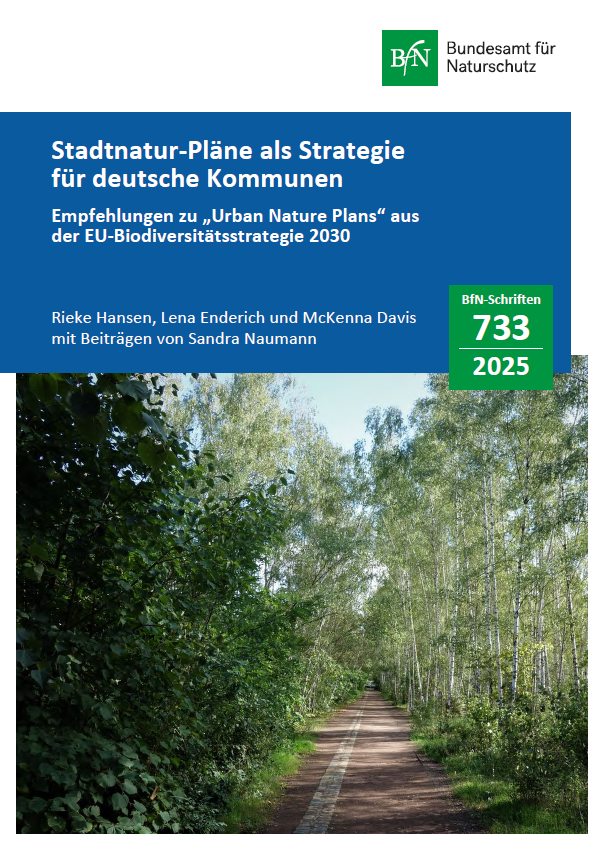
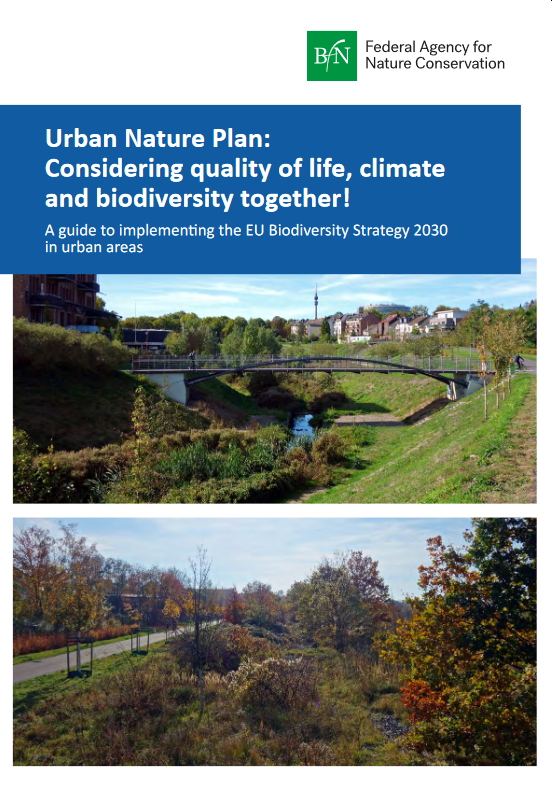
The EU Biodiversity Strategy for 2030 calls on all European cities with more than 20,000 in-habitants to develop and rapidly implement an "Urban Greening Plan". These plans should contain ambitious targets and measures to conserve biodiversity, promote human well-being, and contribute to climate adaptation and mitigation. The European Commission now refers to these plans as "Urban Nature Plans". The project documented in this report aimed to stimulate a discourse on Urban Nature Plans in Germany and to develop recommendations for local authorities.
In this policy brief, Ida Meyenberg and Evgeniya Elkina analyze which governance approaches enable the successful implementation of nature-based solutions (NBS) for managing combined sewer overflows (CSO) in cities. The central question is what institutional, procedural, and financial enabling conditions municipalities and water authorities need, to integrate NBS effectively into urban stormwater management strategies. The Ecologic Institute was project lead in the NICHES project and chiefly responsible for the governance and best-practice analysis in five European and North American cities, deriving from it practice-oriented recommendations.
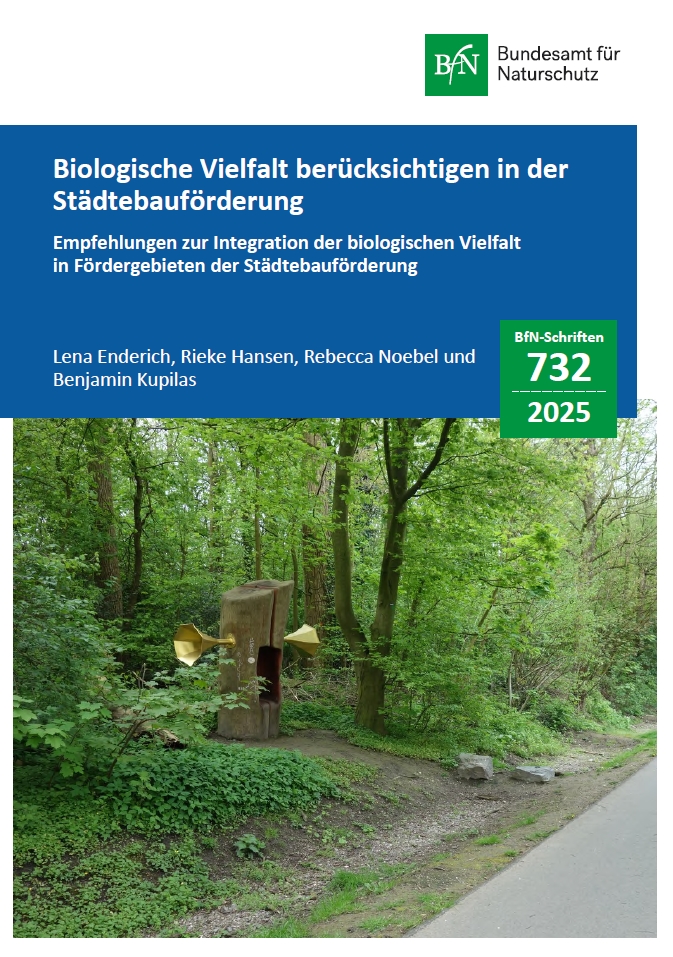
This publication examines how municipalities can strategically use urban development funding to conserve and promote biodiversity in cities. As a project partner of the German Federal Agency for Nature Conservation (BfN) in the "BioViBeS – Incorporating Biodiversity into Urban Development Funding" research project, the Ecologic Institute played a key role in analyzing best-practice examples and deriving practical action fields and recommendations.
This brief examines how policymakers, industry and practitioners can steer the built environment toward a nature-positive future by integrating ecological resilience and quality of life with economic development. It was developed under the EU research project GoNaturePositive!
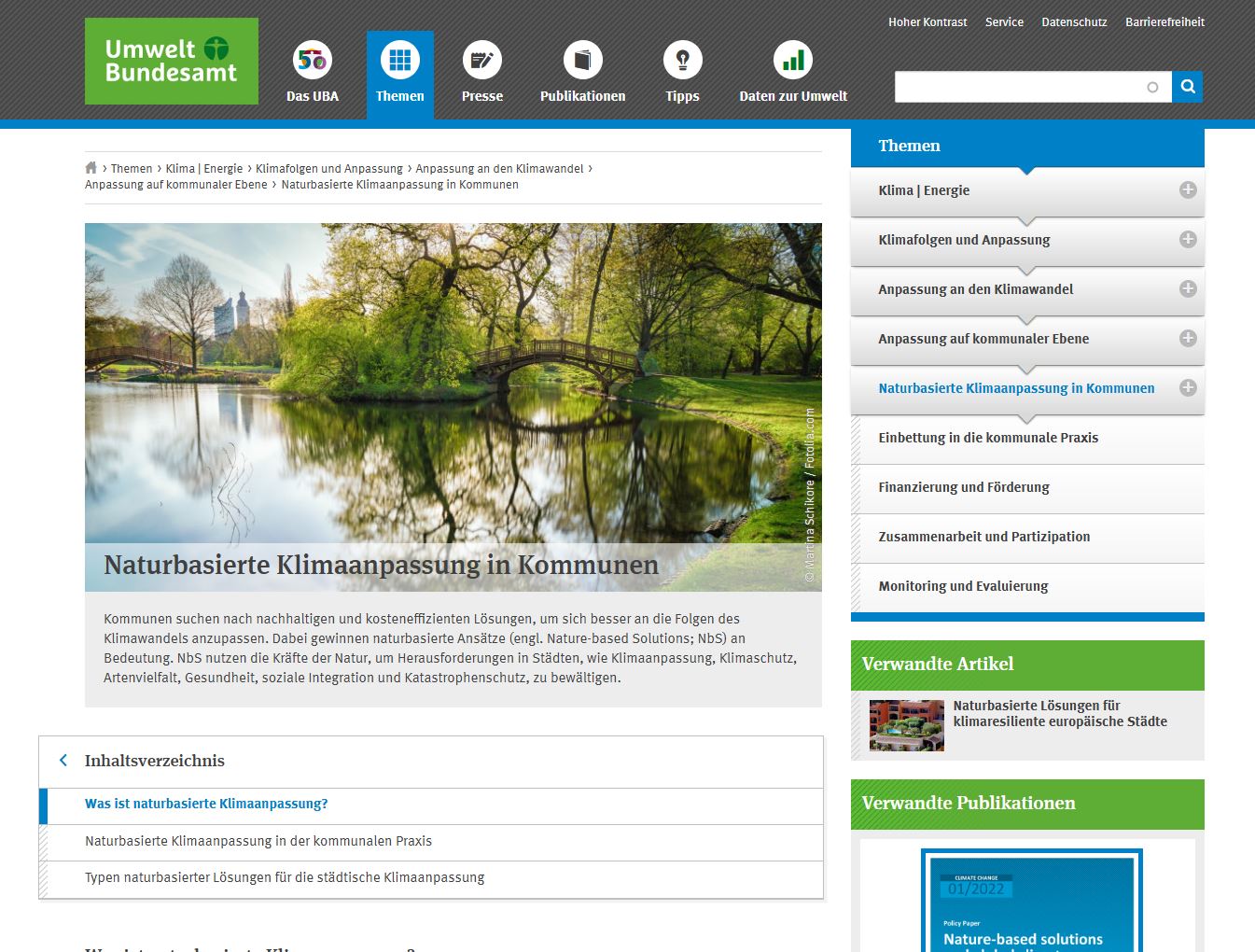
Nature-based solutions, such as green spaces or river restoration, can make a valuable contribution to municipal climate adaptation. The new topic page 'Nature-based climate adaptation' on the Federal Environment Agency's website highlights different aspects of such approaches and offers municipalities targeted support in their planning and implementation. In addition to information on the legal framework and funding issues, it also contains practical examples and helpful publications. Ecologic Institute designed and implemented the content of the website on behalf of the Federal Environment Agency.
This video, produced within the REACHOUT project, focuses on the Urban Heat climate hazard, and showcases how climate service tools can be applied in real-world urban policy challenges. It serves as a visual guide to help municipal representatives, local consultants, and service providers understand and implement these tools effectively.
This video, produced within the REACHOUT project, focuses on the Fluvial Flooding hazard, and showcases how climate service tools can be applied in real-world urban policy challenges. It serves as a visual guide to help municipal representatives, local consultants, and service providers understand and implement these tools effectively.
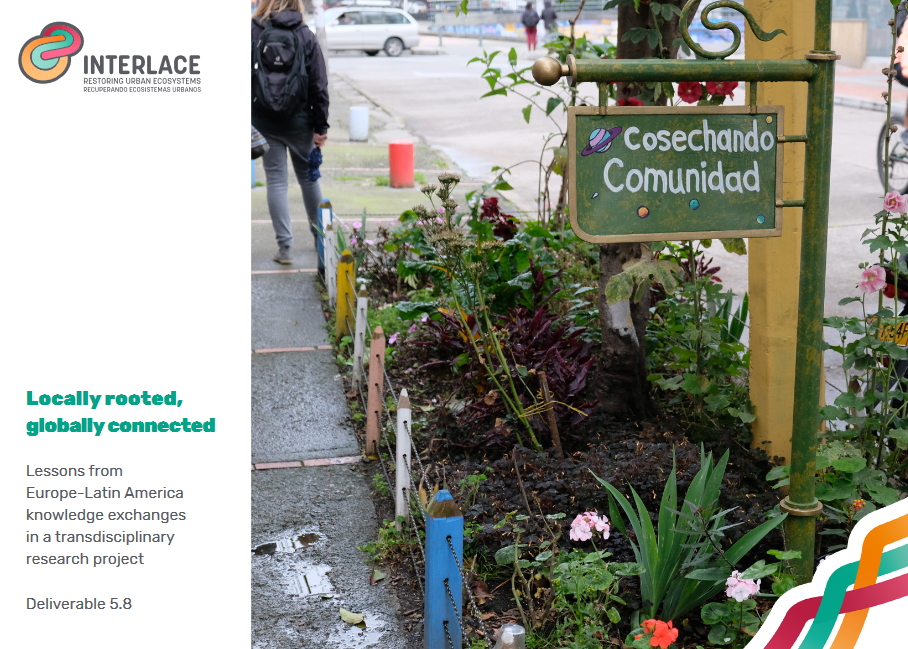
The publication “Locally rooted, globally connected” captures key lessons learned from the knowledge exchanges in the context of the transdisciplinary research and international cooperation between cities, researchers, city networks, and wider stakeholders from Europe and Latin America conducted in the frames of the INTERLACE project. Through partnerships across the two regions, the project highlighted both the opportunities and challenges of working across diverse cultural, institutional, and geographic contexts and demonstrated the importance of tailoring NbS to local contexts while balancing the need for comparability across regions.
As part of the EU-funded REACHOUT project, a comprehensive suite of climate service tools has been developed to support cities in addressing climate adaptation challenges. The newly released Guidelines for Climate Service Tools provide a structured overview of more than 20 technical and soft tools, as well as supporting consultancy services, all integrated into the Triple-A Toolkit – a web-based platform designed to enhance urban climate resilience. The tools address the full policy cycle of adaptation by covering the phases of Analysis, Ambition, and Action, and have been tested and refined through extensive co-creation with seven European City Hubs.
D3.6 presents an expanded set of over 15 climate service tools developed within the REACHOUT project. Aligned with the Triple-A framework, the tools support cities across all adaptation phases and have been tested through co-creation with seven European City Hubs. The report highlights practical applications, integration potential, and readiness levels—laying the groundwork for a future digital platform.
Focusing on cities in the European Arctic, this book consolidates research on sustainable development, local and urban governance, and transnational cooperation in the region. It examines to what extent there is transnational cooperation between urban areas in remote locations and how it can be enhanced to better align with global sustainable development policies to successfully implement goals set for example by the 2030 Agenda for Sustainable Development and the Paris Agreement on climate change.
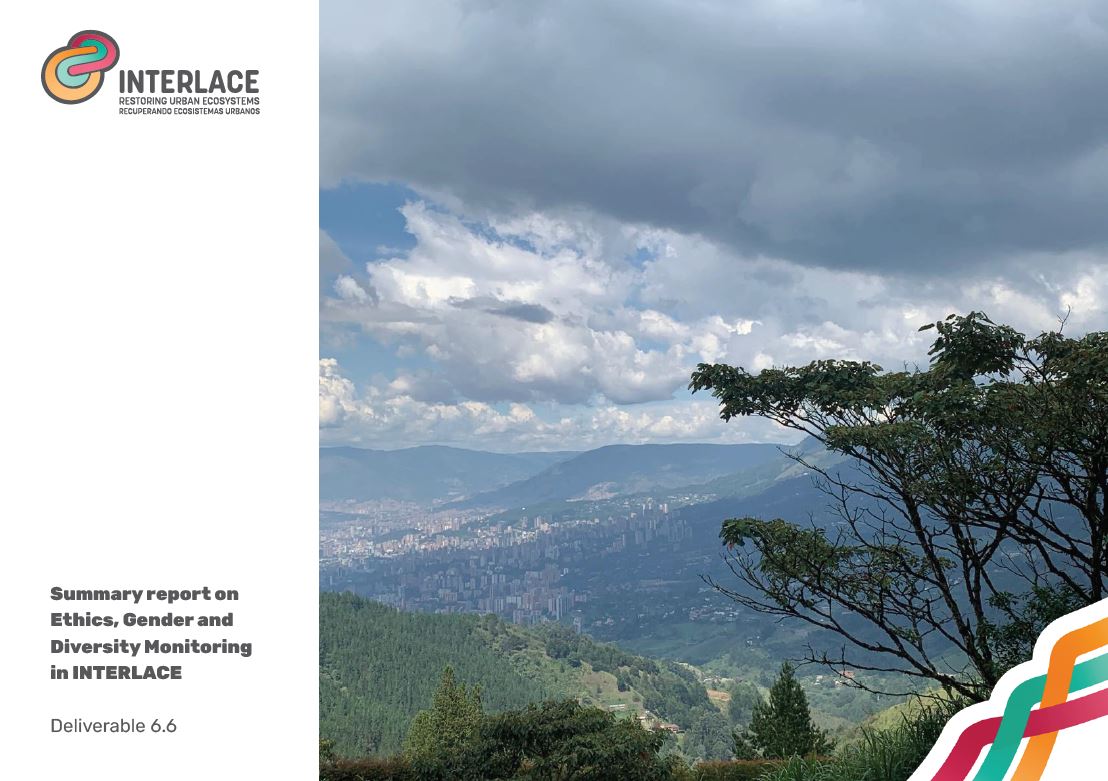
Nature-based solutions (NbS) aim to improve the world for everyone, which means ensuring that vulnerable groups, such as women, children, migrants, and people with disabilities, benefit alongside other social groups. This report, part of the INTERLACE project, assesses how these groups have been included in the planning and implementation of project activities, offering valuable insights for future NBS initiatives and research.
Stories have the unique potential to inspire change, shape perceptions, and foster understanding across diverse audiences. This collection of stories, developed as part of the INTERLACE project, aims to convey the profound emotional and cultural importance natural surroundings have for local communities and showcase the power of collective action.
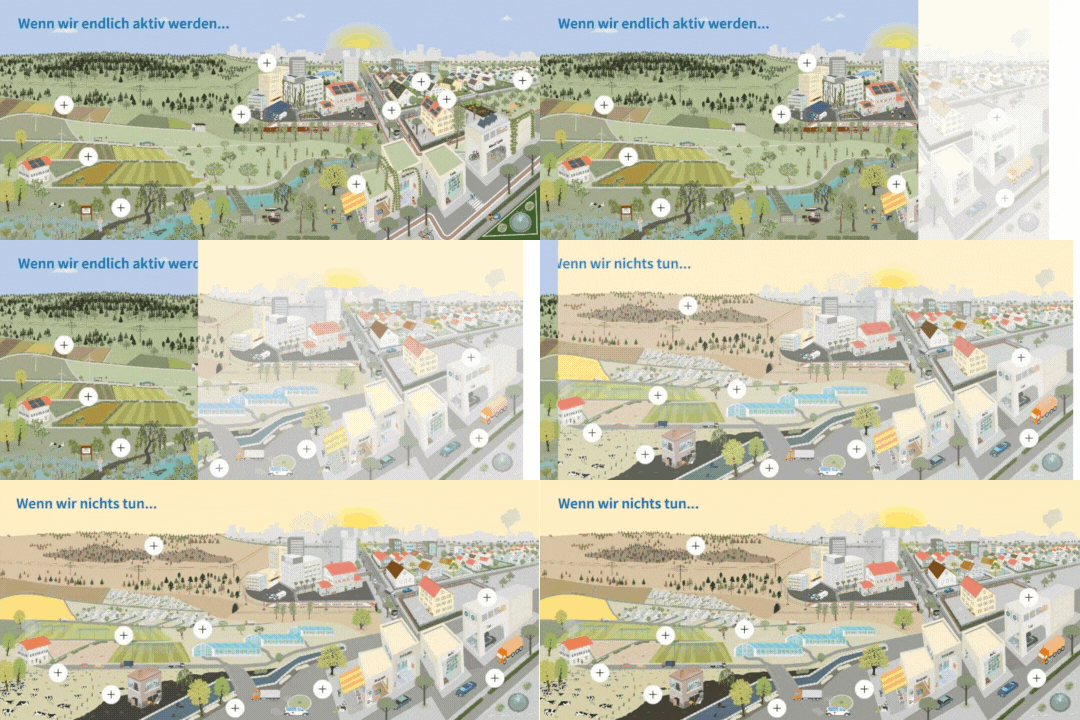
This interactive infographic shows what the future could look like in 20 to 30 years - in two scenarios: one with resolute climate protection and another scenario that leaves everything as it is. The intention is to make the consequences of climate change more tangible and to illustrate the urgency of climate protection measures.
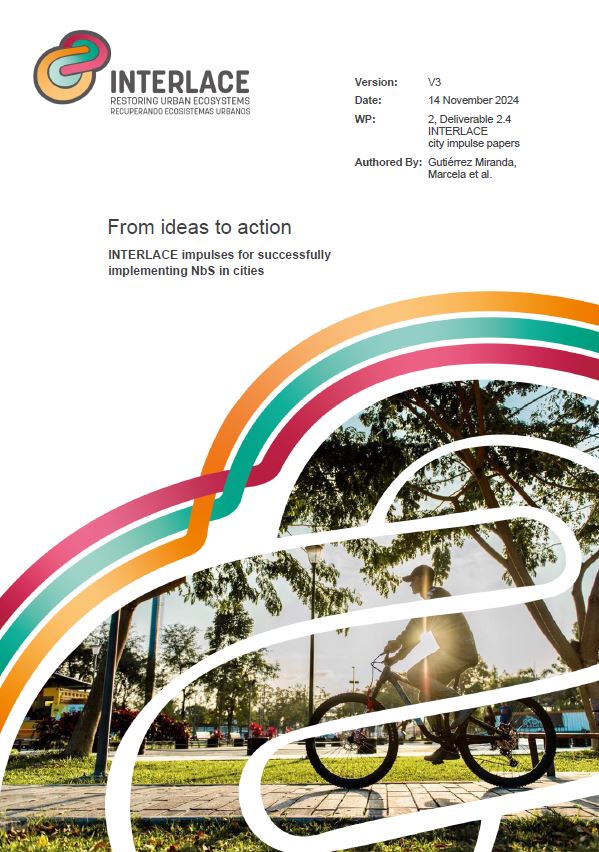
The report ‘From Ideas to Action’ presents the strategy papers of the seven INTERLACE partner cities, which were developed in close cooperation with local stakeholders in Europe and Latin America. These papers highlight tailor-made strategies for nature-based solutions (NbS), including the revitalisation of urban parks in Chemnitz and the development of a search engine for green infrastructure projects in Kraków. The aim is to effectively address the unique challenges of each city, such as climate change, biodiversity loss and social inequality.
A new textbook entitled 'Urban Nature: New directions for city futures', co-authored by Ecologic Institute's McKenna Davis, has just been published. The introductory textbook with a global scope aims to train students of geography, sustainability, and urban and environmental studies to re-imagine and transform cities to meet climate, biodiversity, and sustainability challenges. It speaks directly to the twin crises of biodiversity loss and a changing climate as well as the imperative to integrate justice with urban nature and nature-based solutions, putting cities in focus as spaces and places for transformative change.
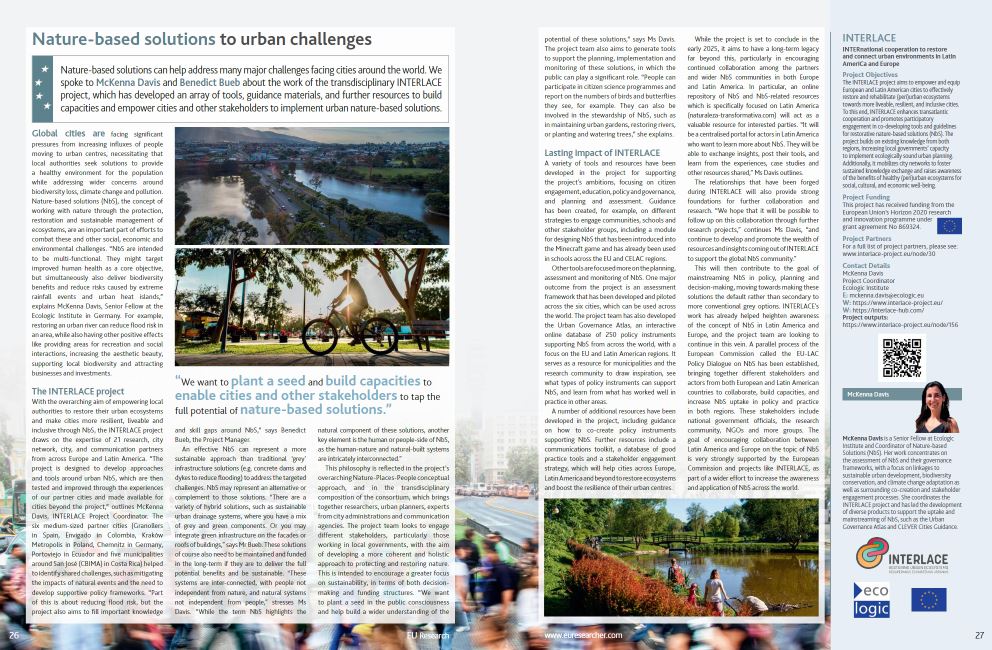
The INTERLACE project, funded by Horizon 2020, exemplifies innovative transdisciplinary approaches to tackling urban challenges through nature-based solutions (NBS). By fostering stakeholder engagement, developing practical tools, and supporting ecosystem restoration, the project empowers cities across Europe and Latin America to implement sustainable NBS. McKenna Davis and Benedict Buebfrom Ecologic Institute provided key insights into the project's progress and outcomes.
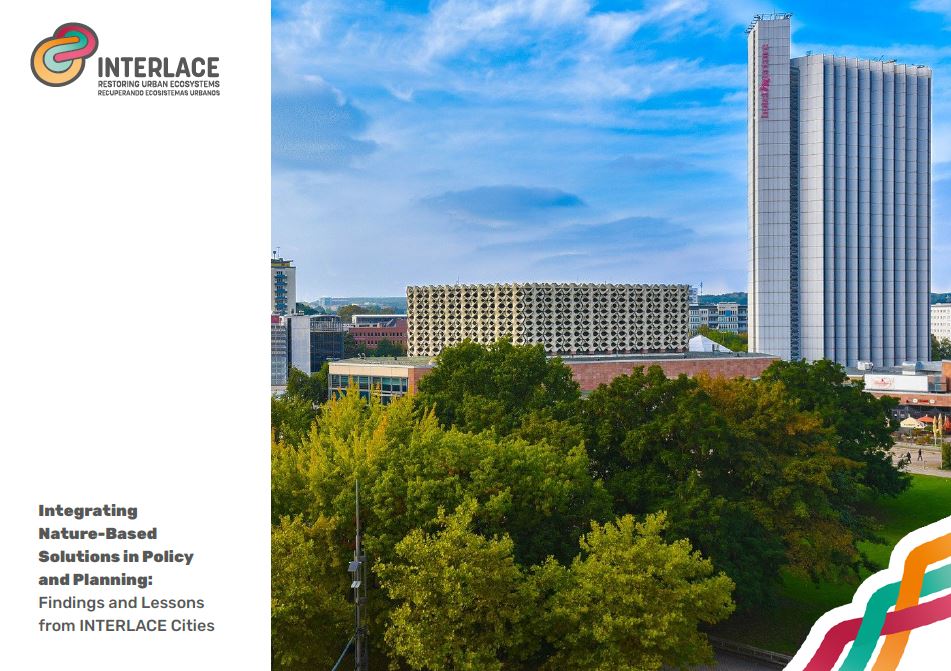
Der Bericht "Integrating Nature-Based Solutions in Policy and Planning. Findings and Lessons from INTERLACE Cities" (dt.: Erkenntnisse und Lektionen aus den INTERLACE-Städten), fasst die Erfahrungen der sieben Partnerstädte in Europa und Lateinamerika zusammen. Er richtet sich an politische Entscheidungsträger:innen und Stadtplaner:innen, die naturbasierte Lösungen (NbS) systematisch in ihre städtischen Planungs- und Governance-Strukturen einbinden möchten. Dabei betont die Publikation die Bedeutung inklusiver Beteiligungsprozesse sowie den Einsatz moderner Daten- und Finanzierungsinstrumente, um NbS auf eine breitere Ebene zu skalieren.
Urban areas across the globe are facing unprecedented challenges – pollution, climate change, urban sprawl – and traditional solutions are falling short. Join the Interlace project's free online course to discover how nature-based solutions offer a promising approach to help create resilient, sustainable cities.
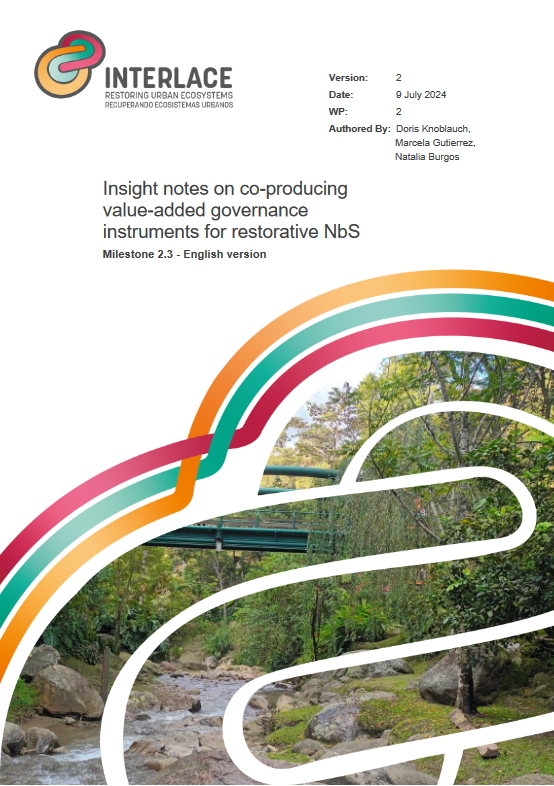
This report from the INTERLACE project examines the co-creation of governance instruments with partner cities, offering insights into the collaborative development of policies and tools that support the implementation of nature-based solutions (NbS). Developed through structured exchanges with city representatives and guided by the expertise of the project task team, the report sheds light on both the challenges and practicalities of co-creating governance frameworks for urban ecosystem restoration.
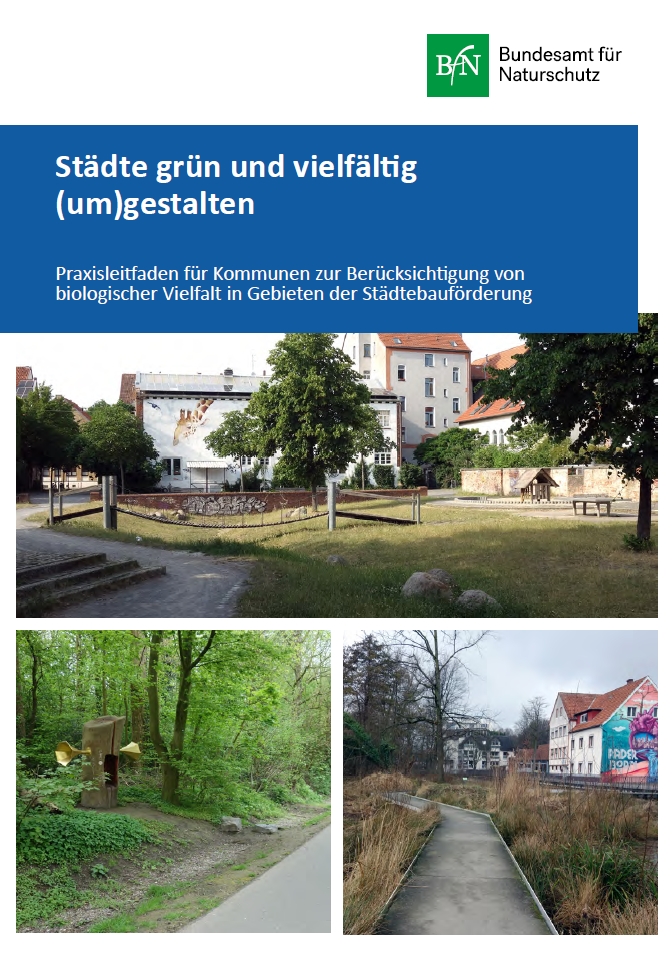
The practical guidance "Green and diverse urban (re)design" shows how local authorities can implement concrete measures to promote ecological diversity in urban areas. From the creation of new green spaces and the naturalization of bodies of water to the greening of roofs and façades, the guide offers practical recommendations and illustrative examples.
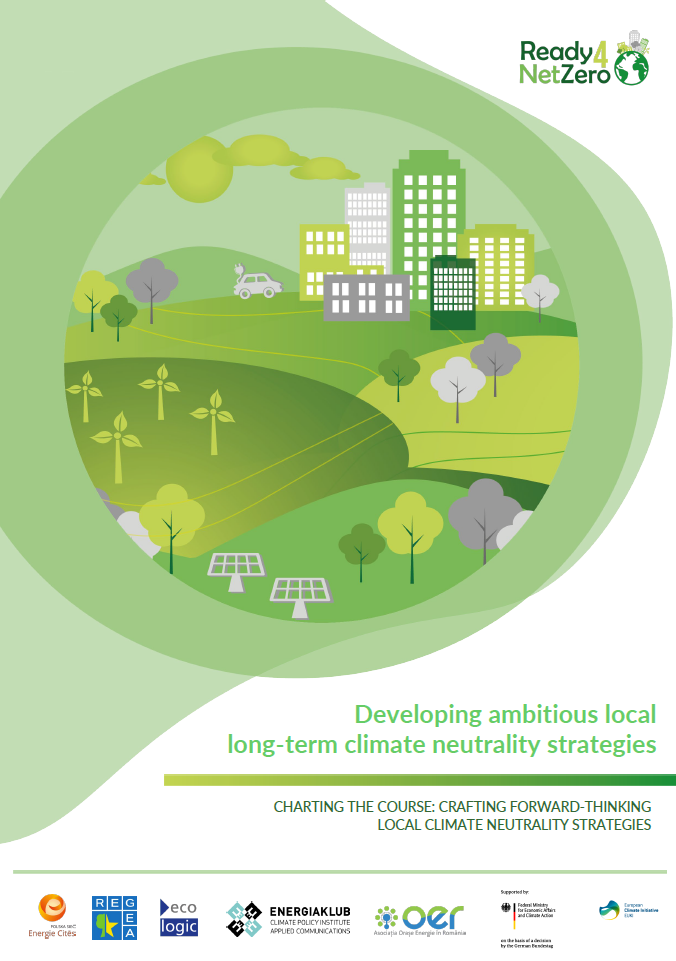
The guidance document "Developing ambitious local long-term climate neutrality strategies", developed as part of the Ready4NetZero project serves as a comprehensive roadmap for administrative staff in small- and medium-sized municipalities as they navigate the complexities of becoming climate neutral. It is structured to facilitate a clear understanding of the necessary cross-cutting measures for developing effective local long-term climate strategies, including realizing a long-term vision, establishing baselines, fostering participation, planning action, financing, monitoring, evaluation, and ensuring a just transition.
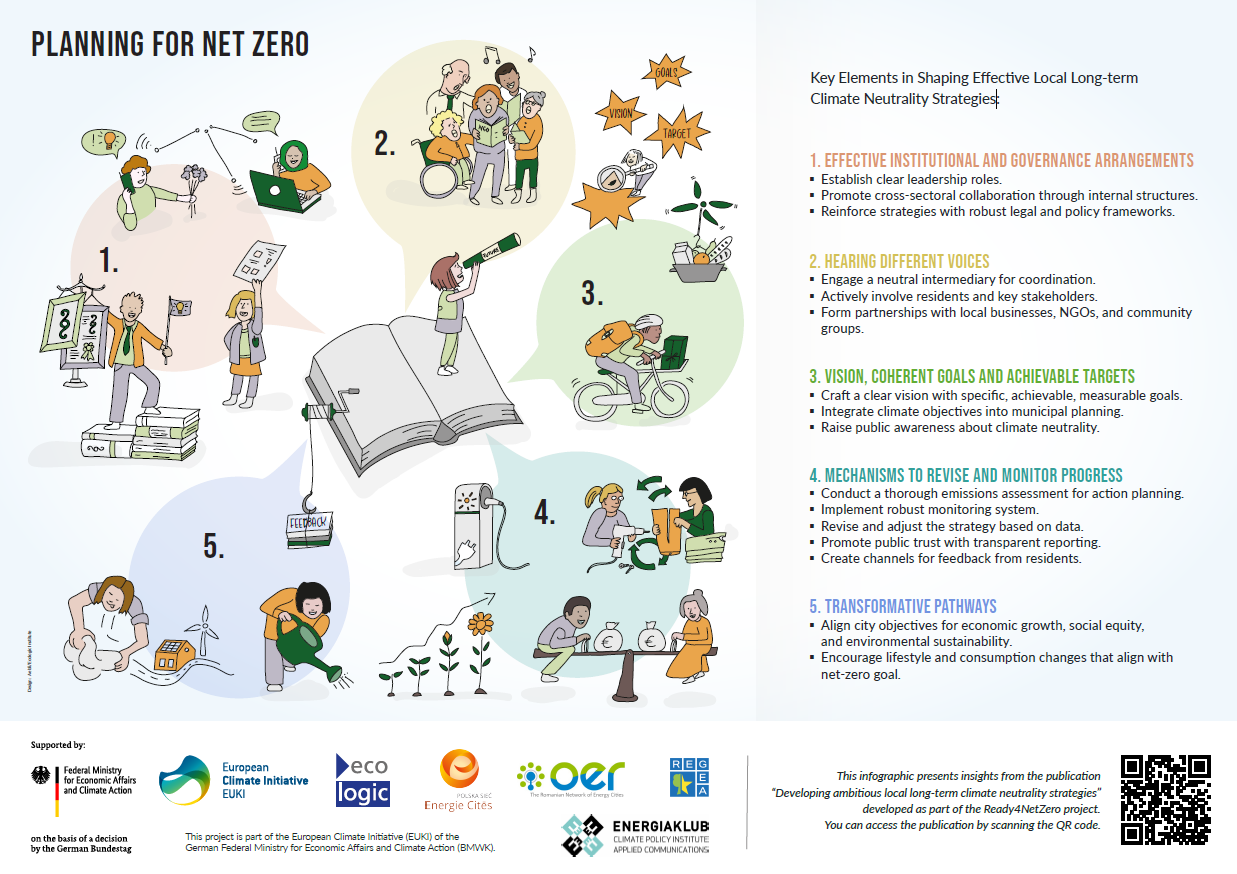
This poster conveys key content from the Ready4NetZero publication "Developing ambitious local long-term climate neutrality strategies". It presents five key elements for effective local long-term climate neutrality strategies.
The EU Biodiversity Strategy 2030 calls on cities to promote urban nature in the form of "Urban Nature Plans" for the protection of biodiversity, for climate protection and adaptation and for the quality of life in cities, and to set ambitious targets for this. This brochure transfers the approach of urban nature plans to the German context and offers concrete tips for implementation. This includes a checklist to determine the extent to which a municipality's existing plans already correspond to urban nature plans.
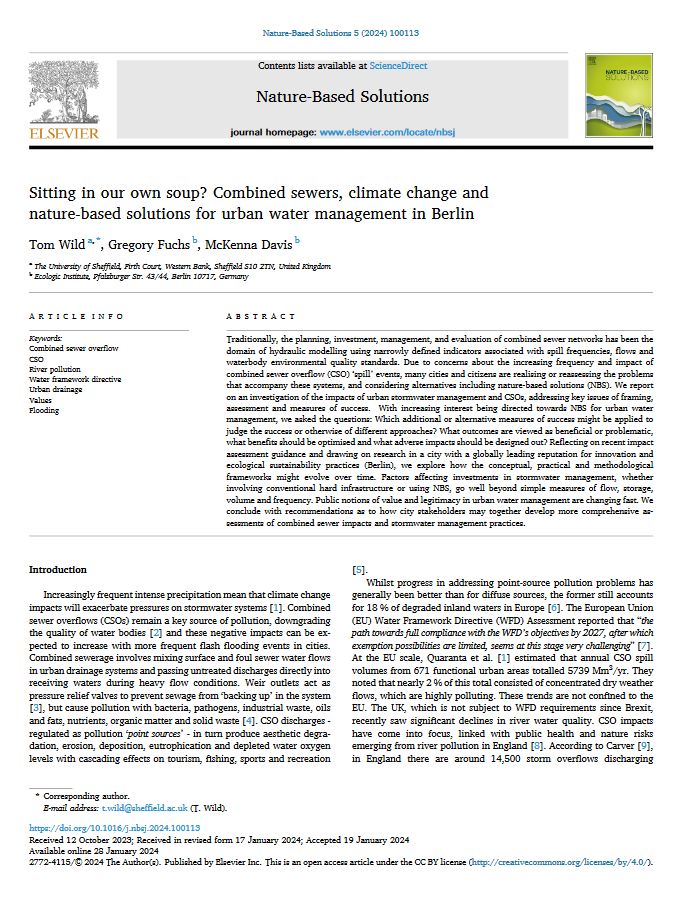
Urban water management is facing new challenges due to climate change. Intensified precipitation is putting additional stress on stormwater systems, leading to increased flood risks, more frequent combined sewer overflows (CSOs), and resultant risks to public health and urban biodiversity. These topics are addressed in a new publication co-authored by Gregory Fuchs and McKenna Davis of Ecologic Institute entitled 'Sitting in our own soup? Combined sewers, climate change and nature-based solutions for urban water management in Berlin.'
The CLEVER Cities Guidance is an online platform conceptualized by Ecologic Institute to give you unique insight into the multifaceted world of sustainable urban development. This introductory video aims to raise not only the interest but also the engagement of stakeholders from local governments, the academic community and the public and to bridge the gap between the different target groups. The video takes you through the CLEVER Cities Guidance, clearly highlighting the concrete contribution it makes in the context of sustainable urban development.
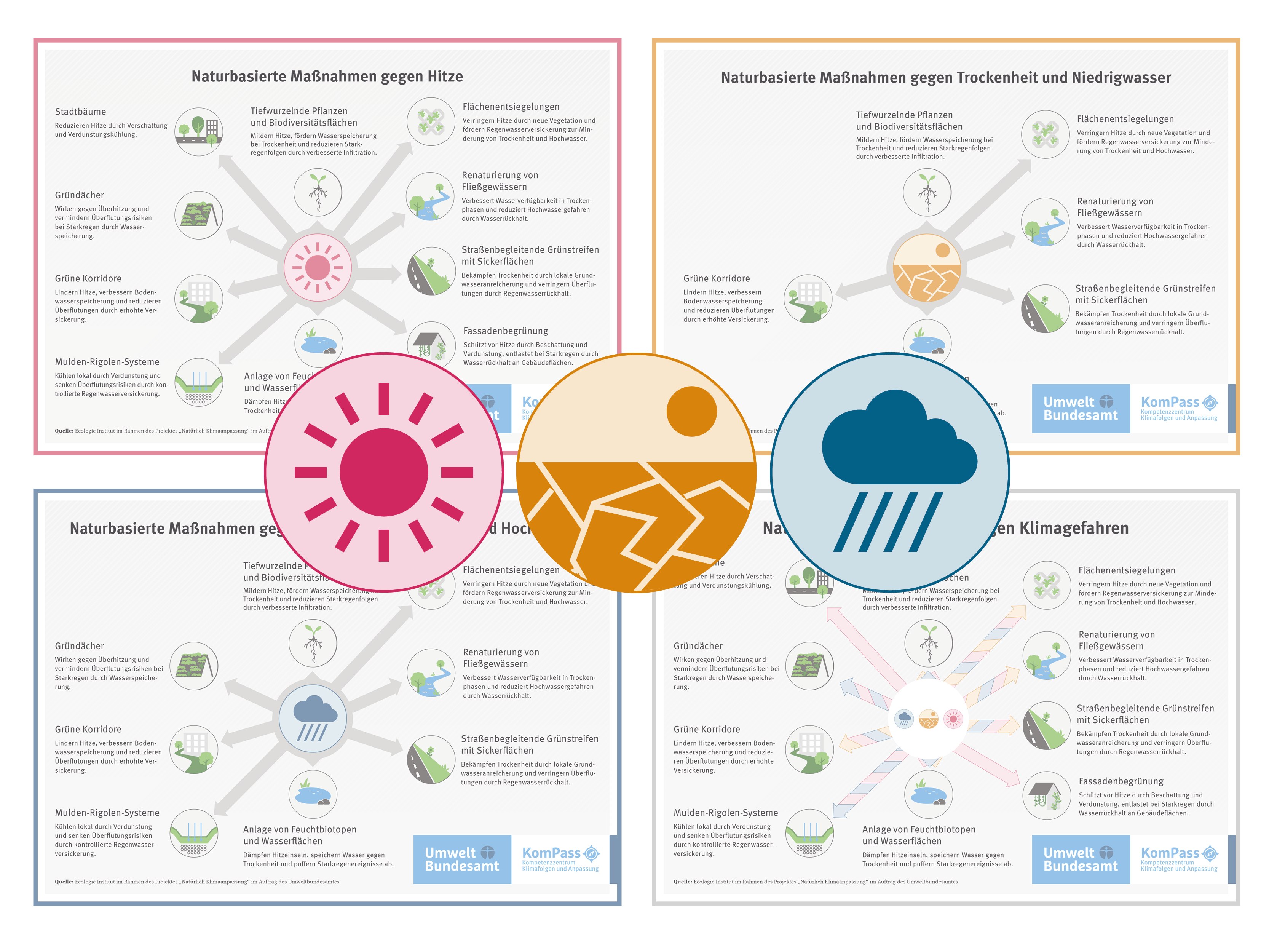
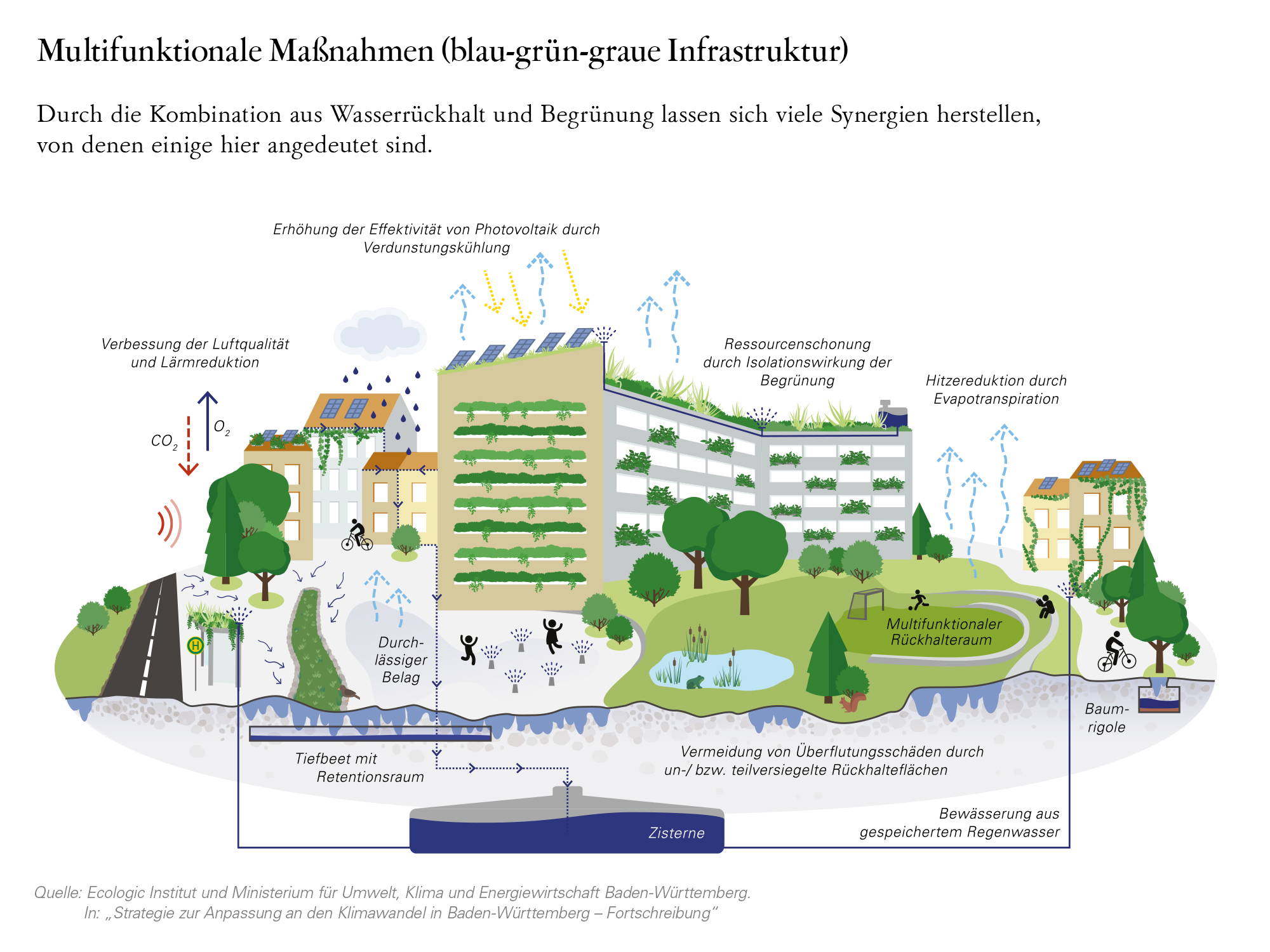
Ecologic Institute conceived and designed several infographics for the update of the Strategy for Adaptation to Climate Change in Baden-Württemberg. These visualise some of the thematised climate impacts on the various fields of action and support the understanding of the content. The infographics are designed in accordance to the project's style guidelines.
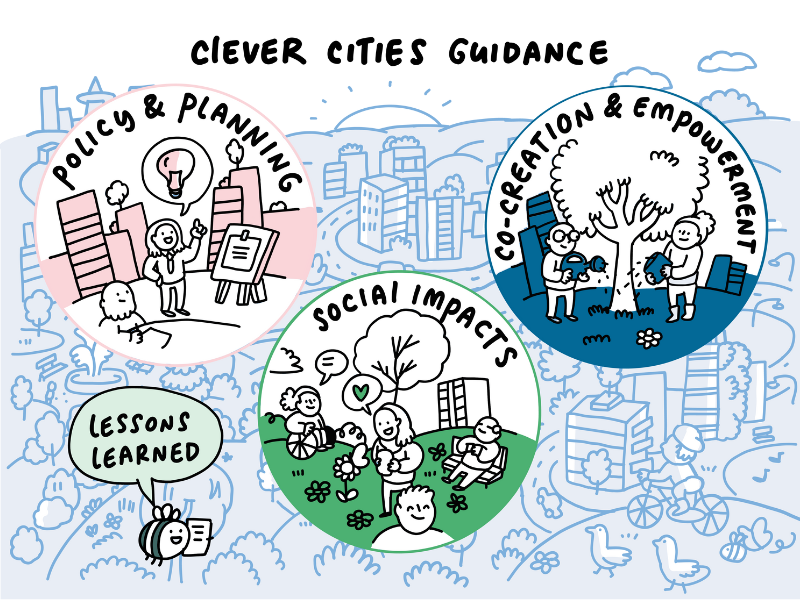
The CLEVER Cities Guidance online platform developed by Ecologic Institute features insights, tools, indicators and lessons learned about nature-based solutions (NBS) emerging out of the CLEVER Cities project and its nine partner cities. Filling a gap in available resources, the Guidance focuses on (1) policy and planning strategies, (2) how to generate and measure social impacts of NBS, and (3) approaches for co-creation and engaging stakeholders.
Ecologic Institute provided editorial and graphical support for the update of the adaptation strategy in Baden-Württemberg. Using graphical elements and a well-designed reader guidance, the reading orientation was improved and the visual quality of the document was increased. In addition to the graphic design, Ecologic Institute provided support for the drafting of several chapters, e.g. on climate change impacts, summarized sectoral adaptation challenges and developed an abridged version of the update of the adaptation strategy.
Due to changing climatic conditions, the state government of Baden-Württemberg committed to update its adaptation strategy in 2023. This compact information highlights the measures from the state strategy in which municipalities have an important role to play. It is intended to help them define and implement, or work towards implementing, the measures necessary for their local conditions and risks. It provides a compact overview for municipalities on their way to adapt to the consequences of climate change.
The adaptation strategy provides the framework for the adaptation activities of the state of Baden-Württemberg and serves as a basis for implementation, especially for administration, municipalities and the economy. Due to changing climatic conditions, the state government of Baden-Württemberg committed to update its adaptation strategy in 2023. This short version summarizes the contents of the adaptation strategy.
This paper focuses on co-creation for nature-based solutions, providing practical examples and guidance for local decision-makers. It sheds light on the effective utilization of co-governance approaches, encouraging participatory processes and collaborative creation in the realm of nature-based solutions.
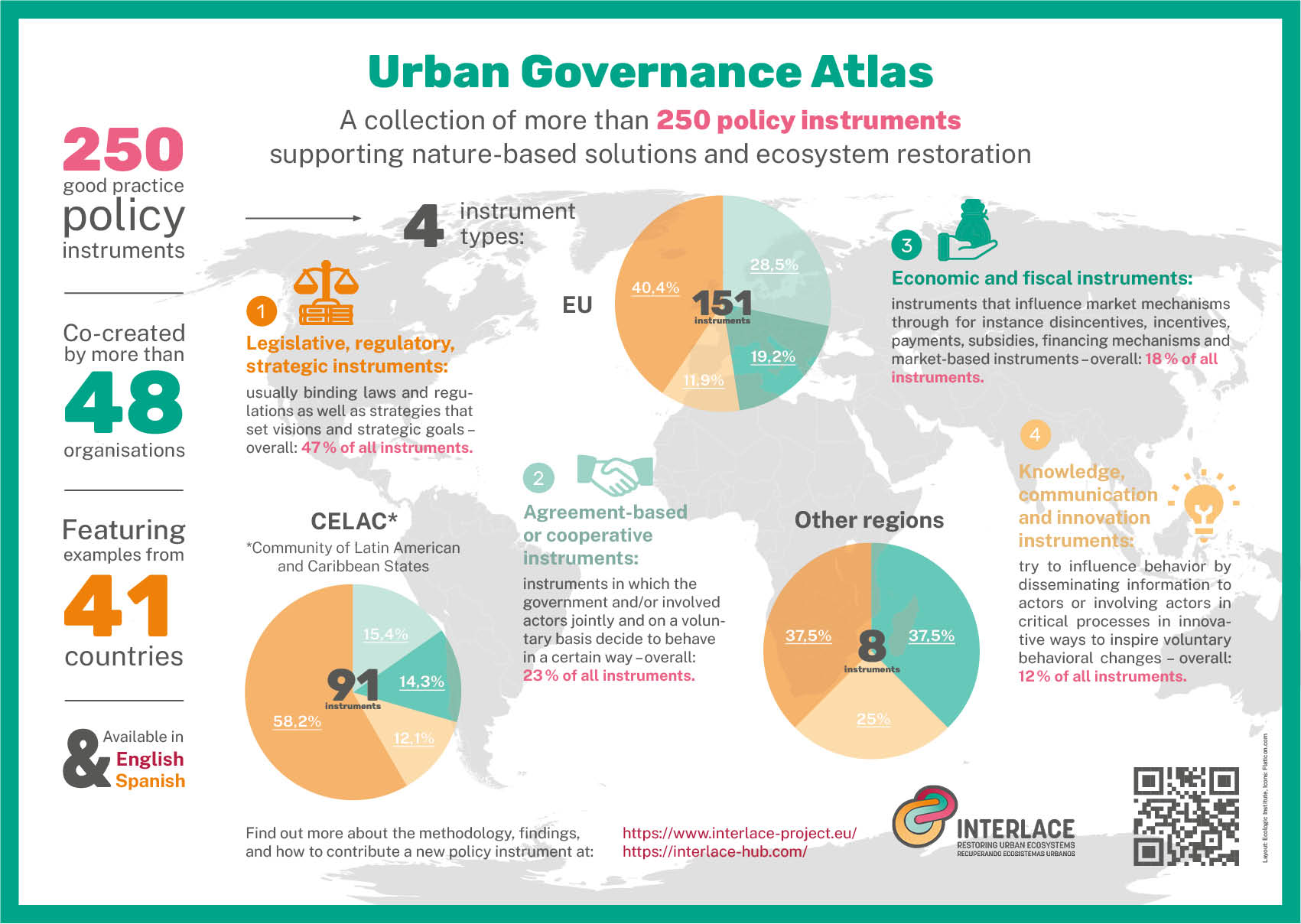
The INTERLACE Urban Governance Atlas was launched in 2023. It invites political decision-makers, urban planners, researchers, civil society organizations, and all interested parties to delve into the success stories of 250 political instruments from 41 countries. These instruments support nature-based solutions and tools for ecosystem restoration. The Atlas aims to showcase what has made them successful, the lessons learned in their design and implementation, and the governance approaches they employ. Developed by the Ecologic Institute, the infographic provides a clear overview of what the Urban Governance Atlas is and who can benefit from it.
The INTERLACE Urban Governance Atlas was officially launched on 11 May 2023 at the INTERLACE Cities Talk Nature Conference in Chemnitz. The first of its kind, the online database showcases 250 policy instruments from 41 countries supporting nature-based solutions and ecosystem restoration. The interactive design invites policymakers, urban planners, researchers, civil society organizations, and others to explore and learn more about what made the instruments successful, lessons learned in their design and implementation, and their approaches to governance.
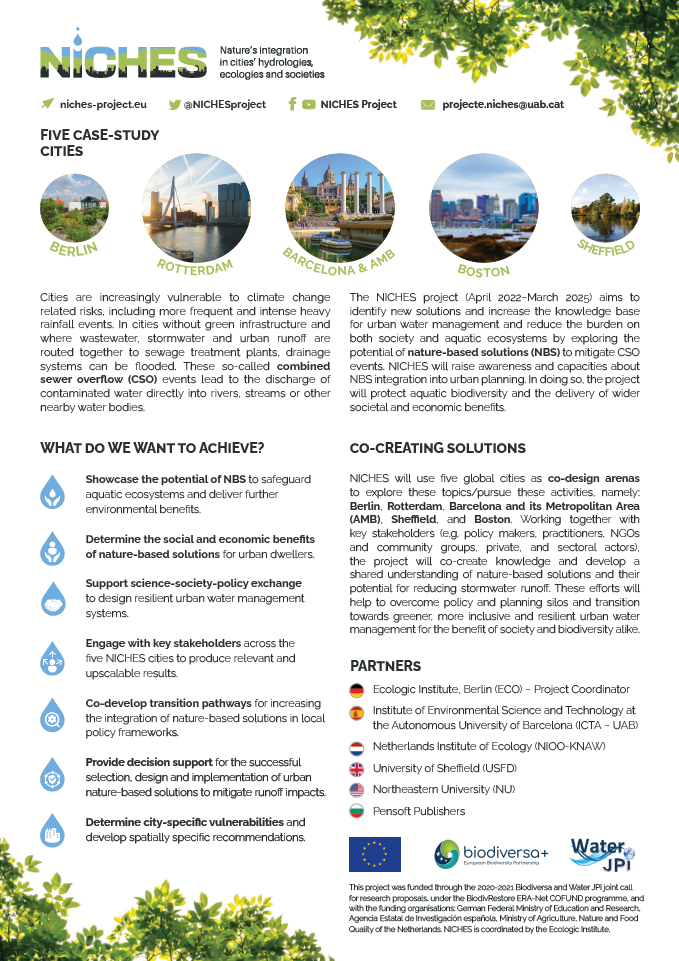
The NICHES project flyer illustrates the main project objectives and case-study cities. An overview of the project process is illustrated, together with details of the partner cities implementing the project. The flyer is styled according to the project style-guides and contains contact information.
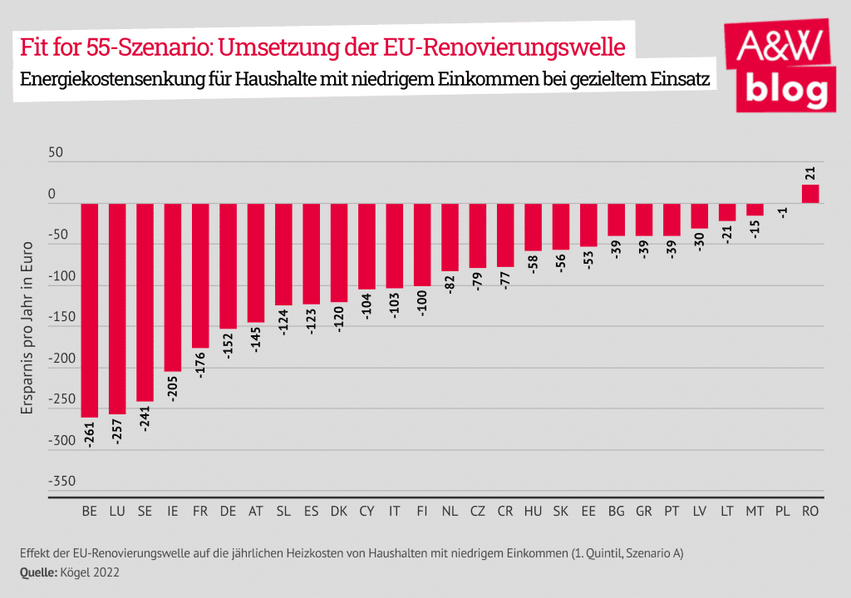
This blog post shows why the EU Renovation Wave should link environmental and social issues. EU member states are currently facing three crises: the climate crisis, an energy security crisis and a social crisis. The EU Renovation Wave has a key role in responding to all three crises. However, it can only fulfill this key role if the implementation of the renovation wave is socially fair.
As part of the EU-funded REACHOUT project, a first collection of climate service tools was developed to support cities in adapting to climate change. The publication D3.5 - Guidelines for Climate Service Tools provides a structured overview of twelve technical and "soft" tools that are brought together in the Triple-A Toolkit - a methodological framework covering the phases of analysis, ambition and action. The tools were co-created and tested in close cooperation with seven European City Hubs and offer practical solutions for climate-resilient urban development - from data-based analyses to participatory formats.
This article written by Dr. Ulf Stein and Benedict Bueb from Ecologic Institute together with researchers of the French National Institute of Agricultural Research (INRAE) presents insights of two case studies, in Paris and Berlin, which investigated the potential of two mobile applications to make urban water management visible to the public and thus increase awareness about certain water management aspects.
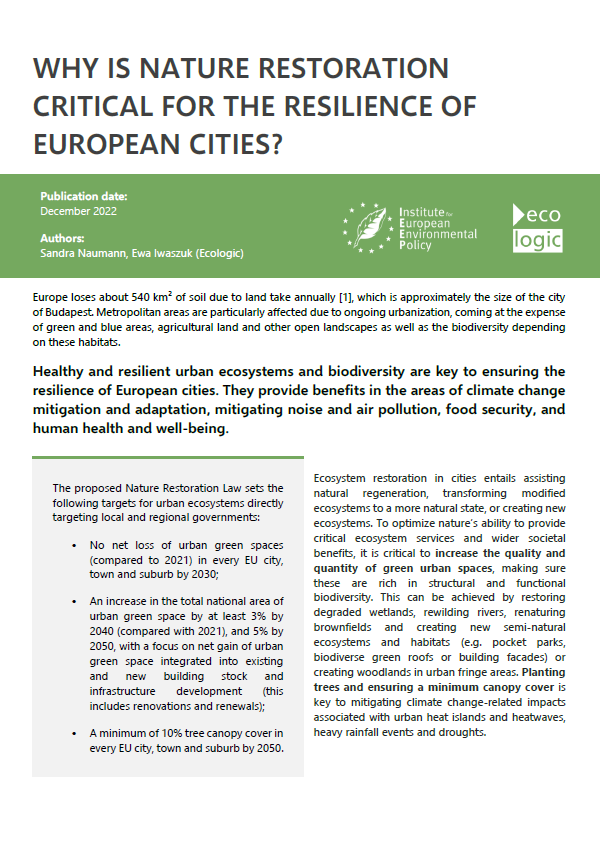
Healthy urban ecosystems and biodiversity are key to ensuring the resilience of European cities. This policy brief presents evidence and data to support strong targets for urban ecosystem restoration to be included in the Nature Restoration Law.
A research team including Arne Riedel from Ecologic Institute examines the political agency of transnational city alliances – particularly the Arctic Mayors' Forum (AMF) – and their contribution to sustainable urban development in the European Arctic.
Buildings are responsible for more than 30% of the EU's greenhouse gas emissions from energy. To increase energy and resource efficiency, the EU Renovation Wave sets the target of doubling renovation rates in the next ten years. The EU also presents the Renovation Wave as a countermeasure against energy poverty, which currently impacts around 34 million EU residents. However, EU-level analyses which connect the technical aspects of the plan with socioeconomic criteria that account for energy poverty remain scarce. In this paper, Nora Kögel from Ecologic Institute addresses that gap by investigating the distributional effects of reaching the Renovation Wave’s 2030 goals in the EU27 countries.
On one of those days when the temperature hit 30 degrees, the "Green Deal – Big Deal?" podcast host Ewa Iwaszuk from Ecologic Institute in Berlin speaks with her guests about the climate change impacts in cities and especially about the EU's plans on how to adapt to and better deal with those impacts. The discussion focuses on the possibilities that nature offers to help us cope with challenges such as heat and flooding.
The Peer Learning note seeks to share practices and lessons. It provides good practice examples from different cities and peri-urban areas in Costa Rica, Ecuador, Spain and Colombia on how to integrate nature in the search for a more inclusive, sustainable and resilient urban development. The Peer Learning Note is targeted at cities, local and regional governments, communities and organizations worldwide interested in the topic of urban restoration.
To achieve the EU's goals, we need to rethink mobility from the ground up. This involves many aspects, including electric mobility, walking, cycling and public transport. The second episode of the "Green Deal – Big Deal?" podcast examines the challenges and issues that the mobility transformation needs to address, including environmental problems like climate change and air pollution.