Ecologic Institute Newsletter No 283 – April 2026
Updates on the National Restoration Plan in Germany
- Ecologic Institute Newsletter

Public Participation in Spring 2026
Dear readers,
With the EU Nature Restoration Regulation entering into force, addressing degraded ecosystems has become an even more pressing priority for European environmental policy. Member States are required to submit first drafts of their National Restoration Plans (NRPs) by September 2026. In Germany, this process is currently reaching an important milestone.
From 25 April to 25 June 2026, citizens, institutions and associations are invited to comment on the draft NRP and thereby actively contribute to shaping Germany’s implementation of the EU targets. Public participation is more than a formal requirement. It is a prerequisite for developing viable solutions and for a successful implementation. After all, ecosystem restoration touches on a wide range of land uses and interests – from agriculture and forestry to water management and urban areas.
Ecologic Institute is supporting the Federal Agency for Nature Conservation (BfN) in developing Germany’s first NRP and, together with partners, is contributing key technical foundations. These include the development of a systematic catalogue of restoration measures for terrestrial ecosystems and guidance on identifying potential restoration areas, as well as the compilation and analysis of relevant data, materials and draft texts for the NRP.
At the same time, we address questions related to the implementation and evaluation of restoration measures. For example, we are currently developing an evaluation concept to assess the effectiveness of restoration measures.
Beyond Germany, we engage in European exchange on key implementation issues, including in the field of urban ecosystems or cross-border cooperation in the Alpine region.
The coming weeks offer a rare opportunity to influence how restoration policy will take shape in practice. We invite you to take part in the consultation and to explore the work, publications and events presented in this newsletter.
Enjoy the reading,
Dr Benjamin Kupilas
Coordinator Biodiversity
Moving to a Clean Industrial Future in Europe – Clean Industrial Transition Monitor
Europe’s push towards a clean, competitive industrial base is gaining structure – but not yet momentum. The Clean Industrial Transition Monitor by ECNO tracks this shift through more than 50 indicators, offering one of the clearest snapshots of where progress is real and where it is stalling. While the Clean Industrial Deal sets out a comprehensive policy framework, significant challenges remain, particularly in creating demand for clean products, mobilising financing, and addressing infrastructure constraints. Strong policy signals, a robust carbon price, and targeted demand-side measures will be key to scaling the transition.
European Energy Security or Acquiescence? – Review
This paper critically reviews a secretive Joint Statement (JS) on Gas Supply Security, signed in Washington, D.C., on 24 February 2026 by the Chairman of the US ‘National Energy Dominance Council’ and ministers from 12 Central and Eastern European countries. It argues that, by sidelining key European priorities, such as climate security, the expansion of renewables, and genuine diversification of supply, the agreement risks entrenching dependency on Europe’s new dominant gas supplier, the United States.
Restoring Coastal Wetlands in Europe – Implementation Roadmap
Europe’s coastal wetlands are valuable natural ecosystems which store carbon, protect biodiversity and strengthen resilience to climate change. Yet restoring them at scale remains a complex challenge. The new Implementation Roadmap to Guide National Action developed under the RESTORE4Cs project offers practical, science-based guidance for national authorities and stakeholders to plan and deliver effective coastal wetland restoration in line with key EU policy targets. The roadmap shows how restoration strategies can be tailored to different national contexts while drawing on the latest tools and insights from RESTORE4Cs. In addition, two pilot implementation roadmaps for Portugal and Romania were developed, illustrating how the approach can be applied in different national contexts.
Evaluation of the Green Architecture of the CAP Strategic Plans – Guidelines
The green architecture of the CAP Strategic Plans brings together key instruments to deliver on environmental and climate objectives – but its performance depends on how effectively these measures work together. New European Commission guidelines aim to bring clarity to this challenge. They set out how to assess the effectiveness, coherence, and efficiency of the CAP’s green architecture as an integrated system, rather than as a collection of individual measures. Ecologic Institute contributed to the guidance on the evaluation of coherence, helping to identify synergies and trade-offs between instruments and to strengthen system-level evaluation.
Using the CAP to Reduce Pesticide Dependence – Policy Brief
The Common Agricultural Policy (CAP) plays a central role in reducing pesticide dependence in European agriculture. A new policy brief from the Horizon 2020 project SPRINT finds that the Common Agricultural Policy (CAP), despite its central role, is still falling short. Key elements of its “green architecture” offer only limited incentives for the kind of systemic change needed to reduce reliance on pesticides. Supporting a transition towards more sustainable plant protection systems requires more ambitious baseline standards, more targeted design of support measures, and stronger coordination and integration of instruments within CAP Strategic Plans.
Transitioning Away from Pesticide Dependency – EU Policy Recommendations
This SPRINT policy brief highlights the need for a fundamental shift in European agricultural systems regarding pesticide use. Rather than focusing on optimisation of inputs, a successful transition must address systemic lock-ins across governance, advisory and knowledge systems, agronomy, and markets. The brief outlines concrete policy measures derived from a five-year participatory research process across ten European countries.
Towards Climate-ready Marine Protected Areas – Study
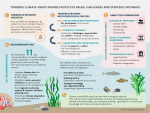
As climate change intensifies, the effectiveness of marine protected areas increasingly depends on how well climate and adaptation considerations are integrated into their design, management, and governance. This study based on structured expert workshops across Europe highlights the key scientific, governance, and socio-economic conditions needed to make MPAs climate-ready. The findings point to a delicate balance: MPAs must be ecologically robust, socially inclusive, and underpinned by coherent governance frameworks, while remaining flexible enough to respond to rapidly changing marine environments.
Technical Options for Reducing Plastic Waste in the Oceans – Report
Can we intercept plastic waste before it reaches the ocean? Which technologies are suitable, and where are they most effective? A recent report by Ecologic Institute examined various approaches to removing plastic waste from wastewater, rivers, harbours, coastal areas, and the open sea. Rather than offering simple fixes, the analysis weighs effectiveness against ecological risks, identifying where different approaches work best and where they may fall short. The report also sets out targeted recommendations to help policymakers deploy these technologies more strategically and avoid unintended consequences.
Ecologic Institute at the 3rd European Carbon Farming Summit 2026
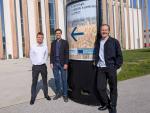
Panel discussion and speeches: Hugh McDonald, Aaron Scheid, Jonathan Gardiner
At the European Carbon Farming Summit 2026 in Padua, experts from policy, research, private sector and practice discussed the next phase of carbon farming. Contributions from Ecologic Institute highlighted that, beyond robust certification standards, scaling carbon farming will depend on creating credible demand, ensuring clarity on how the certificates can be used, and developing innovative financing models.
Assessment of Coherence of the Green Architecture
Speech: Dr Josselin Rouillard
At the Good Practice Workshop of the EU CAP Network in Larnaca, Dr Josselin Rouillard presented approaches to assessing the coherence of the green architecture of Member States' CAP Strategic Plans. The discussion highlighted that green instruments in the CAP should be evaluated as part of a broader system of interventions and policy incentives. This includes attention to interactions within the CAP (e.g., between green instruments such as ecoschemes and non green instruments such as income support) and between the CAP and external policies such as river basin management plans, prioritised action frameworks and organic action plans. The workshop showed how systematically analysing synergies, trade-offs and gaps can strengthen the CAP’s overall contribution to environmental and climate objectives and move it closer to delivering joined-up results.
Plastics and the Environment
Lecture: Doris Knoblauch
On 24 March 2026, Doris Knoblauch delivered a lecture on strategies to reduce plastic pollution and the current, critical state of negotiations for a global plastics agreement. The lecture formed part of the 49th UNEP/UNESCO/BMUKN International Postgraduate Course on Environmental Management, whose participants visited Ecologic Institute. Focusing on global challenges, the textile sector, and key policy options, the lecture highlighted global challenges, the textile sector, and key policy options.
Co-production of Climate Services: Lessons from Policy to Practical Actions
Speech: Dr Grit Martinez
At the fifth Climateurope2 Webstival, Dr Grit Martinez brought together perspectives from science and policy to highlight the role of co-production in advancing climate services in Europe. Her presentation highlighted co-production as a critical lever for aligning climate knowledge with decision-making needs, helping to close the persistent gap between insight and action.
Circular Textiles – Status Conference
From 15 to 17 June 2026 in Augsburg, the “Circular Textiles” status conference will bring together, for the first time, the interim results of 16 collaborative projects working on solutions for a circular textile economy. Beyond project presentations, the event will focus on exchange and discussion, including thematic workshops addressing key cross-cutting issues and offering opportunities for networking within the CirTex community. Participants will also gain insights into Augsburg’s rich textile heritage. Registration is open until 26 May 2026.
DMCSEE and C3S Joint Workshop with the Southeastern European User Community
As drought risks intensify across Southeastern Europe, the question is no longer whether to act but how to act more effectively across borders. On 10 June 2026, the Copernicus Climate Change Service (C3S), in collaboration with the Drought Management Centre for Southeastern Europe (DMCSEE), will host an online workshop dedicated to the use of climate data and services for drought monitoring in the region. The workshop will present C3S drought-related products and recent developments, showcase cross-border use cases, and provide a platform to exchange views on user needs and challenges in the region. It aims to support the further development of climate services and strengthen climate change adaptation to increasing drought risks.
Contents
| ► | Moving to a Clean Industrial Future in Europe – Clean Industrial Transition Monitor |
| ► | European Energy Security or Acquiescence? – Review |
| ► | Restoring Coastal Wetlands in Europe – Implementation Roadmap |
| ► | Evaluation of the Green Architecture of the CAP Strategic Plans – Guidelines |
| ► | Using the CAP to Reduce Pesticide Dependence – Policy Brief |
| ► | Transitioning Away from Pesticide Dependency – EU Policy Recommendations |
| ► | Towards Climate-ready Marine Protected Areas – Study |
| ► | Technical Options for Reducing Plastic Waste in the Oceans – Report |
| ► | Ecologic Institute at the 3rd European Carbon Farming Summit 2026 |
| ► | Assessment of Coherence of the Green Architecture |
| ► | Plastics and the Environment |
| ► | Co-production of Climate Services: Lessons from Policy to Practical Actions |
| ► | Circular Textiles – Status Conference |
| ► | DMCSEE and C3S Joint Workshop with the Southeastern European User Community |